
Most people who plan the trip from Lisbon to Cascais think they are going to spend a day on a beach. They come back having walked clifftops above crashing Atlantic waves, eaten grilled dourada in a family restaurant where the menu is handwritten in Portuguese and discovered a town that once housed Portuguese royalty every summer for fifty years. The 40-minute train ride from central Lisbon is itself one of the most quietly spectacular rail journeys in Southern Europe the tracks run along the Tagus estuary, then the coastline opens up and the Atlantic appears on the left side of the carriage. This guide gives you everything to plan the Lisbon to Cascais trip without guesswork.
In This Guide You Will Find:
- The exact steps to take the Lisbon to Cascais train which station, which card, what it costs and when to go
- Which beaches are worth the trip and which ones fill up by 9:30am on summer Saturdays
- The one clifftop walk that most tourists skip and the best time to do it
- Specific restaurant names, streets and dishes not generic “try the seafood” advice
- A realistic daily budget broken down by transport, food and activities
- The months when Cascais is at its best and the months to avoid
QUICK INFO BOX
| Detail | Info |
| Distance | 30 km west of Lisbon city center |
| Nearest Airport | Lisbon Airport 35 km from Cascais |
| Best Time to Visit | May, June, September |
| Train Journey Time | 40 minutes from Cais do Sodré |
| Train Ticket Price | €2.55 adult / €1.30 child (one way) |
| Days Recommended | 1 day trip or 2–3 nights |
| Average Daily Cost | €40–€80 per person (food, transport, activities) |
How to Take the Lisbon to Cascais Train
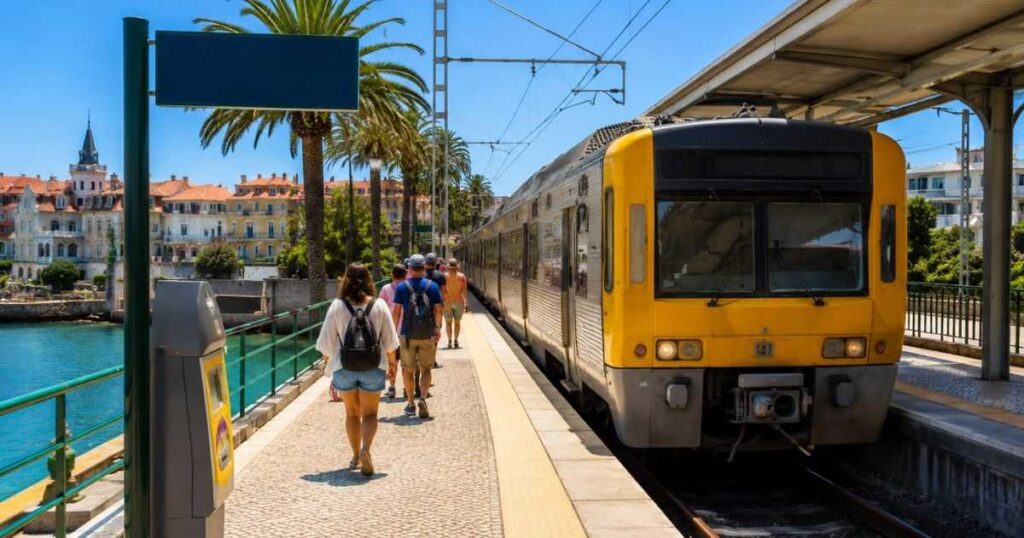
The Linha de Cascais is the urban train line that runs the entire Lisbon to Cascais route without a single transfer. The train departs from Cais do Sodré station in central Lisbon, which connects directly to Lisbon’s green metro line, making it easy to reach from any neighborhood in the city. Cascais station sits right in the center of town the walk from the platform to the main beach takes under eight minutes.
A single adult ticket from Lisbon to Cascais costs €2.55 and a child ticket costs €1.30. The ticket is not a paper slip it loads onto the reusable Navegante card, which costs €0.50 for the card itself. Every traveler needs their own card. You cannot buy a ticket without the card and you cannot share one card between two people. The card machines at Cais do Sodré have an English-language option: select your destination, pay by card or cash and the machine issues the Navegante card with the fare already loaded.
The Linha de Cascais runs from 5:30am to 1:30am daily, with trains departing both Cais do Sodré and Cascais at roughly every 20 minutes. During rush hours, services run more frequently. There are no bookable seats and no reserved carriages. The train fills from the middle people boarding at each stop along the route so getting on at Cais do Sodré gives you the best chance of a seat.
Sit on the left side of the carriage facing forward. From the stop at Algés onward, the tracks run directly alongside the water and you get an uninterrupted view of the Atlantic coast for the last 20 minutes of the journey. On a clear morning, you can see surfers at Estoril Beach from the train window.
The Lisbon to Cascais train gets extremely crowded on summer weekends, particularly in July and August, with some passengers standing the entire 40 minutes. Leave Cais do Sodré before 8:30am on a Saturday or Sunday to get a guaranteed seat. The crowds thin considerably on weekday mornings a Tuesday in June, for example, you will walk straight onto an almost empty carriage.
Pro Tip: Keep your Navegante card for the return journey. You do not need to recharge it the €2.55 single fare covers one trip only, so load a return at the machine before you board at Cais do Sodré. Total round-trip cost: €5.10 per adult.
What to Do First When You Arrive in Cascais
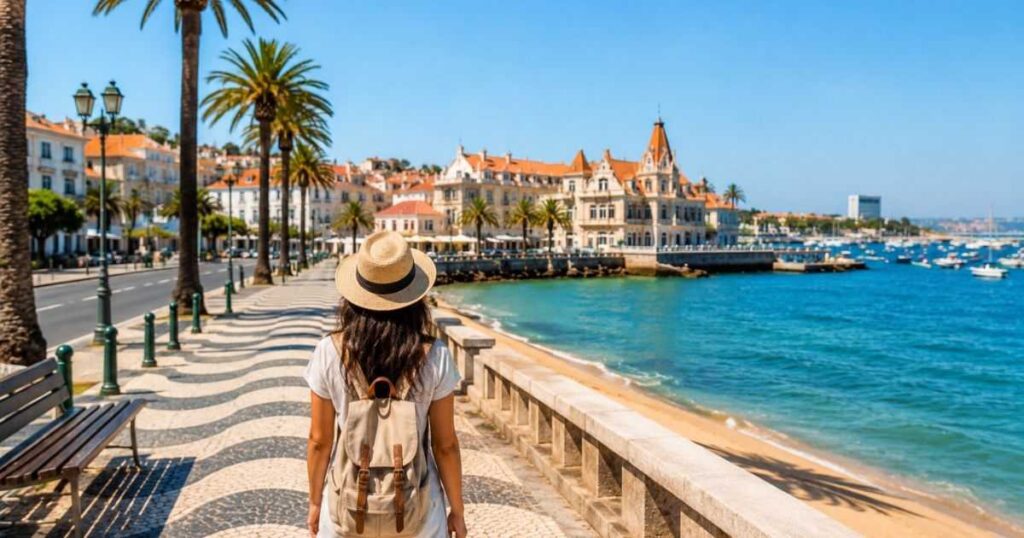
The moment you step out of Cascais station, turn left and walk toward the sea. The main waterfront promenade is a wide, flat esplanade that runs between the beach and the marina connecting every part of the town center in about 15 minutes on foot. At the heart of Cascais lies a compact historic center, where you will find the fortified Cidadela de Cascais, the Condes de Castro villa and the food street of Rua Amarela.
The Cidadela de Cascais, a former fortress by the marina, now houses contemporary art spaces alongside sea views and serves as a logical starting point for exploring the town. Entry to the art district inside the citadel walls is free. The exhibitions rotate every few months and draw almost no tourists most visitors walk straight past the gate heading for the beach.
Walk west from the marina along Avenue Rei Humberto II de Itália toward Boca do Inferno. This coastal road is flat, suitable for all fitness levels and wide enough to serve as a shared cycle path that continues all the way to Guincho Beach. The walk from the station to Boca do Inferno takes about 25 minutes at a relaxed pace.
Boca do Inferno is at its most dramatic during high tide or when the sea is rough, with waves crashing into the chasm and sending spray high above the clifftop. The name means Hell’s Mouth and on a stormy November afternoon, the name earns itself. Most tourists spend 10 minutes at the main viewing platform and leave. Walk another 200 meters west along the cliff path and you reach a secondary viewpoint that is quieter and gives a direct look into the arch from above. Always stay behind the designated barriers the cliffs are steep and the rock edges are uneven.
A Nova Estrela is a small, family-run restaurant hidden from the tourist circuit near the town center, serving home-style Portuguese classics like grilled dourada and bacalhau com natas at prices well below the marina-front restaurants. A full lunch with bread, wine and a main course costs around €13–€16 per person here. Walk one block back from any beach-facing street and you leave the tourist markup behind.
Pro Tip: Jardim dos Frangos has been a Cascais institution since 1974 and serves the town’s most respected piri-piri chicken. It is cheap, busy at lunch and requires no reservation. Order the half chicken with fries and a Sagres beer total cost around €9–€11 per person.
The Beaches Along the Lisbon to Cascais Coastline
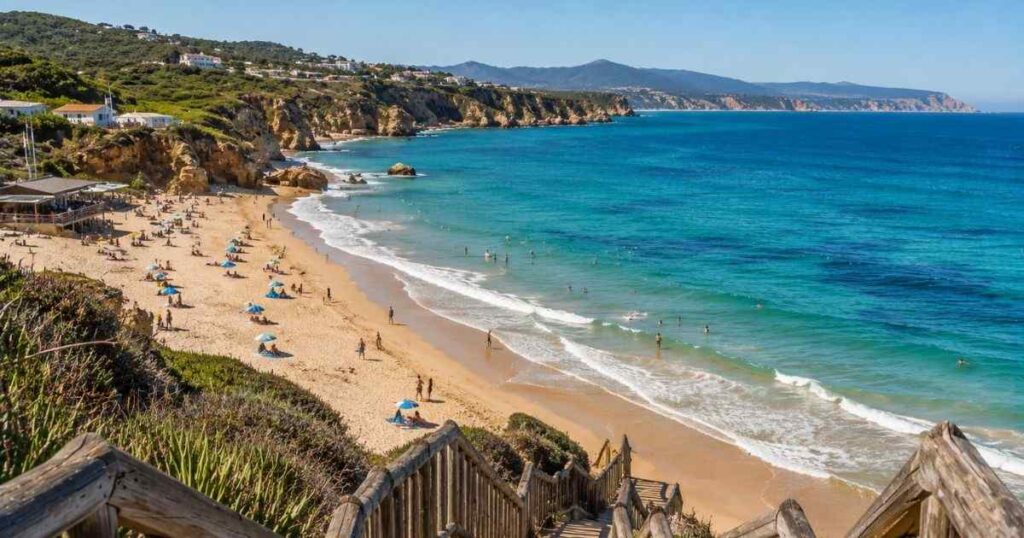
The Lisbon to Cascais train line runs alongside a string of beaches and you can get off at any stop to swim. Each beach has a different mood. Praia de Carcavelos, 20 minutes from Lisbon by train, is the longest beach on the line roughly 1 kilometer of sand with dependable surf and a young, active crowd. It fills up fast on summer weekends but stays manageable on weekday mornings.
Estoril station is one stop before Cascais. Praia do Estoril sits directly in front of the Estoril Casino building, faces the protected bay and attracts calmer water than the beaches further west. Estoril station is also a hub for local buses and taxis, making it easy to combine with a short visit to the Casino, which is the largest in Europe.
In Cascais town, Praia da Conceição and Praia da Duquesa stretch east of the center in one long sweep. These beaches have sunbeds, cafés and easy access from the train station and tend to fill up in summer but they remain practical if you want to lay out a towel without traveling further. Sunbed rental costs €10–€12 per day.
Praia da Rainha, small and tucked into the cliff face, was once the private beach of Queen Amelia in the 1880s and remains one of the least-crowded spots in the town center despite being just 10 minutes on foot from the station. You access it via stairs cut into the cliff. In July and August, arrive before 9am. The rest of the year, you can show up at any hour.
Praia do Guincho, 9 km northwest of Cascais, is a vast, wild beach exposed to strong prevailing Atlantic winds and powerful waves, sitting within the Sintra-Cascais Natural Park. It is the best surf and kite-surf beach in the region and it never gets as crowded as the town beaches because the wind makes long sunbathing sessions uncomfortable. Bus 405 or 415 from the terminal behind CascaisVilla shopping mall next to the train station runs regularly to Guincho, with the journey taking about 20 minutes.
Pro Tip: Guincho Beach faces directly west. At 6:30pm in summer, the sun drops straight into the ocean on the horizon. Bring a jacket the wind picks up sharply after 3pm and stay for a sunset that the town beaches, which face south, cannot replicate.
Where to Eat in Cascais Without Paying Tourist Prices
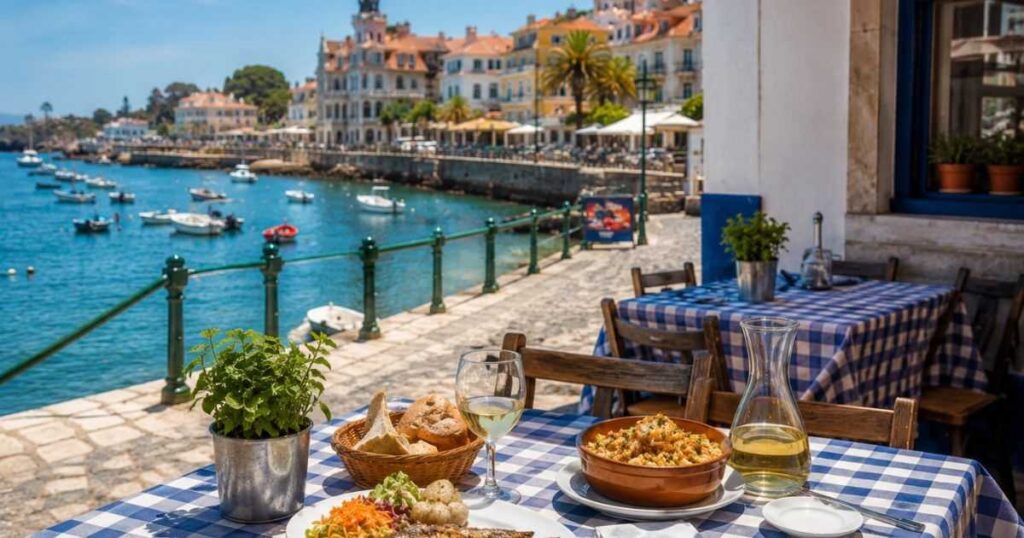
Manjar da Vila is a well-regarded local restaurant offering a constantly changing menu of fresh Portuguese dishes, with a lunch option at €8.50 for a full meal of bread, a main course and dessert. It draws a regular local crowd and rarely appears in the first wave of tourist recommendations. The seafood rice and grilled octopus are both consistently ordered.
Flecha Azul sits on a side street just off the main tourist drag and consistently earns the description “authentic Portuguese experience” from visitors who find it. Most tourists walk past without noticing it because the entrance is unremarkable and there is no English-language menu board outside. That is exactly the point. A full fish lunch here runs €12–€15 per person.
For the Mercado da Vila the covered market two blocks north of Praia da Rainha arrives before noon on any day from Tuesday through Sunday. Local vendors sell fresh pastéis de nata for €1.20 each, aged cheeses, smoked sausages and vacuum-packed salted cod to take home. A market breakfast of a pastel de nata, a coffee and a fresh orange juice costs €4–€5 and takes 15 minutes.
The yellow hot dog van on the coastal road between Cascais Marina and Boca do Inferno has been a Cascais fixture since 1986. António Novais started it at age 19 after returning from Venezuela, adding cheese, cabbage, fries and sauces to what was otherwise a plain sausage roll and it became a regional landmark. It costs under €5 and you eat standing on the clifftop path with the Atlantic directly below. This is not a tourist recommendation, this is what Lisbon families eat on Saturday afternoons when they make the Lisbon to Cascais trip.
Pro Tip: Santini Ice Cream has been operating in Cascais for decades and uses natural fruit flavors that no chain gelato brand replicates. The raspberry and the coffee with real beans are the two flavors worth specifically ordering. Expect a queue of 10–15 minutes in summer. Join it anyway.
Best Time to Make the Lisbon to Cascais Trip
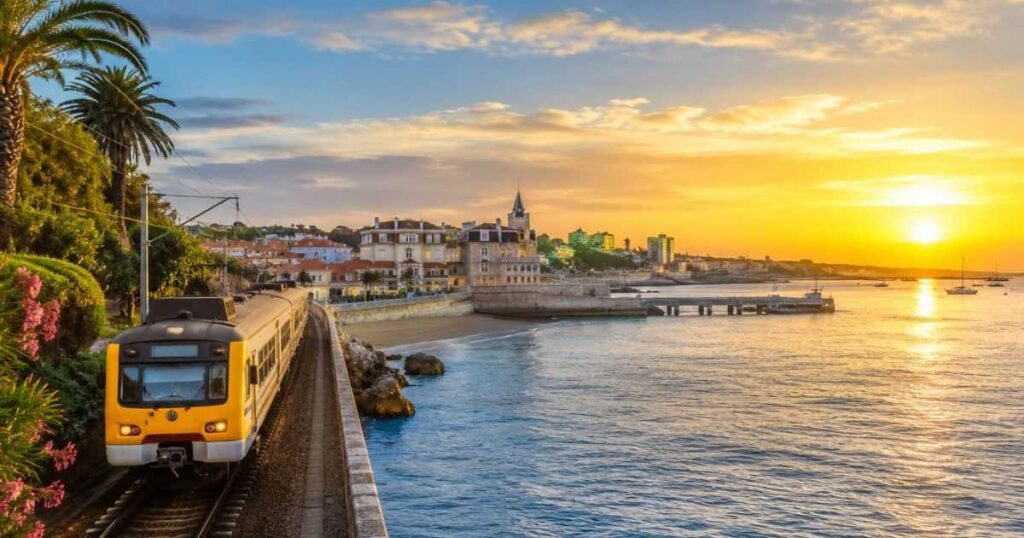
July and August bring the heaviest crowds, as Lisbon locals head to the coast to escape the city heat. May, June and September offer warm weather with far fewer people. In June, sea temperatures at Cascais reach 18–19°C cool but swimmable and the town operates at about 60% of its peak-season capacity. September is the sweet spot: water temperatures hit 20–21°C after a full summer of warming, the tourist numbers drop noticeably after the first week and restaurant tables open up without needing a reservation.
October and April both work well for the Lisbon to Cascais day trip if your focus is walking, eating and exploring rather than swimming. The clifftop walk to Boca do Inferno is more dramatic in October the Atlantic swell builds, the waves are larger and the coastal light turns golden for longer stretches of the afternoon. A mid-range lunch in October costs €10–€13 per person compared to the €16–€20 you pay at the same restaurant in August.
In winter, Cascais leans into its cultural side. The Paula Rego Museum and the Condes de Castro Guimarães Museum offer a warm break from cooler days and the Mercado da Vila and the town’s seafood restaurants remain open and uncrowded. The Linha de Cascais train runs on the same schedule year-round and costs the same regardless of season.
One detail that most guides covering the Lisbon to Cascais route miss entirely: the light in late September and early October transforms the clifftop walk between the town center and Guincho. The sun sits lower, the Atlantic turns a deeper shade of green and the coastal path at Boca do Inferno glows in a way that July’s bright overhead sun cannot produce. If you own a camera, this is when you come.
Pro Tip: Book two nights in Cascais for a late September stay on Tuesday and Wednesday. Midweek pricing drops 25–35% compared to Friday and Saturday nights and the town at 8pm on a quiet Tuesday with locals eating dinner and the marina lit up is the version of Cascais that most day-trippers never see.
Practical Tips for the Day Trip From Lisbon to Cascais
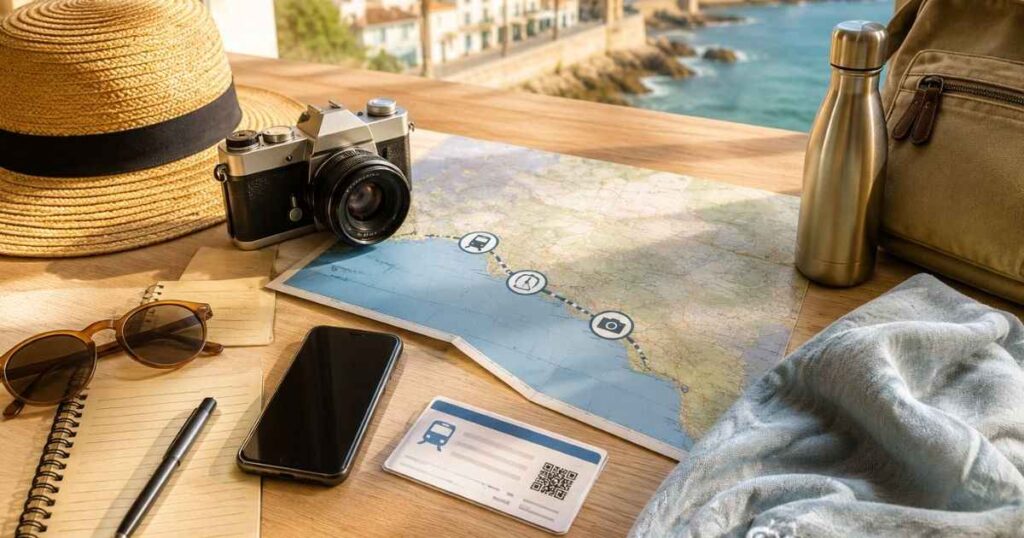
A well-planned Lisbon to Cascais day trip runs on a simple schedule. Take the 8:02am train from Cais do Sodré, arrive at Cascais at 8:43am, walk the clifftop route to Boca do Inferno before 10am while the light is low and the path is quiet, stop for a market breakfast on the way back, reach the beach by 11am, eat lunch at an inland restaurant at 1pm and leave Cascais on the 4pm train. That sequence gives you nearly eight full hours without rushing a single part of it.
A taxi from Cascais train station to Boca do Inferno costs €7–€9 but finding one for the return journey is unreliable. Bolt and Uber both operate in Cascais and charge €4–€5 for the same route, making them the practical choice for families with young children or anyone who wants to cover distance quickly.
Several bike rental shops near the station offer half-day hire at around €10–€15. The coastal bike path between Cascais and Estoril is flat, paved and runs alongside the water for 3 km, one of the most pleasant cycling routes in the Lisbon region. Cycling to Guincho from the town center takes about 30 minutes on the coastal road in the morning, harder in the afternoon once the Atlantic wind builds.
A realistic single-day budget per person for the Lisbon to Cascais trip: €5.10 round-trip train ticket, €4–€5 market breakfast, €13–€16 lunch at an inland restaurant, €3–€5 coffee and afternoon snack and €10–€12 sunbed hire if you want one. Total: €35–€48 for a full day with no major entry fees. The Condes de Castro Guimarães Museum charges €3 entry and the Cidadela art district is free.
On the return journey from Cascais to Lisbon, trains get packed between 5pm and 8pm on summer weekends, with everyone leaving the beach at the same time. Leave by 4pm or wait until after 8pm to travel in comfort.
Pro Tip: The Cresmina Dune Interpretation Center near Guincho Beach is free to enter and has elevated walkways above the dune ecosystem with direct views to the ocean. It provides information on the flora and fauna of the dunes without disturbing the natural environment. Almost no one on the standard Lisbon to Cascais day trip visits it which makes it one of the calmest spots on the entire coastline.
You may also like:
Best Things to Do in Split, Croatia
Frequently Asked Questions
How many days do you need in Cascais?
One day covers the main beaches, the Boca do Inferno walk and the historic center on a day trip from Lisbon. Two nights allow you to visit Guincho Beach, cycle the coastal path to Estoril, eat dinner at a sit-down restaurant without rushing and see the town after the day-trippers have left on the evening trains. Three days works if you plan to combine Cascais with a day trip to Sintra, reachable by bus 403 from Cascais station in about 40 minutes.
Is Cascais worth visiting as a day trip from Lisbon?
The Lisbon to Cascais day trip consistently delivers more than visitors expect. Most people arrive at the beach and leave having walked dramatic clifftops, eaten grilled fish at a local price and discovered a town with 150 years of royal history and a genuinely working waterfront. The €5.10 round-trip train ticket makes it the cheapest day out available from Lisbon and the 40-minute journey is one of the most scenic rail trips in Portugal.
What is the best time to visit Cascais?
May, June and September give the best balance of warmth, manageable crowds and reasonable restaurant prices. July and August are the warmest months but also the busiest, with the Lisbon to Cascais train filling up by mid-morning on weekends. October suits visitors focused on walking and culture rather than swimming, with water temperatures still around 18–19°C and far fewer tourists competing for tables.
Is Cascais expensive for tourists?
Cascais is the most affluent town in the Lisbon region but it remains significantly cheaper than comparable coastal destinations in Spain, France or Italy. A full grilled-fish lunch with wine and bread costs €13–€18 per person at a mid-range restaurant away from the marina. The Lisbon to Cascais train at €2.55 each way is among the cheapest transport options in Western Europe for a coastal day trip. Budget travelers who eat at the Mercado da Vila and avoid the waterfront terrace restaurants can keep daily food costs under €20.
Is Cascais better than Sintra for a day trip from Lisbon?
They serve different purposes. Sintra is for palaces, hillside gardens and architecture it requires more walking, more queuing and costs more in entry fees, with the Pena Palace alone at €14 per adult. Cascais is for the coast, the open air and a slower pace most of what makes it worth visiting is free. If you have two days outside Lisbon, do both. If you have one day and you want the beach, take the Lisbon to Cascais train. If you want something more visual and culturally dense, go to Sintra.
Conclusion
The Lisbon to Cascais train journey is the easiest decision you will make in Portugal. Thirty kilometers separates the capital’s busy hills from a coastline that runs from a former royal resort town all the way to wild Atlantic dunes at Guincho. The full-day version of this trip early train, clifftop walk before the crowds, market breakfast, beach, local lunch, late afternoon departure costs under €50 and feels like a full trip inside a trip. Take the 8:02am train from Cais do Sodré, walk west from the station toward Boca do Inferno while the morning light still sits low on the cliffs and stay long enough to eat lunch somewhere without an English menu board outside. That combination is what the Lisbon to Cascais trip actually is and it is more than most people expect to find 40 minutes from where they started.

