
Most people fly into Split thinking it is just a ferry stop for Hvar. They spend six hours, tick off Diocletian’s Palace and leave on the next boat. That is one of the biggest mistakes you can make in Croatia. Split is a living Roman city 1,700 years old, still breathing, still loud where locals hang laundry inside ancient palace walls and argue football over $3 espresso.
This guide covers the best things to do in Split, Croatia, for travelers who want more than a quick selfie at the Peristyle. You will find specific prices, distances, the activities most visitors skip and honest advice on timing your visit.
In This Guide You Will Find:
- The exact entry fees and opening hours for Diocletian’s Palace and Klis Fortress
- Which beaches to go to based on whether you want sand, pebbles or total seclusion
- How to do a Hvar day trip from Split for under €50 total
- The one neighborhood (Varoš) that almost no tourist bothers to explore
- A day-by-day breakdown for a 3-day itinerary in Split
- What to eat, where to eat it and how much a real local meal costs in 2026
Quick Info Box
| Detail | Info |
| Location | Dalmatia Coast, southern Croatia |
| Nearest Airport | Split Airport (SPU) 24 km from city center (~25 min by car) |
| Best Time to Visit | May–June and September (fewer crowds, 25–28°C) |
| Travel Time from Zagreb | 5 hours by bus, 6 hours by car, 1 hour by plane |
| Days Recommended | 3–5 days (5 if adding island day trips) |
| Average Daily Cost | €60–€100 per person (mid-range, including accommodation) |
Things to Do in Split Croatia: Start at Diocletian’s Palace (But Do It Right)
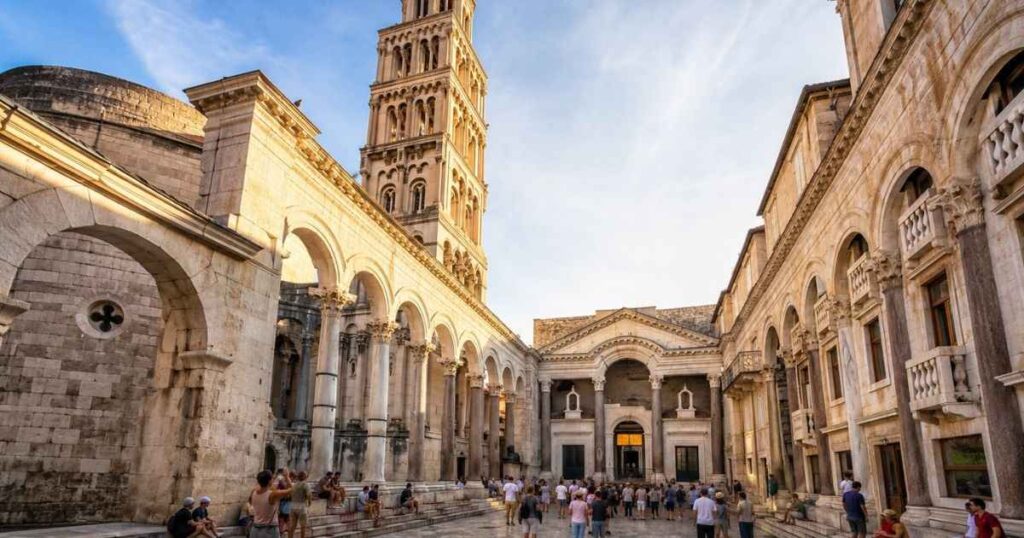
Diocletian’s Palace is not a ruin. That distinction matters the moment you walk through the Golden Gate and realize people live, work, eat and drink inside a 3rd-century Roman emperor’s retirement home. The palace covers 30,000 square meters and forms the entire core of Split’s Old Town, a UNESCO World Heritage Site since 1979.
Most visitors walk through the Peristyle Square, look at the Cathedral of Saint Domnius (the converted mausoleum of Emperor Diocletian himself) and leave. The cathedral charges €5 for entry to the main floor and €3 more to climb the 60-meter bell tower worth every kuna for the unbroken view of the Adriatic. What most tourists miss are the underground cellars (Podrum), directly beneath the palace. Entry costs €10 and the vaulted Roman halls are the closest thing you will find to walking through ancient Rome without flying to Italy.
The palace substructure also hosted scenes from Game of Thrones (the dragon catacombs in Meereen were filmed here), which now draws a separate wave of visitors. Go before 9:00 AM or after 6:00 PM to move through the cellars without a crowd pushing you from behind.
Pro Tip: Enter through the Bronze Gate on the south side (facing the Riva promenade) to arrive directly in the underground cellars most tourists pour in through the Golden Gate on the north and miss the basement entirely.
Split Croatia Beaches: Where to Swim and When
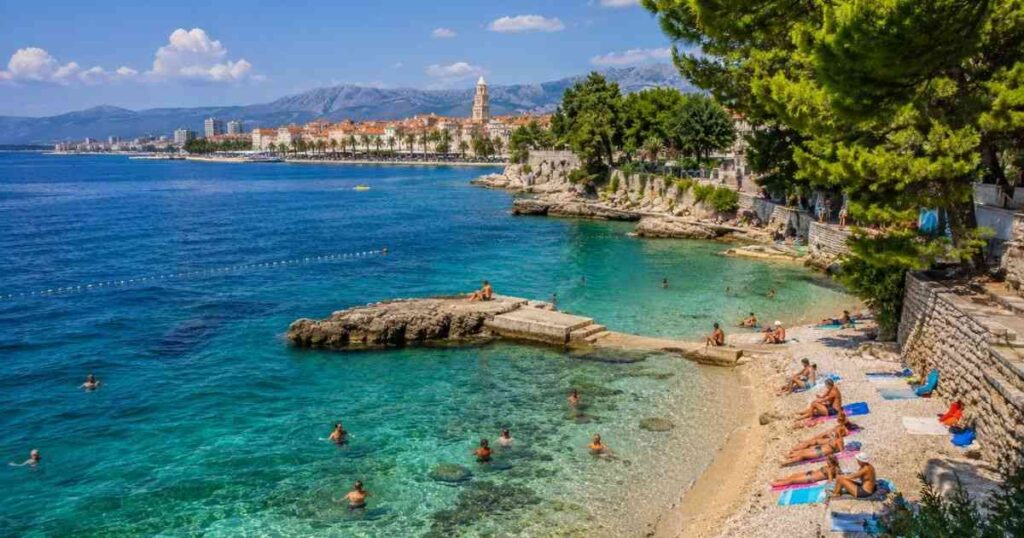
Split does not have the powdery white sand beaches that postcards promise and that is not a complaint. The beaches here are pebble and concrete but the Adriatic water runs 27°C in July and stays clear enough to see the bottom at 4 meters. Knowing which beach to choose saves you a 40-minute bus ride to somewhere worse.
Bačvice Beach sits a 10-minute walk east of the Old Town ferry terminal. It is Split’s most famous beach and the birthplace of picigin, a local ball game played in shallow water that you will see every summer morning. The beach gets crowded by 10:00 AM in July and August but the surrounding beach bar area runs until 4:00 AM. Entry is free. Kaštelet Beach on the Marjan Peninsula requires a 30-minute walk or a short bus ride (line 12 from the city center) but it is quieter, tree-shaded and mostly used by locals. The water is consistently cleaner than Bačvice.
For the most secluded swim near Split, take the 35-minute drive (or organized day tour) to Zlatni Rat beach on Brač Island, a distinctive shingle cape that shifts shape with the current. The Jadrolinija ferry to Supetar on Brač costs €9 one-way and runs hourly in peak season.
Pro Tip: Visit Bačvice Beach on a weekday morning in June rather than August. Water temperature is nearly identical (24°C vs. 27°C) but you will share the beach with a fraction of the August crowd.
Day Trips from Split, Croatia: Islands and Canyons
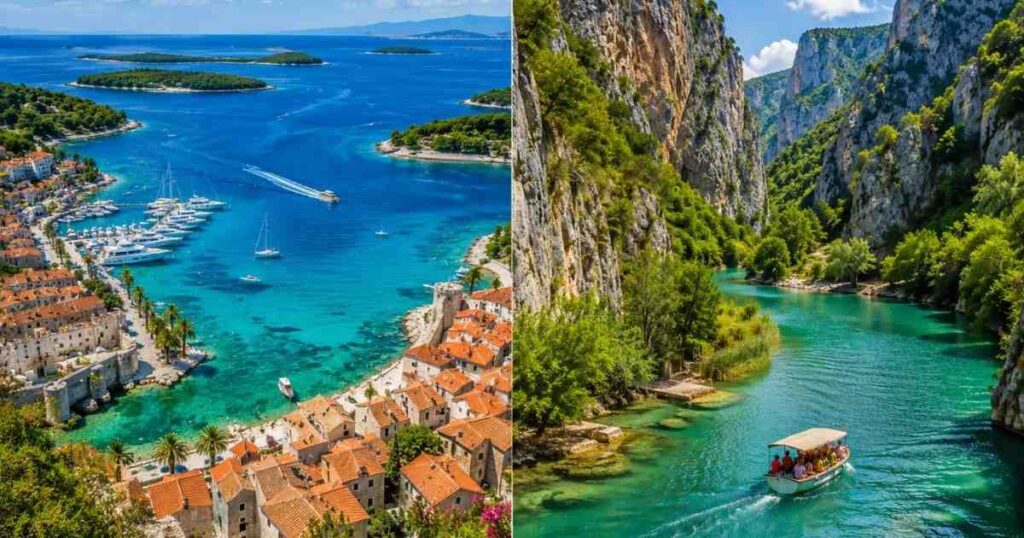
Split’s location makes it one of the best-connected cities on the Adriatic. Within 90 minutes, you can reach three completely different environments: island vineyards, Roman ruins and river canyons.
Hvar Island is the most popular day trip from Split and for good reason. The Jadrolinija car ferry to Stari Grad takes 2 hours and costs €11 one-way per person the passenger catamaran to Hvar Town takes 1 hour and costs €8 one-way. Once there, the Hvar Town fortress (Fortica) charges €10 entry and delivers a panoramic view across the Pakleni Islands. The lavender fields between Hvar Town and Stari Grad peak in late June this specific window makes Hvar worth visiting even without beaches.
Klis Fortress, 13 km north of Split, charges €12 for adults and takes 30 minutes by car or 45 minutes on bus line 22. The fortress sits on a sheer cliff above the valley and served as the Game of Thrones filming location for the city of Meereen. It is significantly less visited than Diocletian’s Palace despite being historically older. Cetina Canyon, 25 km southeast of Split near the town of Omiš, offers rafting tours for €35–€45 per person (3-hour guided trips depart daily May through October). The canyon walls reach 180 meters and the water runs turquoise in summer, one of the most visually dramatic landscapes within an hour of Split.
Pro Tip: Book the Hvar catamaran online at Jadrolinija.hr at least 24 hours in advance during July and August walk-up tickets regularly sell out before 9:00 AM.
Things to Do in Split Croatia: Hidden Spots Most Visitors Miss
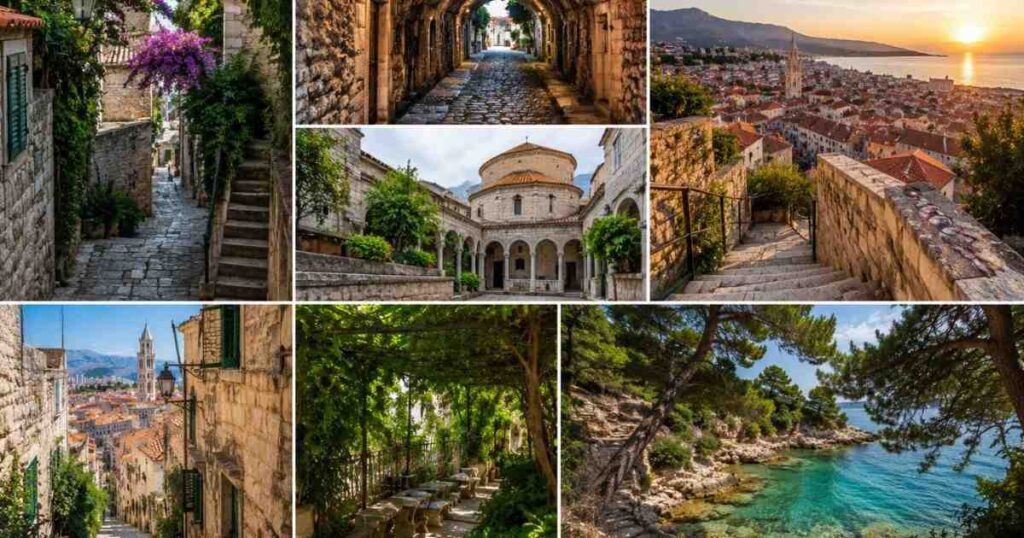
The neighborhood of Varoš sits directly behind the Diocletian’s Palace complex and receives almost none of the tourist traffic that floods the Old Town. It is an authentic 19th-century Dalmatian district with narrow stone lanes, cats sleeping on doorsteps, no souvenir shops. Walk up through Varoš to reach Marjan Hill, a forested peninsula that rises 178 meters above the city and gives you an unobstructed view from the islands of Šolta and Brač to the Mosor mountain range inland. The walk from the Old Town to the top viewpoint takes 40 minutes. There is no entry fee.
The Gregory of Nin Statue outside the Golden Gate is a bronze sculpture by Ivan Meštrović, one of Croatia’s most significant 20th-century sculptors. Every guidebook tells you to rub the statue’s big toe for good luck. What they do not mention is that Meštrović’s full museum, a Renaissance-era villa 2 km west of the palace displays 200 of his original works and charges only €8 entry. It draws perhaps 5% of the visitors that queue for the toe photo.
For food, skip the tourist-facing restaurants on the Riva promenade. A grilled fish plate at those spots costs €22–€30. Walk two streets inland to Fife restaurant near the city market, a local institution where a full plate of pašticada (slow-braised beef in prune sauce, the definitive Dalmatian dish) with bread and wine costs under €14.
Pro Tip: The Split City Market (Pazar) opens at 7:00 AM daily and closes by noon local fishermen sell the morning’s catch directly from ice-filled crates at prices 40% lower than any restaurant on the Riva.
Practical Tips for Visiting Split, Croatia in 2026
Split Airport connects to over 30 European cities with direct flights and seasonal routes from the UK, Germany and the Netherlands run May through October. A taxi from the airport to the Old Town costs a fixed €35 the public shuttle bus (Pleso Prijevoz) costs €7 and takes 35 minutes. Uber operates in Split but availability drops outside the city center.
Getting around Split itself requires almost no transport the Old Town is entirely walkable and most beaches are within 20 minutes on foot or a short bus ride. The city bus network charges a flat €1.50 per journey. Renting a scooter costs €30–€45 per day and gives access to coves along the Marjan coast that buses do not reach.
Split is notably cheaper than Dubrovnik. A mid-range hotel in the Old Town runs €90–€140 per night in July 2026 the equivalent room in Dubrovnik’s Old Town costs €180–€260. A cappuccino on the Riva costs €2.50 the same coffee at Dubrovnik’s Stradun runs €4. If your Croatia trip includes both cities, base yourself in Split and take the 4.5-hour bus to Dubrovnik as a day trip (€15 one-way on FlixBus).
Pro Tip: Avoid driving into the Old Town entirely the limited parking fills by 9:00 AM in summer and fines for illegal parking run €50. Use the Joker parking garage 600 meters from the Golden Gate at €1.50 per hour.
You may also like: Unique Things to Do in Porto: Hidden Gems, Nightlife & River Views Guide
FAQ’s
How many days do you need in Split, Croatia?
Three days is enough to cover Diocletian’s Palace, Marjan Hill, Bačvice Beach and one island day trip to Hvar. Five days lets you add Klis Fortress, Cetina Canyon rafting and a day on Brač Island without feeling rushed. Travelers who rush Split in one day miss the city’s actual character the early morning market, the late-night Riva and the neighborhoods behind the palace walls.
Is Split, Croatia worth visiting in 2026?
Split remains one of the best-value coastal destinations in the Mediterranean in 2026. Daily costs run €60–€100 for a mid-range traveler, which is roughly 30–40% cheaper than comparable summer destinations like Santorini or the Amalfi Coast. The city’s combination of UNESCO Roman history, Adriatic beaches and island access within 60 minutes by ferry makes it difficult to match for variety within a single base.
What is the best time to visit Split, Croatia?
June and September are the best months to visit Split. June delivers full beach weather (24–27°C water temperature), all ferries and tours running at full schedule and crowds that are manageable compared to August. September offers the same conditions with noticeably lower accommodation prices and quieter streets after European school holidays end. July and August bring peak pricing, ferry queues and 35°C heat that makes midday sightseeing uncomfortable.
Is Split, Croatia expensive for tourists?
Split is moderately priced by Western European standards and clearly cheaper than Dubrovnik. A sit-down lunch at a non-tourist restaurant costs €10–€14 including a glass of local wine. A ferry to Hvar costs €8–€11 one-way. Museum entry across Split averages €8–€12 per attraction. The main expense is accommodation. Old Town apartments book out months in advance for July and command 60–80% higher prices than May or September equivalent options.
Is Split better than Dubrovnik for a Croatia trip?
Split suits travelers who want more variety, lower costs and a city that functions as a real place rather than a heritage theme park. Dubrovnik’s walled city is visually more dramatic but its streets hold fewer residents and more souvenir stalls per square meter. Split has a working port, a daily market, local neighborhoods and island access across a wider range (Hvar, Brač, Šolta, Vis) than Dubrovnik offers. For first-time visitors to Croatia who want history, beaches and islands from one base, Split is the stronger choice in 2026.
Conclusion
The best thing about Split is that most visitors underestimate it. They treat it as a transit hub rather than a destination, which means the city rewards the travelers who actually stay. The things to do in Split, Croatia stretch far beyond the palace gates from the canyon walls at Cetina to the lavender hills of Hvar, from the 7:00 AM fish market to the midnight picigin games at Bačvice.
Book three nights minimum not one. On your last evening, walk up to the Marjan Hill viewpoint 30 minutes before sunset, find a seat on the stone steps and watch the light turn the Adriatic the color of an old Roman fresco. That view costs nothing and belongs entirely to you.

