
Most travelers book a hotel in Lisbon and spend the next three days realizing they picked the wrong neighborhood. The city looks compact on a map and it is but staying in Alfama feels nothing like staying in Chiado and neither feels like Príncipe Real. Lisbon is built on seven hills and which hill you sleep on changes your entire experience. This guide tells you exactly where to stay in Lisbon based on your travel style, budget and what you actually want to do each day, no vague suggestions, just the specific details that make the difference.
In This Guide You Will Find:
- Which neighborhood suits first-timers versus repeat visitors
- Exact hotel price ranges for budget, mid-range and luxury stays in each area
- Which streets to avoid and why including one popular district with a specific noise problem
- Where to stay in Lisbon for quiet mornings versus late nights
- The one area most tourists overlook that gives you a local feel at lower prices
- Which months make certain neighborhoods crowded beyond comfort
Quick Info
| Detail | Info |
| Country | Portugal |
| Nearest Airport | Humberto Delgado Airport 7 km from city center |
| Best Time to Visit | March–May and September–October |
| Travel Time from Madrid | ~3 hours by flight |
| Days Recommended | 4–6 days |
| Average Daily Cost | €100–€150 mid-range |
Where to Stay in Lisbon: Chiado and Baixa for First-Time Visitors

If this is your first trip and you want to get everything right, the answer to where to stay in Lisbon is Chiado or Baixa. These two neighborhoods sit side by side in the flat center of the city and from here you can walk to São Jorge Castle in 20 minutes, reach the Alfama viewpoints in 25 minutes and board Tram 28 from your doorstep. Chiado has an upscale, unhurried energy independent bookshops, tile-fronted wine bars and cafes where a pastel de nata costs €1.20 and the espresso is taken seriously. Baixa is flatter, more grid-like and built after the 1755 earthquake on a clean Pombaline street plan that makes orientation easy from day one.
Hotels in Chiado and Baixa run €120–€250 per night for solid 4-star options. The Hotel da Baixa sits two minutes from Rossio train station and puts you directly on Rua Augusta, Lisbon’s main pedestrian shopping street. One thing most first-timers don’t realize: Baixa empties out after 9 PM. The daytime foot traffic disappears completely, which makes evenings surprisingly quiet for such a central location, a genuine advantage if you plan early mornings and need sleep without earplugs.
Deciding where to stay in Lisbon for the first time comes down to this: Chiado gives you café culture, restaurants from €12 to €35 per head and the feel of a city that genuinely works. Baixa gives you historic monuments within a 10-minute walk in every direction.
Pro Tip: Book a room on Rua do Carmo or a side street off Praça do Comércio you get the full central position without the tram noise that hits rooms facing Rua da Conceição directly.
Alfama: Atmosphere and Trade-offs Every Traveler Should Know
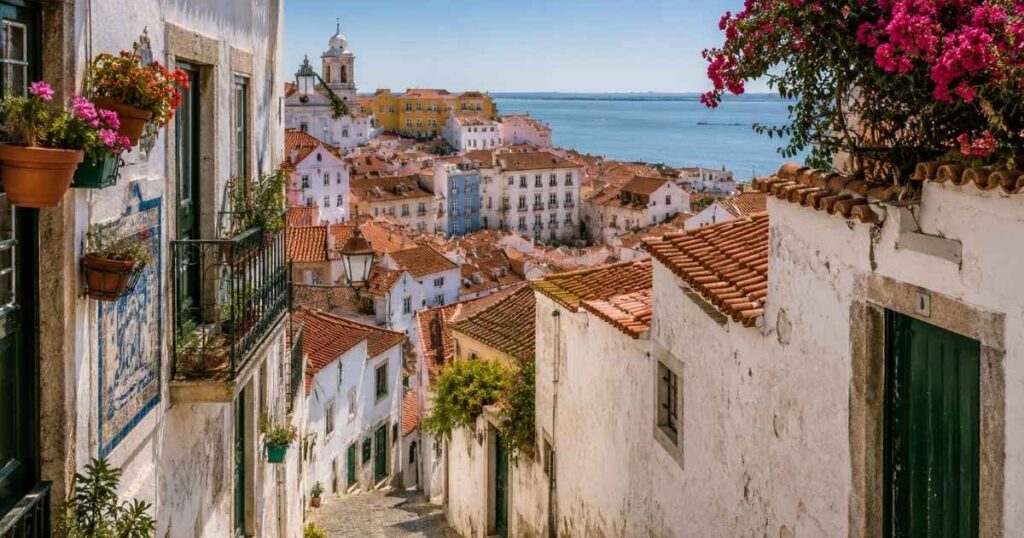
Alfama is the neighborhood where every travel photograph is taken in terracotta rooftops, narrow lanes and fado drifting out of a doorway at 10 PM. Staying here puts you inside that atmosphere rather than walking through it as an outsider. The Miradouro das Portas do Sol faces the Tagus river from 40 meters above street level. São Jorge Castle charges €15 per adult and stands at the very top of the hill. For travelers asking where to stay in Lisbon specifically for atmosphere and history, Alfama is the honest answer but with conditions attached.
The streets are steep cobblestones and a wheeled suitcase becomes a liability within the first five minutes. Getting a taxi or rideshare to your guesthouse door is often impossible because the lanes are too narrow for cars. Budget guesthouses in Alfama start at €60–€90 per night and boutique stays with castle views run €150–€200. The neighborhood draws its heaviest crowds between June and August, when the lanes around Largo do Chafariz de Dentro feel shoulder-to-shoulder by 7 PM.
If you want Alfama without the peak-season pressure, go in October or November. The light stays warm, the fado houses remain open and room prices fall 20–30% compared to July. Alfama rewards slow travelers who stay at least three nights. It takes that long to stop being a tourist in it and start feeling like a temporary resident.
Pro Tip: Stay near the base of Alfama close to the Museu do Fado rather than at the summit you can walk up to the viewpoints each morning without dragging luggage up 80 meters of cobblestone gradient on arrival day.
Bairro Alto and Príncipe Real: Where to Stay in Lisbon for Nightlife or Boutique Culture
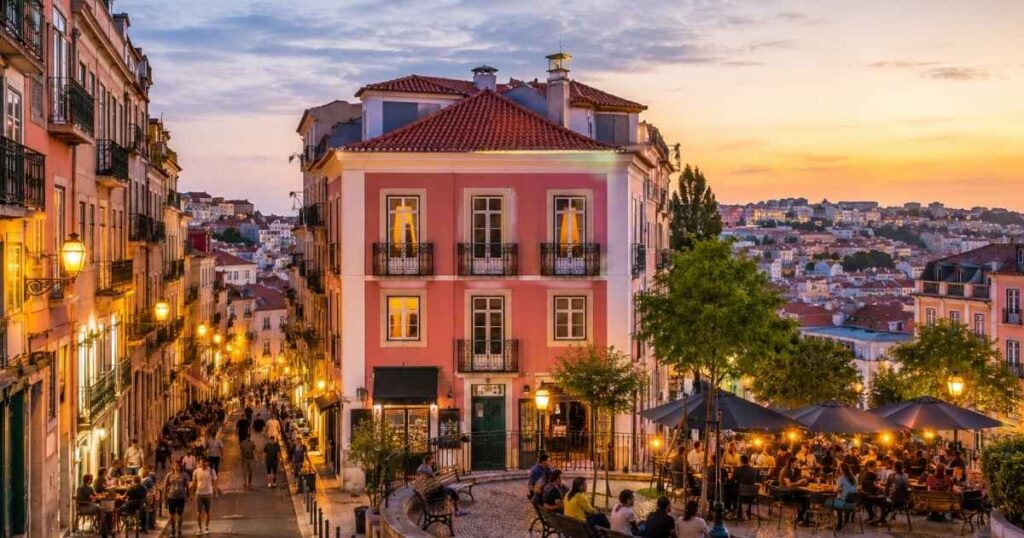
Bairro Alto and Príncipe Real sit beside each other on the western hill above Chiado but they serve completely different types of travelers. Bairro Alto is Lisbon’s traditional nightlife district bars on Rua do Norte and Rua da Atalaia stay open until 2 AM and the noise levels are real. Anyone wondering where to stay in Lisbon for late nights and a lively scene will find this neighborhood delivers exactly that. The Bairro Alto Hotel is the standout 5-star property here, a converted 18th-century palace with a rooftop terrace and Michelin-recognized dining rooms starting at around €350 per night.
Príncipe Real, three streets north, operates on an entirely different frequency. This is where Lisbon’s design-conscious residents actually live independent shops selling Portuguese ceramics and natural wine, a Saturday antique market that draws locals rather than tour groups and restaurants serving €18 lunch menus that would cost €40 in equivalent Chiado spots. The Memmo Príncipe Real hotel offers panoramic city views and minimalist rooms from around €180 per night. The neighborhood is quiet enough to sleep with windows open yet central enough to reach Chiado in a 12-minute walk downhill.
Most tourists skip Príncipe Real entirely when deciding where to stay in Lisbon, which is precisely what makes it worth choosing. The combination of lower prices, local atmosphere and easy access to the center makes it the most underrated base in the city.
Pro Tip: If Bairro Alto is tempting, check whether your hotel sits within two blocks of Rua do Norte. That street generates consistent noise until 2 AM seven nights a week, pack earplugs or move your search one street further north.
Avenida da Liberdade and Lapa: Comfort Without the Hill-Climbing
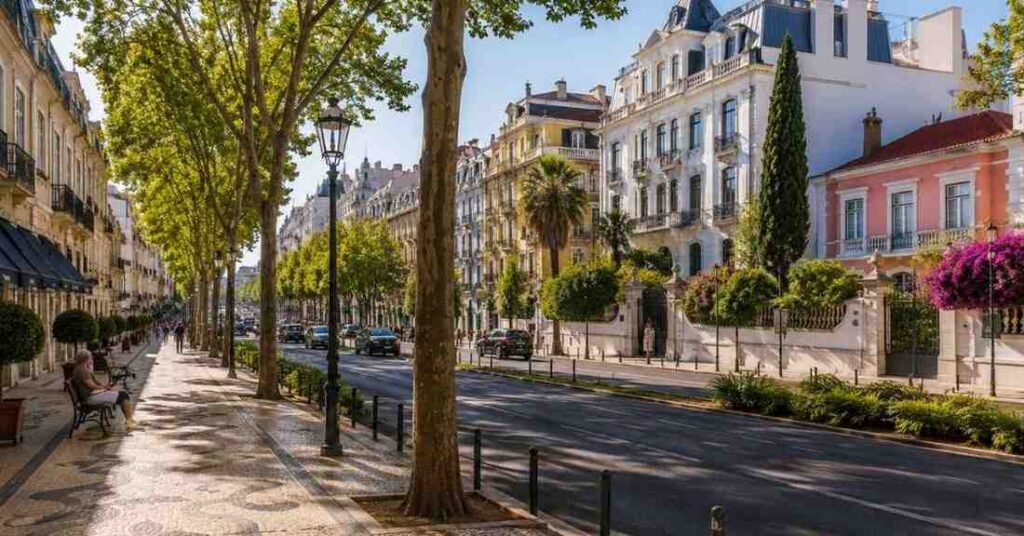
Avenida da Liberdade is Lisbon’s most elegant street, a 1.5 km tree-lined boulevard connecting the Marquês de Pombal roundabout to the Baixa district below. Travelers who want to know where to stay in Lisbon for comfort and flat walking will find the most straightforward answer here. The Four Seasons Hotel Ritz Lisbon anchors this area with rooms from €400 per night, a rooftop running track and Michelin-recognized facilities. Mid-range hotels on side streets run €100–€160 per night.
Lapa, slightly southwest, is Lisbon’s embassy district residential, safe and almost entirely overlooked by first-time visitors. The Jardim da Estrela is a 5-minute walk from most Lapa guesthouses, one of the city’s best parks and on weekday mornings it belongs almost entirely to local dog walkers rather than tour groups. Getting to the historic center from Lapa takes 15–20 minutes by Tram 25 or a €6 rideshare. Families, older travelers and anyone prioritizing sleep over proximity to nightlife consistently rate this area as their best choice in Lisbon.
These two neighborhoods trade Alfama’s atmosphere and Chiado’s buzz for space, ease and noticeably lower ambient noise. For a week-long stay rather than a long weekend, that trade often turns out to be the right one.
Pro Tip: April through May and September through October bring shoulder-season prices to this corridor. 3-star hotels drop to €80–€100 per night while daytime temperatures stay between 18–25°C.
Practical Tips Before You Decide Where to Stay in Lisbon
Lisbon’s public transport network is good enough that neighborhood location matters less for daytime sightseeing than it does for evening comfort a 24-hour Viva Viagem transport card costs €6.40 and covers metro, bus and tram across the city. The catch: the metro does not reach Alfama or Bairro Alto directly. Both depend on trams, buses or walking, which becomes a significant issue if you’re arriving with a large suitcase. Anyone making their final decision on where to stay in Lisbon should check transport access to their specific address before booking not after.
Peak season runs June through August temperatures exceed 30°C, hotel prices rise 30–40% above shoulder-season rates and Alfama and Chiado become genuinely crowded. Mid-range rooms that cost €120–€150 in October push to €200–€250 in July. Lisbon is also 21–31% cheaper than Barcelona at every hotel star rating a 4-star here averages €163–€201 per night versus €256 in Barcelona making it one of the strongest value propositions among major European capitals. Book at least 8 weeks ahead for any travel between May and September, as central Lisbon inventory in Chiado and Alfama fills consistently by that point.
Pro Tip: If you find your preferred neighborhood fully booked, Mouraria, the historic Moorish quarter adjacent to Alfama offers guesthouses from €70–€110 per night with the same hill atmosphere and fewer tourists per square meter.
You may also like:
Frequently Asked Questions
How many days do you need in Lisbon?
Four to five days gives you enough time to explore the main areas, do a day trip to Sintra by train (45 minutes from Rossio station, €4.65 each way) and eat at enough local tascas to understand the food. Three days is possible but leaves you rushing between Alfama, Belém and the center. Six days is comfortable if you also plan to reach Cascais or the Setúbal wine country.
Is Lisbon a good base for first-time visitors to Portugal?
Lisbon is one of the most practical entry points for first-time Portugal visitors the airport sits 7 km from the city center, the metro costs €1.61 per journey and English is spoken in every tourist area. Deciding where to stay in Lisbon is the most important planning decision you’ll make, since the right neighborhood gives you walkable access to the main sights, good restaurants under €15 per person and easy connections to day trips. The city consistently ranks among Europe’s best value capital cities, with mid-range daily costs of €100–€150 compared to €180–€260 in Paris, Amsterdam or London.
What is the best time to visit Lisbon?
March through May and September through October offer the best balance of weather, manageable crowds and hotel prices. April and October temperatures stay between 17–22°C with minimal rain ideal for walking across multiple neighborhoods in a day. July and August bring reliable sun but also peak crowds in Alfama and Belém, plus hotel prices 30–40% higher than shoulder season. December through February is mild by European standards, rarely dropping below 10°C and gives you the city with almost no tourist crowds outside of Christmas week.
Is it expensive to stay in Lisbon compared to other European cities?
Lisbon remains one of the most affordable major European capital cities for accommodation. Budget guesthouses start at €50–€90 per night, mid-range 3-star hotels average €80–€150 and 4-star options run €120–€250. The same 4-star quality costs 30–36% more in Barcelona. A three-course lunch at a neighborhood tasca costs €10–€14 per person and the metro fare is €1.61. Mid-range travelers consistently spend €100–€150 per day all-in, which places Lisbon well below Paris, Amsterdam, Rome and Madrid on daily cost comparisons.
Is it better to stay in Alfama or Chiado in Lisbon?
The answer to where to stay in Lisbon, Alfama or Chiado depends entirely on what you prioritize. Chiado is flat, central, metro-connected and surrounded by restaurants and shops within a 5-minute walk. It suits travelers who want ease of movement and a comfortable base for covering the whole city. Alfama has the fado, the castle, the viewpoints and the narrow medieval lanes but it also has steep cobblestones, limited car access and summer evening crowds. First-time visitors who haven’t researched the neighborhood typically find Chiado less exhausting travelers who’ve been to Lisbon before and know what they want typically choose Alfama specifically for the atmosphere it cannot be replicated anywhere else in the city.
Conclusion
Lisbon rewards travelers who choose their neighborhood deliberately. The city is compact every area in this guide sits within 3 km of Praça do Comércio but the difference between waking up in Chiado and waking up in Alfama is the difference between two entirely separate cities. Where to stay in Lisbon is really a question about what kind of daily experience you want: the effortless walkability of Chiado, the living history of Alfama, the quiet refinement of Príncipe Real or the comfort of Avenida da Liberdade. Once you know that answer, the booking takes five minutes. Book your first night at Rossio station’s neighborhood café, order a ginjinha at the counter like a local and let the city tell you whether you’ve chosen correctly.

