
Kona does not ask you to hike volcanoes or surf Waimea to earn its best experiences. A 65-year-old with a bad knee can watch manta rays from a boat at night, taste single-origin Kona coffee at the farm where it grew and swim with sea turtles in calm, protected bay water all without a strenuous step. This guide covers the best Kona tours for seniors, what they actually cost, which operators handle accessibility well and how to build a realistic itinerary that does not exhaust you before day three.
In This Guide You Will Find:
- The top 6 senior-friendly tours in Kona with exact prices and accessibility details
- Which snorkel spots work for seniors who haven’t snorkeled in years
- How the manta ray night tour works and why it suits older travelers better than most assume
- What most senior visitors to Kona miss: the upcountry coffee belt above 600 meters elevation
- The best months to visit Kona for calm water and manageable heat
- Practical transport tips for getting between tours without a rental car
Quick Info
| Detail | Info |
| Location | Kona, Big Island, Hawaii, USA |
| Nearest Airport | Ellison Onizuka Kona International (KOA) 11 km from downtown |
| Best Time to Visit | April–May, September–October |
| Travel Time from Honolulu | 45-minute flight |
| Days Recommended | 4–6 days |
| Average Daily Cost | $150–$220/person including tours |
Best Kona Tours for Seniors: Top Picks by Activity Type
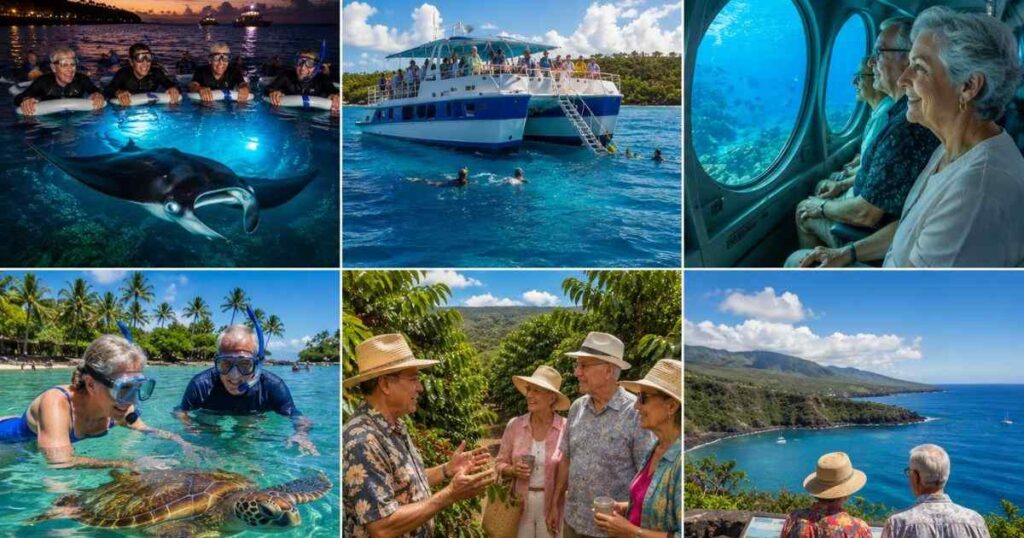
The manta ray night snorkel sits at the top of nearly every senior traveler’s Kona list and for good reason. Fair Wind Cruises runs a dedicated manta tour departing from Keauhou Bay, 8 km south of downtown Kona. You lie on a boogie board at the surface with no diving, no swimming ability required while underwater lights attract plankton and manta rays with wingspans of 3–4 meters glide beneath you. The tour costs $130–$145 per adult and lasts approximately 2.5 hours on the water.
Body Glove Cruises offers a morning snorkel and historical cruise that stops at Pawai Bay, a marine preserve where sea turtles feed regularly. The boat has a water elevator that lowers directly into the ocean, a critical feature for seniors who cannot manage a backward roll off the side. This tour runs $145 per adult, includes a buffet lunch and stays out for 4 hours. Most visitors don’t realize that Pawai Bay’s protected cove keeps water calm even when the open coast gets choppy in the afternoon.
For non-swimmers or travelers who prefer staying dry, a glass-bottom boat tour covers the same reef ecosystem without entering the water. Atlantis Submarines operates a 48-passenger submarine that descends to 30 meters below the surface off the Kona coast no swimming required, fully air-conditioned and accessible for most mobility levels. Tickets cost $115 per adult.
Pro Tip: Book the manta ray tour for a Sunday or Monday departure weekday boats carry fewer passengers and the manta viewing area feels significantly less crowded than Friday and Saturday nights when multiple operators arrive simultaneously.
Kona Coffee Farm Tours: The Senior Experience Most Visitors Skip
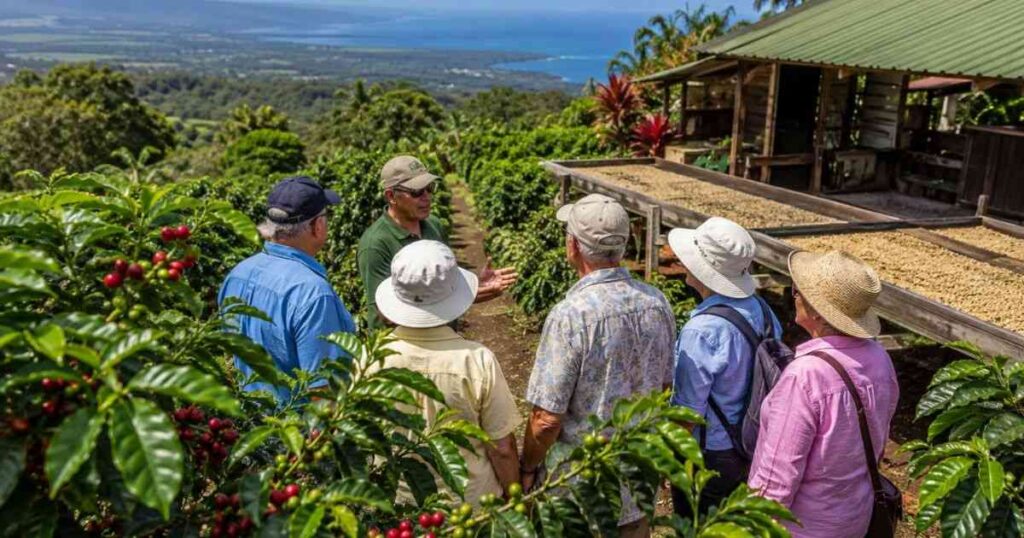
Most tourists stay on Ali’i Drive along the waterfront and never drive 20 minutes up Highway 180 into the coffee belt above Kealakekua. That is a mistake and it is the most common one senior visitors make in Kona. The Kona coffee growing region sits between 300 and 900 meters elevation on the slopes of Mauna Loa, where afternoon cloud cover keeps temperatures at 18–22°C noticeably cooler than the coast, which sits at 27–30°C in summer.
Greenwell Farms offers a free walking tour of their estate, one of Kona’s oldest coffee operations, established in 1850. The tour covers the full production process from cherry to roasted bean and takes 45–60 minutes on flat, paved paths. No booking required tours run continuously during operating hours. The farm sits on Highway 11 in Kealakekua, 19 km south of downtown Kona.
UCC Hawaii Farm offers a more structured paid tour at $30 per person that includes a cupping session where you taste multiple roast profiles side by side. The property also has a café and gift shop, making it a natural 2-hour stop. Kona coffee sells for $45–$65 per 250g bag on the farm significantly less than the same product shipped to mainland retailers.
Mountain Thunder Coffee Plantation in Holualoa sits at 610 meters elevation and offers a $20 farm tour with panoramic views across the coast. The walking paths are gentle and paved throughout and the facility has accessible restrooms, a detail that matters more than most tour descriptions mention.
Pro Tip: Visit coffee farms in the morning before 11:00 AM. Afternoon clouds roll in by noon most days, which is atmospheric but reduces visibility for the coastal views from the upcountry properties.
Accessible Snorkeling and Water Activities for Seniors in Kona
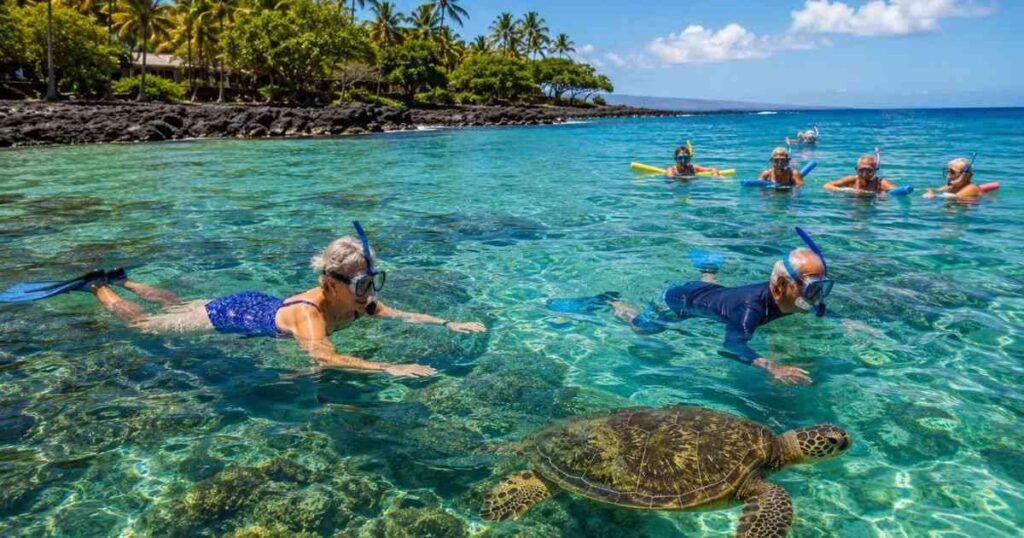
Kealakekua Bay is the single best snorkeling location on the Big Island for seniors and most visitors only see it from the highway overlook. The bay sits 20 km south of Kona and holds Hawaii’s best-preserved coral reef system in the state’s cleanest coastal water. The Captain Cook Monument at the north end of the bay marks the spot where the reef wall drops from 2 meters to over 180 meters you stay in the shallow section where visibility regularly reaches 30 meters.
The bay has no road access to the water. You reach it by kayak (2 km paddle from the boat ramp at Napo’opo’o), by permitted snorkel boat tour or by a steep 3 km trail that drops 300 meters in elevation the trail option is not suitable for most seniors. Fair Wind Cruises runs a morning snorkel trip to Kealakekua Bay on a 150-passenger catamaran with a hydraulic boarding ladder, costs $175 per adult and includes snorkel equipment and a light breakfast.
Two Step beach at Hōnaunau, adjacent to the Pu’uhonua o Hōnaunau National Historical Park, offers shore entry snorkeling with a natural lava shelf that allows you to walk in gradually rather than swimming from shore. The entry point has natural steps in the lava hence the name and the water is calm in the morning. Parking at Two Step is free and the adjacent national park charges $20 per vehicle for entry.
Kahalu’u Beach Park in Keauhou, 8 km south of downtown Kona, is the most accessible shore snorkel spot for seniors. The reef sits 10 meters from shore in water 1–2 meters deep and Hawaiian green sea turtles feed on the algae daily between 7:00 AM and noon. A lifeguard staffs the beach every day and the parking lot sits directly adjacent to the sand.
Pro Tip: Rent snorkel equipment from Snorkel Bob’s on Ali’i Drive ($35/week) rather than buying disposable sets at the drugstore the quality difference makes a 2-hour snorkel session genuinely comfortable versus exhausting.
Practical Tips for Senior Travelers Doing Kona Tours
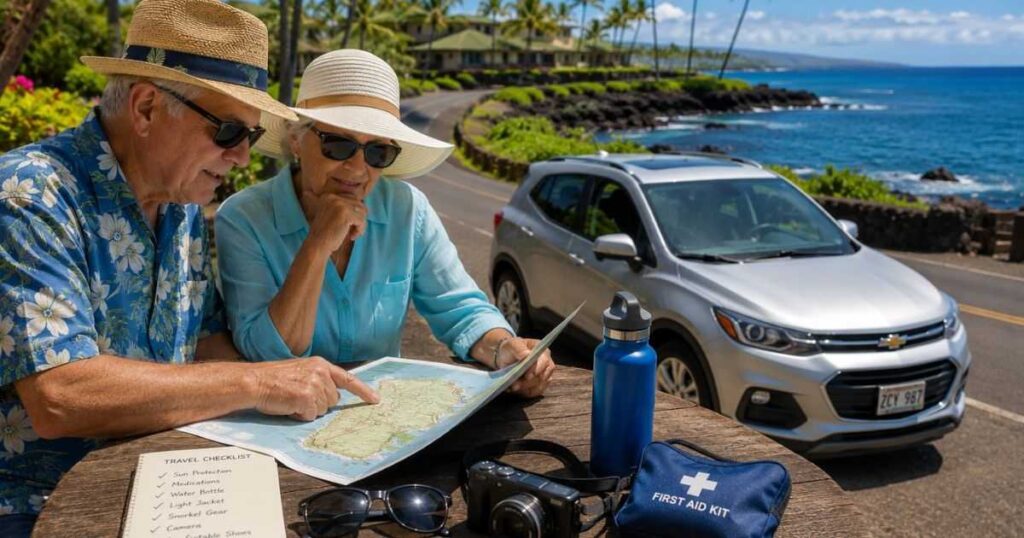
Kona’s layout creates a problem most senior visitors only discover after arriving. The main tourist strip along Ali’i Drive is 8 km long and almost nothing is walkable between the northern hotel district and the southern beach parks. Without a rental car, you depend on taxis or rideshare. Uber operates in Kona but surge pricing applies during morning tour departure windows (7:00–9:00 AM). A compact rental car from Kona Airport averages $65–$85/day and removes every logistical friction point.
Heat management matters more in Kona than in Honolulu. Kona sits in a dry leeward zone where afternoon temperatures regularly reach 31–33°C from June through August with no trade wind relief. Tours and outdoor activities work best before noon. September and October bring the same warm water temperatures (26–27°C) with 20–25% lower accommodation rates and significantly reduced tour boat crowding compared to July.
Kona’s medical facilities are more limited than Oahu. The Kona Community Hospital sits in Kealakekua, 20 km south of downtown and handles standard care but complex cardiac or surgical situations transfer to Oahu. Senior travelers with active cardiac conditions or recent surgeries should discuss the trip with their physician and carry a printed medical summary.
Most tour operators in Kona list wheelchair accessibility on their websites but the practical standard varies significantly. Call the operator directly and ask specifically whether you can board without using stairs, whether the boat has onboard accessible restrooms and what the boarding procedure looks like. Fair Wind, Body Glove and Captain Dan McSweeney’s Whale Watch are consistently reliable for genuine accessibility.
Pro Tip: Pack a light fleece or long-sleeve layer for evening manta ray tours. The ocean temperature after sunset drops enough that bare arms on a wet boogie board become uncomfortable within 30 minutes and most operators do not provide warm layers.
You may also like:
Best Things to Do in Kona Hawaii
Frequently Asked Questions
How many days do you need in Kona for seniors?
Four days is the practical minimum for seniors who want to cover the main Kona tours without rushing. Day one works as an arrival and orientation day along Ali’i Drive. Days two and three cover the manta ray night tour, a morning snorkel cruise and a coffee farm visit. Day four allows for Kahalu’u Beach, the Pu’uhonua o Hōnaunau historical park or a submarine tour. Five or six days adds meaningful flexibility for rest and slower-paced exploration.
Are Kona tours suitable for seniors with limited mobility?
Yes, Kona has more mobility-accessible water tours than any other destination in Hawaii. Operators like Body Glove and Fair Wind use hydraulic water elevators and boarding ramps that eliminate ladder climbing. The Atlantis Submarine tour requires only walking down a standard gangway and sitting in an aircraft-style seat for 45 minutes. Coffee farm tours at Greenwell Farms and Mountain Thunder use flat, paved paths throughout.
What is the best time for seniors to visit Kona?
April through May and September through October give seniors the best combination of calm ocean conditions, manageable heat and lower prices. July and August are peak season tour boats fill to capacity, accommodation prices increase 30–40% and afternoon temperatures regularly exceed 32°C. April water temperatures average 25°C warm enough for comfortable snorkeling without the summer crowds.
How expensive are Kona tours for seniors?
A realistic 4-day Kona tour budget for seniors runs $600–$900 per person excluding flights and accommodation. The manta ray night tour costs $130–$145, a morning snorkel cruise runs $145–$175, the Atlantis Submarine costs $115 and coffee farm tours range from free to $30. Most tour operators do not offer automatic senior discounts but calling ahead and asking directly often reveals unadvertised 10–15% reductions for travelers over 65.
How do Kona tours for seniors compare to Maui tours for seniors?
Kona offers more accessible water-based tours than Maui because the leeward coast keeps ocean conditions calmer year-round. Maui’s Road to Hana and Haleakala sunrise are two of Hawaii’s most iconic experiences but involve significant driving or hiking that limits senior participation. Kona concentrates its best experiences manta rays, sea turtles, coral reefs and coffee farms within a 25 km corridor that a rental car covers easily. Maui has more resort infrastructure Kona has better accessible outdoor activity options.
Conclusion
Kona earns its reputation among senior travelers not because it softens the experience of Hawaii but because its geography naturally produces calm water, accessible reefs and activities that do not demand physical performance as entry tickets. The best Kona tours for seniors put you face-to-face with manta rays, ancient Hawaiian history and the best single-origin coffee growing region in the United States none of which require youth or fitness. Book the Fair Wind morning snorkel to Kealakekua Bay for your second day, arrive at the dock by 8:00 AM and position yourself at the bow when the captain cuts the engine above the reef the clarity of that water, with the green cliff face rising behind you, is the moment Kona justifies every dollar of the flight.

