
Most people think Kona shuts down after sunset. They finish their shaved ice, watch the sun drop into the Pacific and head back to their hotel by 7 PM and they miss the best part of the day. The best things to do in Kona at night happen after the beaches empty out bioluminescent water, warm trade winds on open-air restaurant terraces and a sky so dark you can trace the Milky Way with your finger. This guide covers every worthwhile evening activity in Kailua-Kona, from the world-famous manta ray snorkel to the low-key local bars most tourists never find.
In This Guide You Will Find:
- Exactly where to book the manta ray night snorkel and what to expect underwater
- The best restaurants on Ali’i Drive for dinner after 7 PM with real price ranges
- Where locals go for drinks not the resort bars
- How to do a proper stargazing session without driving to Mauna Kea at night
- The one oceanfront spot where you can watch spinner dolphins return to the bay at dusk
- Seasonal tip for the best ocean conditions for night water activities
QUICK INFO BOX
| Detail | Info |
| Location | Kailua-Kona, Big Island, Hawaii |
| Nearest Airport | Ellison Onizuka Kona International Airport (KOA) 7 miles / 15 min from town |
| Best Time to Visit | April–November (drier evenings, calmer ocean) |
| Travel Time from Honolulu | 45-minute flight |
| Days Recommended | 3–5 nights |
| Average Daily Cost | $150–$250 per person (meals, activities, transport) |
The Manta Ray Night Snorkel The Top Thing to Do in Kona at Night
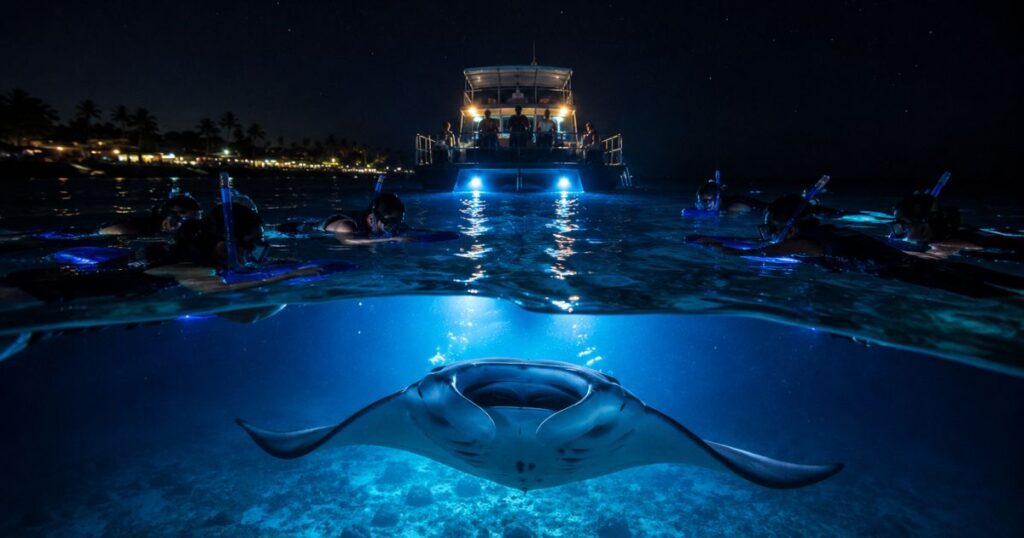
No other night activity on the Big Island compares to this one. Every evening, tour boats anchor above a sandy patch at Garden Eel Cove or Manta Village, about 2 miles north of Kailua Pier and drop underwater lights into the water. Those lights attract plankton. The plankton attract manta rays, some with wingspans over 14 feet that barrel-roll just inches below snorkelers’ faces for 60 to 90 minutes straight.
You book through operators like Sea Paradise, Manta Ray Advocates or Jack’s Diving Locker. Prices run $80–$120 per person for snorkel tours and $110–$150 for dive tours. The boats leave between 5:30 PM and 7 PM depending on the season and most trips return by 9:30 PM. Book at least 5–7 days ahead between June and September when spots sell out daily.
The moment you put your face in the water, you understand why this ranks as one of the top wildlife encounters in the entire United States. The mantas are not aggressive they feed with their mouths open, looping through the light beam in slow, deliberate circles. Most visitors don’t realize that the night snorkel is actually more beginner-friendly than daytime reef snorkeling because you stay in one spot clinging to a board, with no current to fight.
April through October gives the calmest ocean conditions, with wave heights averaging under 2 feet on the west side of the island. November through March still works but choppier evenings occasionally cause last-minute trip cancellations.
Pro Tip: Book a tour that goes to Garden Eel Cove rather than Manta Village. It consistently draws more mantas, averaging 10–15 individuals per night versus 3–7 at the southern site.
Evening Dining on Ali’i Drive Where to Eat at Night in Kona
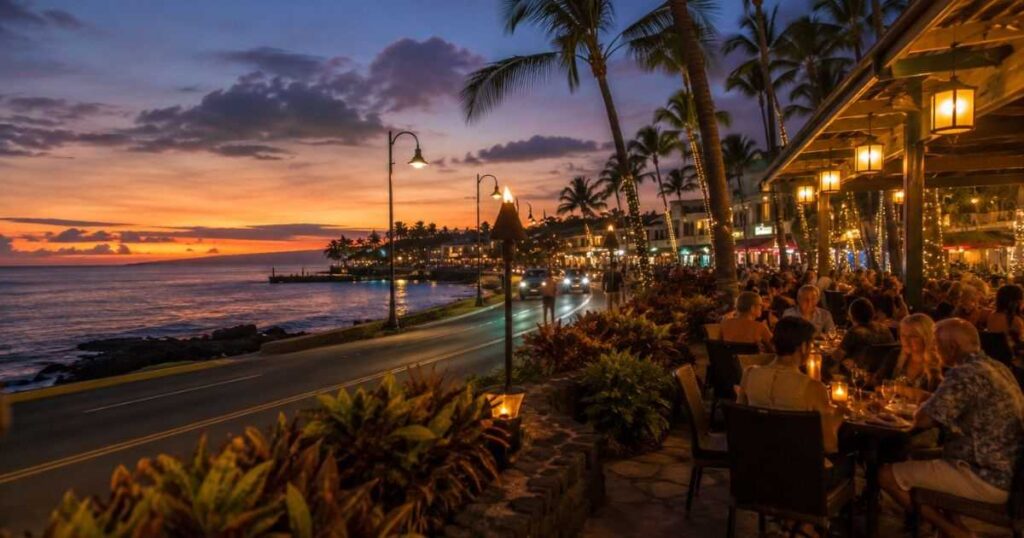
Ali’i Drive is the main coastal road through Kailua-Kona and roughly 15 restaurants line this 3-mile stretch with open-air seating and direct ocean views. The best ones fill up between 6:30 PM and 7:30 PM, so either arrive before 6 PM or plan to wait 30–45 minutes without a reservation on weekends.
Huggo’s on the Rocks sits literally on the lava shelf above the water at the north end of Ali’i Drive. Their fish tacos run $22–$24 and the seared ahi plate is $38. The outdoor bar area requires no reservation and serves full food until 9 PM. On Friday nights, a live slack-key guitar player starts at 7 PM and plays until 10 PM. This is the best free live music on the Kona waterfront.
For a more local experience, walk to Da Poke Shack near the southern end of Ali’i Drive before 7 PM. They close when they sell out and by 7:30 PM the premium fish is usually gone. A two-scoop poke bowl costs $14–$18 and is larger and fresher than anything served at resort restaurants charging double the price.
Lava Java sits at the corner of Ali’i Drive and the Courtyard hotel complex and stays open until 9 PM. Their coconut cream pie at $9 a slice is the most specific dessert worth sitting down for in Kona. Locals order it after dinner at other restaurants just to end the night there.
Pro Tip: Thursday nights on Ali’i Drive draw the lowest crowds of any weeknight Friday and Saturday evenings add 40–50% more foot traffic and longer restaurant waits.
Things to Do in Kona at Night Beyond the Water Stargazing, History and Local Bars
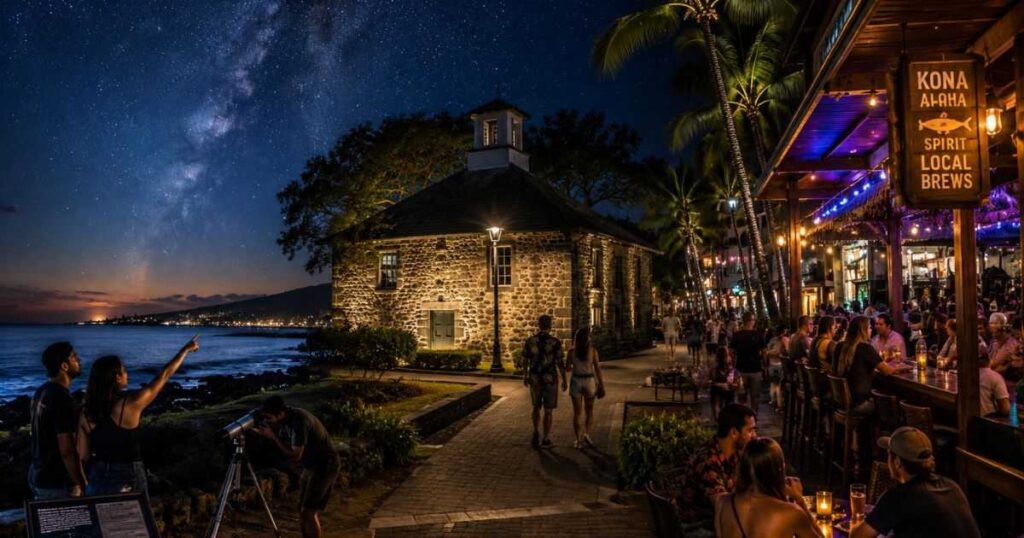
Most tourists assume they need to drive 45 miles and 14,000 feet up to Mauna Kea for good stargazing. You don’t. The Pu’uhonua o Honaunau National Historical Park, 19 miles south of Kona town, holds ranger-led stargazing events on select Friday nights throughout the year. Admission is $20 per vehicle and the site’s coastal location puts you completely away from Kona’s limited light pollution.
If you stay in town, the parking lot at Kahalu’u Beach Park goes nearly dark after 9 PM. Bring a red-light headlamp, a blanket and a star map app like Stellarium. You can identify Jupiter, Saturn and the Southern Cross from that spot without equipment and the sound of the reef just offshore creates a specific kind of quiet that’s hard to find in any other beach town in Hawaii.
For drinks, Humpy’s Big Island Alehouse on Ali’i Drive is the one bar in Kona that operates like a mainland craft beer bar 36 taps, most featuring Hawaii-brewed beers including Kona Brewing Company’s on-draft lineup. A pint runs $7–$9. The crowd is mixed with locals and visitors, the lighting is low and unlike resort hotel bars, nobody is trying to sell you a timeshare.
What most tourists miss entirely is the evening torch-lighting ceremony at the King Kamehameha’s Kona Beach Hotel courtyard. Every night at dusk, staff light the traditional torches along the waterfront in silence. It takes about 10 minutes, it’s free and it gives you a specific sense of the historical weight of this coastline that no museum exhibit replicates.
Pro Tip: Download the free Bishop Museum star map for Hawaii specifically it labels constellations as named in traditional Hawaiian navigation, which makes the stargazing experience meaningfully different from a generic astronomy app.
Practical Tips for Exploring Kona at Night Getting Around, Safety and What to Skip
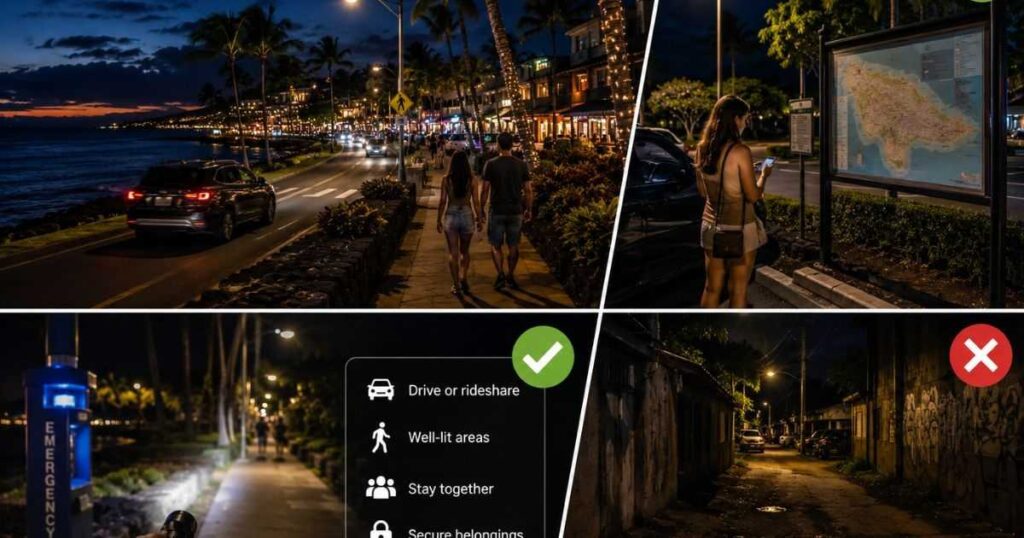
Kona’s walkable core runs about 1.5 miles along Ali’i Drive from Kailua Pier to Kahalu’u Beach Park. If you’re staying anywhere along that stretch, you don’t need a car for evening activities in town. Uber and Lyft operate in Kona but with limited drivers wait times run 15–25 minutes after 9 PM and surge pricing kicks in near closing time at bars around midnight.
Renting a car is worth it specifically for the manta ray tour return (most tour operators have their own dock at Honokohau Harbor, 2 miles north of town) and for the Pu’uhonua o Honaunau stargazing drive. Parking along Ali’i Drive is free after 6 PM in the public lots near the pier. Safety in Kona at night is a non-issue in the tourist district the area from the pier to Keauhou is well-lit and consistently active until around 11 PM.
What to skip the so-called “luau shows” offered by large resort hotels run $135–$185 per person, serve buffet food of mediocre quality and perform a generic Polynesian show that conflates Hawaiian, Samoan and Tahitian traditions without distinction. The actual experience of Kona at night with open water, dark skies and fresh fish on a lava-rock terrace costs less and delivers more.
Compared to Lahaina on Maui, Kona’s nightlife is quieter and more nature-focused. Lahaina has more bars and a louder evening scene. Kona suits travelers who want to be in the ocean at 8 PM and under the stars by 10 PM rather than bar-hopping until midnight.
Pro Tip: Wear closed-toe shoes if you plan to walk Ali’i Drive after dark sections of the sidewalk cross old lava rock and the uneven surface catches visitors wearing flip-flops off guard.
You may also like:
Frequently Asked Questions
How many days do you need in Kona to experience the best nighttime activities?
Three nights gives you enough time to do the manta ray snorkel, one proper waterfront dinner and a stargazing evening without feeling rushed. A fourth night lets you add the Pu’uhonua o Honaunau ranger program if it falls on a Friday during your stay. One night in Kona is not enough to experience the water activities alongside the evening dining scene.
Is Kona worth visiting for nighttime activities specifically?
Kona offers the most consistent manta ray night snorkel experience in the world no other destination matches the frequency and reliability of manta sightings at Garden Eel Cove. Beyond the water, the combination of dark skies, oceanfront restaurants and free cultural events makes Kona evenings genuinely distinct from any other Hawaiian town. Visitors who stay only during the day miss the defining experience of this coastline.
What is the best time of year for things to do in Kona at night?
April through October offers the calmest ocean conditions for night snorkeling and the warmest evening temperatures, averaging 75–80°F on the waterfront. June, July and August are peak manta ray season with the highest sighting rates. November through March still works for most activities, though occasional winter swells cancel water tours 1–2 nights per week on average.
Is Kona expensive for tourists at night?
A full evening in Kona manta ray tour, dinner on Ali’i Drive and a drink at Humpy’s runs $130–$200 per person. Stargazing at Kahalu’u Beach Park costs nothing. The manta ray snorkel ($80–$120) is the biggest single expense of any Kona evening but it is also the single most memorable activity on the entire Big Island.
Is Kona better than Hilo for nighttime activities on the Big Island?
Kona is significantly better than Hilo for evening activities. Hilo’s east-side location means more rain and cloud cover at night, which limits stargazing and dampens the outdoor dining scene. Kona’s west-side position gives it 90% clear-sky evenings from April through October. Hilo has more local character and lower prices but it lacks Kona’s manta ray access and its concentrated waterfront dining strip.
Conclusion
Kona at night is not an afterthought, it is the main event. The manta rays don’t appear until dark. The best seats on Ali’i Drive face a sky that shifts from orange to purple to black while you eat. The things to do in Kona at night reward the travelers who stay out past sunset instead of retreating to their hotel rooms. Book your manta ray snorkel for your second night in Kona use your first evening to walk Ali’i Drive, eat at Da Poke Shack before it sells out and watch the torch-lighting ceremony at the King Kamehameha courtyard so you arrive at the water already knowing what this place is about.

