
Most tourists who arrive in Zadar spend two days exploring the Old Town, snap a photo at the Sea Organ, then board a bus to Dubrovnik without ever stepping foot in Croatia’s most extraordinary national park. The Plitvice Lakes sit just 155 kilometers from Zadar close enough for a long day trip but rewarding enough to deserve an overnight stay. This guide covers every option for getting from Zadar to Plitvice Lakes, what to expect when you arrive, how much everything costs and what most visitors get completely wrong on their first visit.
In this guide you will find:
- Exact driving and bus routes from Zadar to Plitvice Lakes with current times and costs
- How to book Plitvice Lakes entry tickets in advance and why you must do it
- The difference between Route A and Route B inside the park and which one to pick
- What month to visit Plitvice Lakes for the best conditions and smallest crowds
- Where to stay near the park if you want to arrive before the day-trip buses
- One thing almost every visitor from Zadar does wrong and how to avoid it
Quick Info
| Detail | Info |
| Distance | 130 km (straight line) / 155 km by road |
| Driving Time | Approximately 2 hours |
| Bus Time | 2.5 to 3 hours |
| Best Time to Visit | April to June, September to October |
| Entry Fee | From €23.50 to €39.90 depending on season |
| Days Recommended | 1 full day minimum, overnight strongly recommended |
| Average Daily Cost | €60–€90 per person including transport and entry |
How to Get from Zadar to Plitvice Lakes
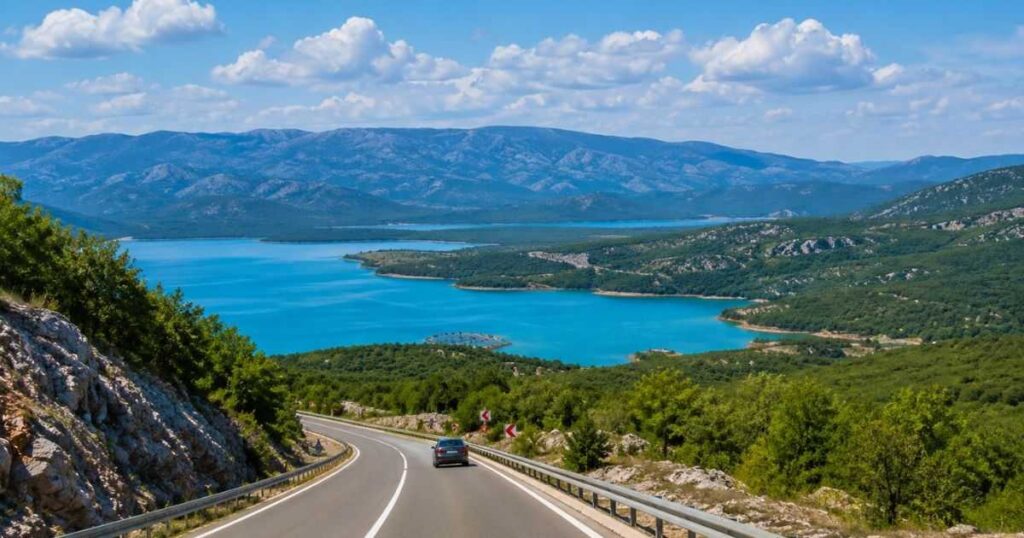
The route from Zadar to Plitvice Lakes is one of the most well-traveled day trips on Croatia’s Dalmatian coast and you have three realistic options: drive yourself, take a public bus or book an organized tour. Each has a different cost structure and a very different experience.
Driving from Zadar to Plitvice Lakes takes roughly 1 hour 50 minutes on a clear day using the A1 motorway north toward Zagreb. You exit at Gornja Ploča and follow signs for Nacionalni Park Plitvička Jezera. The motorway toll from Zadar to the Plitvice exit costs approximately €6 to €8 depending on your vehicle class. Petrol adds another €10 to €14 round trip in a standard car. Parking at the park costs €1.50 per hour and the main Entrance 1 lot fills by 9:00 AM during peak season. Driving gives you full control over your departure time critical if you want to beat the crowds.
Taking the bus from Zadar to Plitvice Lakes is the most budget-friendly option. Autobusni Kolodvor Zadar (Zadar Bus Terminal) runs several daily departures toward Plitvice, with the earliest bus leaving around 8:00 AM. The journey takes 2.5 to 3 hours depending on stops. A one-way ticket costs between €10 and €15 depending on the operator. The bus drops you within 500 meters of Entrance 1. Return buses run in the afternoon, so check the schedule in advance. Missing the last bus back means an unplanned overnight.
Organized tours from Zadar to Plitvice Lakes are sold by nearly every agency on Zadar’s waterfront. Prices typically range from €45 to €65 per person, including transport and park entry. The downside is fixed timing most tours arrive between 10:00 AM and 11:00 AM, exactly when the park is most crowded and you leave by 4:00 PM. If crowd avoidance matters to you, driving or taking an early bus is the smarter move.
Pro Tip: If you drive from Zadar to Plitvice Lakes, leave no later than 6:30 AM. Entrance 1’s parking lot reaches capacity before 9:00 AM in July and August. Arriving early also gives you 90 minutes on the trails before the tour buses unload.
Plitvice Lakes Entry Tickets and Routes Explained
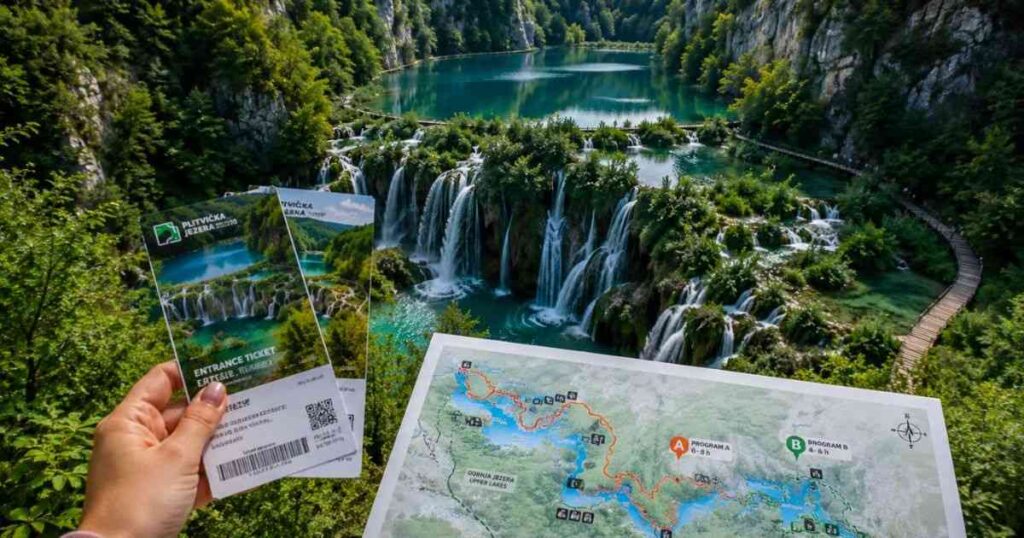
Booking your entry ticket before leaving Zadar is not optional, it is essential. The Plitvice Lakes National Park sells a fixed daily number of tickets online and during peak months (July, August and the first half of September) those tickets sell out days or even weeks in advance. Walk-up tickets are sometimes available but gambling on this when you have already made the trip from Zadar to Plitvice Lakes is a poor strategy.
Tickets are sold through the official national park website at np-plitvicka-jezera.hr. Pricing changes by season. In the high season (June through September), adult entry costs €39.90. In the shoulder season (April, May, October), it costs €23.50 to €29.90. Children under 7 enter free. You choose a time slot when booking and entry is staggered to control flow on the trails.
Inside the park, two primary routes cover the main lakes. Route A takes 4 to 6 hours and covers the entire system from the Upper Lakes to the Lower Lakes, including a boat ride across Kozjak, the largest lake. Route B covers the Lower Lakes only and takes 2 to 3 hours. First-time visitors making the trip from Zadar to Plitvice Lakes should choose Route A the Upper Lakes section is where you find the most dramatic waterfalls including Veliki Slap, which at 78 meters is Croatia’s tallest waterfall. Route B misses this entirely.
Footwear matters more here than at almost any other national park in Europe. The wooden boardwalks run directly over the lake water and become extremely slippery after rain. Waterproof trail shoes or hiking sandals with grip perform far better than sneakers. In wet weather, flat-soled shoes become genuinely dangerous.
Pro Tip: Book your Plitvice Lakes ticket for the 7:00 AM entry slot. The morning light through the Upper Lakes between 7:30 AM and 9:30 AM is dramatically better for photography and you will complete half the route before the first tour groups from Split arrive.
Best Time to Visit Plitvice Lakes from Zadar
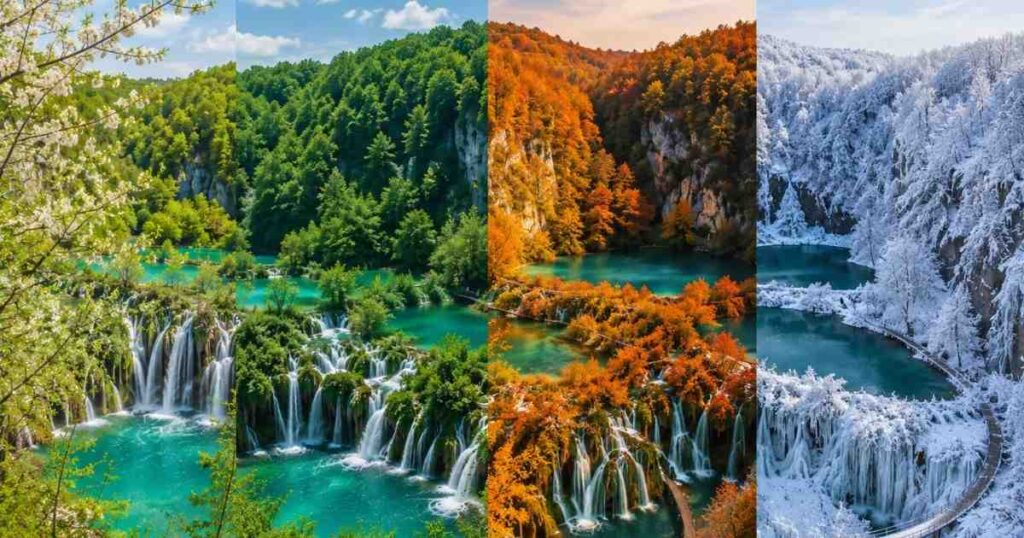
Every month at Plitvice Lakes looks different and the right answer depends on what you want from the visit. The park is open year-round but conditions vary so widely that the month you choose affects your entire experience.
April and May are the best months for visitors traveling from Zadar to Plitvice Lakes on a first trip. The snowmelt from the surrounding Mala Kapela mountains peaks in April and May, which pushes the waterfalls to their maximum volume. Veliki Slap runs at full force and the smaller cascades across the Upper Lakes have more water than at any other time. Daily visitor numbers are lower than in summer, ticket availability is better and temperatures in the park sit between 10°C and 18°C comfortably for 4 to 6 hours of walking. Spring wildflowers cover the meadows around the park perimeter.
July and August attract the heaviest crowds. The Zadar to Plitvice Lakes route becomes genuinely congested, parking is chaotic and the boardwalks feel more like a slow-moving queue than a nature walk. The waterfall volume is lower because the snowmelt has finished. Temperatures inside the forested trails stay pleasant around 22°C to 26°C but the Upper Lakes exposed section can feel warm. If summer is your only option, book tickets at the 7:00 AM slot and arrive at Entrance 1 before opening time.
September and October offer the best combination of reasonable crowds and color. Mid-September through mid-October brings the beech and maple trees into full autumn color amber, copper and deep red against the turquoise of the lakes. Water temperatures are cold enough that the lake color intensifies. Most tour groups thin out after the first week of September.
Winter (November through March) transforms the park into a frozen landscape that very few visitors ever see. The boardwalks partially close due to ice, entry fees drop to €10 and some sections of the Upper Lakes freeze over. The drive from Zadar to Plitvice Lakes in winter requires snow chains in the higher sections from November onward.
Pro Tip: The absolute best window for the Zadar to Plitvice Lakes trip is the second week of October autumn color peaks, the main car park has space by 8:00 AM and entry tickets are available without booking weeks in advance.
Where to Stay Near Plitvice Lakes
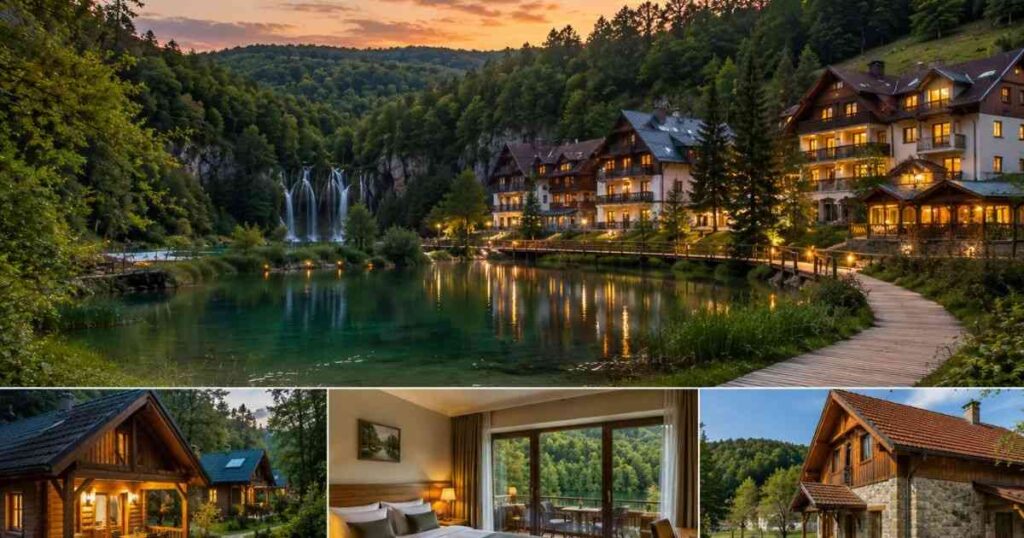
Most travelers who make the journey from Zadar to Plitvice Lakes arrive as a day trip and leave the same evening. This is fine for Route B but not enough time to properly walk Route A and still reach the Upper Lakes at the best light. Staying one night near the park completely changes the experience.
Inside the park, the national park authority operates three hotels: Hotel Jezero, Hotel Plitvice and Hotel Bellevue. Hotel Jezero sits closest to Entrance 2, with double rooms from €110 to €180 per night. Staying inside means you reach the trails before the day-trip visitors arrive from Zadar, Split and Zagreb.
Private accommodation in Mukinje and Rastovača villages immediately adjacent to the park cost €40 to €70 per night for a double room including breakfast. The villages are a 10-minute walk from the park entrances and offer significantly better value than the hotel options inside.
Plitvička Jezera town, 3 kilometers from the park, has options from €35 budget rooms to €120 boutique apartments. If you are combining this stop with a broader Croatia trip, the Zadar to Plitvice Lakes route connects naturally with an onward journey to Zagreb (2 hours north) or a return to Šibenik on the coast.
Pro Tip: Book accommodation inside or immediately adjacent to the park rather than returning to Zadar the same day. The difference between arriving at the park at 7:00 AM versus 10:30 AM on the same trail is 3,000 fewer people around you.
Practical Tips for the Zadar to Plitvice Lakes Trip
The Zadar to Plitvice Lakes journey is well-organized and easy to navigate but several small details separate a smooth trip from a frustrating one.
Bring cash. The park’s food kiosks accept cards inconsistently. A budget of €10 to €15 in cash covers lunch and a snack at one of the kiosks near the boat crossing on Kozjak Lake. The kiosks sell grilled sausages, sandwiches and cold drinks, nothing refined but functional after 3 hours of walking.
Download the park map offline before you lose cell signal. The forested sections of the Upper Lakes have no reliable mobile coverage and the trail forks are not always clearly marked. The national park website has a downloadable PDF map.
Entrance 1 vs Entrance 2 most tours from Zadar enter at Entrance 1, starting at the Lower Lakes. If you drive yourself, consider entering at Entrance 2 and walking the Upper Lakes first. The crowds thin in the Upper Lakes section because most day-trippers run out of time before reaching them.
No swimming, no drones, no leaving the boardwalks. These rules are strictly enforced with fines starting at €200.
What most visitors from Zadar miss: The viewpoint at the top of Sastavci Falls, where the Korana River begins flowing out of the Lower Lakes. You reach it by following the trail past the main boardwalk loop to the upper rim of the gorge. The view back over the entire Lower Lake system from above is more striking than anything on the standard Route B boardwalk.
Verdict: The Zadar to Plitvice Lakes trip requires almost no logistical complexity but the small decisions departure time, ticket slot, route choice determine the entire quality of your experience.
You may also like:
Things to Do in Split, Croatia
Frequently Asked Questions
How many days do you need for Plitvice Lakes from Zadar?
One full day is the minimum to complete Route A, which covers all 16 lakes and the main waterfalls. If you are traveling from Zadar on a day trip, leave by 6:30 AM to arrive at opening time. Two days one night near the park allows you to walk both routes and visit at different times of day when the light and crowd levels shift significantly.
Is the Zadar to Plitvice Lakes trip worth it?
Yes, unambiguously. Plitvice Lakes is one of the few UNESCO World Heritage sites in Europe that actually matches its photographs. The color of the water, a calcium-carbonate-driven turquoise that changes with depth and light is unlike any lake system on the continent. The 155-kilometer drive from Zadar takes under 2 hours and the park’s trail infrastructure is excellent.
What is the best time to visit Plitvice Lakes?
April through May for maximum waterfall volume and manageable crowds or mid-September through mid-October for autumn color and post-summer quiet. July and August are the most popular months but also the most crowded, with all entry slots selling out weeks in advance during peak weeks.
Is Plitvice Lakes expensive for tourists?
Entry alone costs €39.90 per adult in the high season. Add transport from Zadar (€10 to €15 by bus or €20 by car including tolls and petrol), lunch (€8 to €12) and parking (€5 to €8) and a day trip from Zadar to Plitvice Lakes costs approximately €65 to €75 per person. This is mid-range for a Croatian national park experience and significantly cheaper than comparable parks in Switzerland or Austria.
Can you do Zadar to Plitvice Lakes as a day trip or is it better to stay overnight?
Both work but overnight is better for first-time visitors. A day trip from Zadar to Plitvice Lakes gives you enough time for Route A if you leave early but you will arrive when the park is already busy. Staying one night lets you access the park at 7:00 AM before the day-trip crowds from Zadar, Split and Zagreb arrive and you can walk the Upper Lakes in complete silence.
Final Thoughts
The Zadar to Plitvice Lakes route is the most underused short trip on Croatia’s coast. Most visitors in Zadar spend their time within the city walls which is worth it but the national park sits only 2 hours away and delivers something the coast cannot: a landscape that looks genuinely otherworldly. Sixteen terraced lakes connected by waterfalls, boardwalks running directly over the water and a forest so dense it blocks midday light. The trip from Zadar to Plitvice Lakes is not complicated to plan but it rewards the visitors who plan it carefully. Book your entry ticket the moment you confirm your travel dates, choose the 7:00 AM slot and arrive at the park before the lower lot fills. Then take the trail past the Sastavci viewpoint at the end, the one most visitors skip and look back at the whole system from the top of the gorge.

