
Sintra sits 25 km northwest of Lisbon and the things to do in Sintra stretch far beyond the postcard image of one colorful palace. Most visitors arrive at 10 AM, queue for Pena Palace and leave by 3 PM having covered less than a third of what this UNESCO World Heritage town actually holds. The things to do in Sintra include 8th-century Moorish ramparts, a 27-meter underground spiral staircase, Atlantic cliffs at the western edge of continental Europe and a historic center most tourists walk straight through without stopping. This guide covers every major attraction with exact prices, travel times and the specific decisions that separate a frustrating crowded day from a well-paced one.
In This Guide You Will Find:
- Exact entry prices for Pena Palace (€14), Quinta da Regaleira (€12) and the Moorish Castle (€8)
- Why the Initiation Well at Quinta da Regaleira is the most underrated of all things to do in Sintra
- How to reach Cabo da Roca the westernmost point of continental Europe from Sintra town by bus for €2.60
- The specific 8:45 AM arrival strategy that cuts your crowd exposure by half
- Which months give you dry weather and shorter queues simultaneously
- Why walking between sites beats the tourist bus and which uphill route to take
Quick Info
| Detail | Info |
| Location | Sintra Municipality, Lisbon District, Portugal |
| Nearest Airport | Lisbon Humberto Delgado Airport 30 km, approx. 40 min by car |
| Best Time to Visit | March to May, September to October |
| Travel Time from Lisbon | 40 minutes by train from Rossio Station |
| Days Recommended | 1 to 2 days |
| Average Daily Cost | €60–€90 per person (transport + 2 attractions + meals) |
The Top Things to Do in Sintra: Palaces, Castles and Hidden Estates

When planning things to do in Sintra, split your list into two categories: hilltop landmarks that require advance booking and ground-level sites most visitors miss entirely. Pena Palace tops every list of things to do in Sintra the €14 entry buys access to a 19th-century royal palace painted in mustard yellow and deep red, built on the ruins of a monastery destroyed in the 1755 Lisbon earthquake. King Ferdinand II purchased the land in 1838 and commissioned a structure pulling together Gothic, Moorish and Manueline styles into something genuinely unlike anything else in Europe. Book tickets online at least 48 hours ahead walk-up tickets sell out before 10 AM in June, July and August.
The Moorish Castle, 10 minutes on foot from Pena Palace, costs €8 and dates to the 8th century. You walk original ramparts and look down across the entire Sintra valley, with Pena Palace visible through the forest canopy below. This castle fell to Christian crusaders in 1147 and was left structurally unrestored until the 19th century.
Quinta da Regaleira delivers the most memorable of all things to do in Sintra for visitors who give it proper time. The estate at €12 entry covers five floors of palace, formal gardens, grottos, underground tunnels and the Initiation Well, a 27-meter-deep spiral staircase designed to represent Dante’s nine circles of hell, with a Knights Templar cross tiled into the floor at the bottom. Most tourists spend 45 minutes here and plan for at least two hours to explore the tunnel network properly.
The National Palace of Sintra in the town center costs €10 and holds the largest collection of 15th and 16th-century Manueline azulejo tilework in Portugal. Its twin conical chimneys visible from the main square make it the most photographed building in Sintra town itself yet it draws far fewer visitors than the hilltop palaces on any given day.
Pro Tip: Book Pena Palace tickets the night before your visit at parquesdesintra.pt. Walk-up tickets sell out before 10 AM during summer months and the 15-minute ticket queue wastes time you could spend on the ramparts.
Things to Do in Sintra Beyond the Palaces: Coast, Cliffs and Hidden Beaches
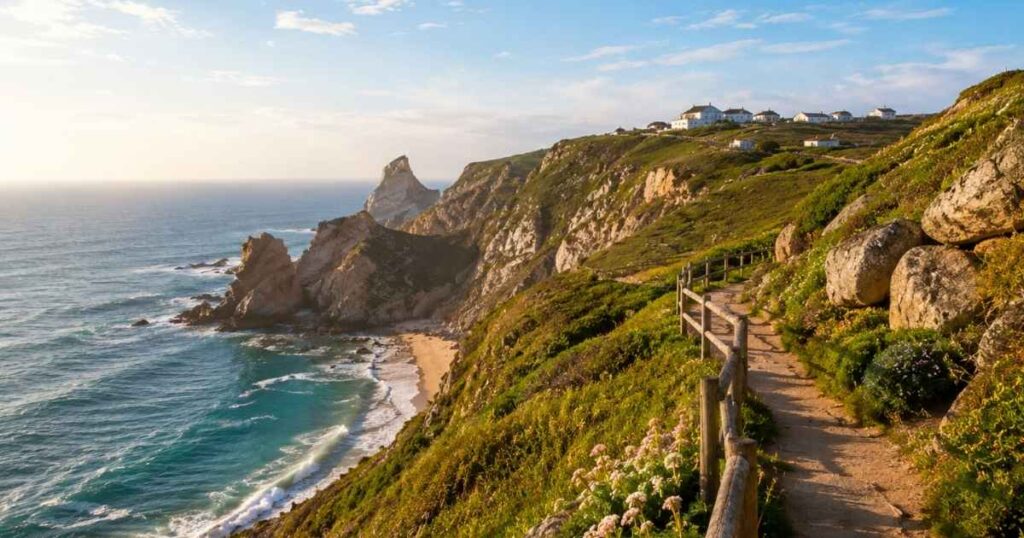
The full range of things to do in Sintra extends 12 km west to the Atlantic coastline, where the scenery shifts completely from forest palaces to ocean cliffs. Cabo da Roca is the westernmost point of continental Europe, a granite headland where cliffs drop into the Atlantic and a lighthouse built in 1772 still operates today. The stone monument at the cliff edge carries a line from 16th-century poet Luís de Camões: “Here where the land ends and the sea begins.” Bus 403 connects Sintra town to Cabo da Roca in 40 minutes for €2.60 each way.
Adraga Beach sits 3 km south of Cabo da Roca and takes roughly 50 minutes to reach from Sintra by car. The beach is framed by limestone cliffs and backed by a single restaurant serving grilled fish from €12 a plate. Atlantic water temperature here rarely exceeds 18°C even in August, so most visitors come for the geology and the afternoon light rather than swimming.
Among the coastal things to do in Sintra, the narrow-gauge electric tram to Praia das Maçãs stands out as a local experience most tourists skip. The tram departs near Sintra town on weekends from April through October, costs €3.50 each way and takes 45 minutes through pine forest to reach a beach that works for swimming between June and September.
The Sintra-Cascais Natural Park covers the entire area from the palace hills to the Atlantic with 75 km of marked hiking trails. The trail from Sintra town to Cabo da Roca covers 11 km and takes three to four hours this is one of the things to do in Sintra that most visitors never consider, despite the fact that the final ridge delivers the clearest Atlantic views in the entire region.
Pro Tip: Take Bus 403 to Cabo da Roca first, then connect south to Cascais rather than returning to Sintra. This linear route adds Cascais to your day without backtracking and costs no extra transport fare.
Best Time to Visit Sintra and How to Structure Your Day

Timing shapes the quality of every single thing to do in Sintra more than any other planning decision. March through May and September through October give you temperatures between 15°C and 22°C, low rainfall and queues that are a fraction of summer length. A July queue at Pena Palace that runs 45 minutes at the gate drops to under 10 minutes by mid-September that single difference changes the entire rhythm of the day.
July and August bring 35,000 to 40,000 daily visitors. Parking near the historic center fills by 8:30 AM in peak summer, which is why the Lisbon-Sintra train is the most reliable option year-round. The train leaves Rossio Station every 20 minutes, costs €2.30 each way and arrives in exactly 40 minutes. Sintra train station sits 1.5 km from the historic center Bus 434 runs a loop between the station, town center, Moorish Castle and Pena Palace for a €6.90 full-day pass.
Walking the uphill route from town to the palaces takes 35 to 45 minutes and passes Quinta da Regaleira’s outer wall, a stretch of Neo-Gothic stonework that puts the estate in architectural context before you even buy a ticket. Winter months from November through February see temperatures around 10°C to 14°C with regular Atlantic rain. The palaces stay open and crowds thin sharply but hilltop trails become slippery and some outdoor areas of Pena Palace close in heavy weather.
Pro Tip: Arrive at Sintra train station by 8:45 AM. Walk directly uphill to the Moorish Castle first, then cross the ridge to Pena Palace you reach both before the first tour buses from Lisbon arrive at 10 AM.
Practical Tips for Things to Do in Sintra Without Wasting Half Your Day

The most common planning error for things to do in Sintra is underestimating elevation changes between sites. Pena Palace, Moorish Castle and Quinta da Regaleira sit within a 2 km triangle but the uphill stretches between them add 30 to 45 minutes of actual walking time compared to flat terrain. Wear proper walking shoes, the cobblestones through Sintra town and the forest paths between palaces are steep and uneven and sandals cause real problems by the second hour.
Food in the Sintra historic center runs high. A sit-down lunch near the main square costs €18 to €25 per person. Walk two streets off the main tourist route and the same meal drops to €12 to €14. The market hall on Avenida Heliodoro Salgado, five minutes from the train station, sells local cheese, bread and pastries for under €5 the right stop before the morning uphill walk.
Travessa queijada, the small cone-shaped pastry Sintra has produced since the 13th century costs €1.20 at Casa Piriquita on Rua das Padarias, open since 1862. Roadside stalls near the palace bus stops sell the same pastry for €2.50 from display cases that sit out for hours. This is one of the things to do in Sintra that costs almost nothing and connects you to a food tradition older than the palaces themselves.
Most visitors planning things to do in Sintra do not realize the historic center is at its most photogenic between 7 AM and 8:30 AM. The light on the National Palace chimneys and the cobblestone lanes off Rua Gil Vicente is sharpest in the early morning and you have the town to yourself for that window before the Lisbon day-trippers arrive.
Pro Tip: Download the Parques de Sintra app before you arrive. It shows real-time queue lengths at each palace and allows direct ticket booking essential in summer when Pena Palace queues build 90 minutes before the gates open.
You may also like:
Frequently Asked Questions
How many days do you need in Sintra?
One full day covers the core things to do in Sintra if you start before 9 AM. Two days lets you add the coastal route to Cabo da Roca, Adraga Beach and a slower morning in the historic center. Most visitors from Lisbon complete the main palace circuit Pena Palace, Moorish Castle, Quinta da Regaleira in six to seven hours including travel time from the city.
Is Sintra worth visiting?
Sintra holds UNESCO World Heritage status for its entire cultural landscape, not just individual buildings, the only designation of its kind in Portugal. The concentration of Romanticist palace architecture, Atlantic forest and ocean coastline within a 12 km radius makes it the most layered single-day destination accessible from Lisbon. No comparable town in Portugal delivers this range of things to do in Sintra within a 40-minute train ride from a major city.
What is the best time to visit Sintra?
March through May and September through October offer the best conditions. Spring temperatures sit between 15°C and 22°C with low rainfall, while September and October cut summer crowds by roughly 60 percent without sacrificing dry weather. Avoid July and August if your priority is shorter queues and unhurried access to the main sites.
Is Sintra expensive for tourists?
A full day covering three attractions: Pena Palace at €14, Moorish Castle at €8, Quinta da Regaleira at €12 plus train tickets from Lisbon at €4.60 return and two meals totals approximately €60 to €70 per person. Eating at the market hall near the train station instead of the historic center restaurants cuts food costs by 30 to 40 percent.
Can you do Sintra as a day trip from Lisbon?
Yes Sintra is one of the most practical day trips from Lisbon in Portugal. The Rossio-to-Sintra train runs every 20 minutes from 5:30 AM to midnight, costs €2.30 each way and takes exactly 40 minutes. Leave Lisbon by 8 AM, cover the three main hilltop sites and return comfortably by early evening with every key thing to do in Sintra checked off your list.
Conclusion
No destination within 40 minutes of a European capital packs this much into a single day. The things to do in Sintra range from 8th-century Moorish ramparts to Dante-inspired underground tunnels to standing at the literal western edge of continental Europe watching the Atlantic. Sintra rewards the visitors who arrive early, walk between sites rather than busing between queues and spend 20 minutes in the market hall instead of a tourist restaurant. Book your Pena Palace ticket the night before, reach Sintra station by 8:45 AM and walk to the Moorish Castle first from those ramparts, with Pena Palace rising through the forest below you and the Atlantic visible on the horizon, you understand immediately why this town has no real competition in Portugal.

