
Kona breaks every assumption you arrive with. You expect a resort strip with overpriced cocktails and snorkel tours packed with 40 strangers. What you actually get is a coastline shaped by active volcanoes, an ocean that glows with bioluminescent plankton at night, coffee farms clinging to a volcanic mountain at 2,500 feet and a Hawaiian cultural site so precisely preserved that you can run your hand along a wall built in 1550 CE. The tourists who left disappointed stayed on Alii Drive. The ones who leave changed and went looking for the unique things to do in Kona that no hotel concierge mentions.
This guide tells you exactly where to go, what each experience costs, how long to allow and just as importantly what to skip entirely.
In this guide you will find:
- The exact spot where 20+ manta rays gather every single night and how to book it correctly
- Which Kona coffee farm gives the most educational tour for under $20 and which ones waste your time
- The sacred Hawaiian refuge that most visitors drive straight past and why it deserves 2 full hours
- Three water activities in Kona that beat anything available on Maui for serious ocean travelers
- The unmarked white sand beach at mile marker 88 that resort guests never find
- Practical facts about getting around Kona: car rental costs, gas prices, parking and what to skip
| Location | Kailua-Kona, Big Island, Hawaii, USA |
| Nearest Airport | Ellison Onizuka Kona International (KOA) 7 miles, 15 min from town |
| Best Time to Visit | April–June and September–November |
| Travel from Honolulu | 45-minute flight (separate island no road connection) |
| Days Recommended | 4–6 days minimum |
| Average Daily Cost | $150–$280 USD per day (mid-range, including accommodation) |
Unique Things to Do in Kona: The Manta Ray Night Dive
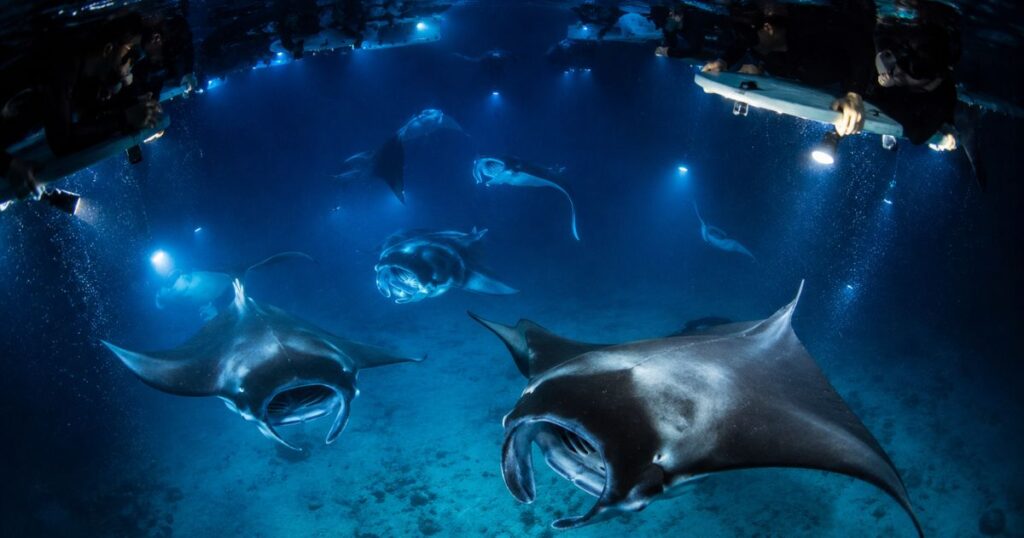
The most iconic of all unique things to do in Kona is not a beach, not a hike and not a luau. It is a night dive with wild manta rays at Garden Eel Cove, known locally as Manta Heaven. Nobody feeds the rays, nobody herds them, the sighting rate simply runs above 90% on any given night because the biology works reliably. Every evening after dark, operators anchor above a sandy flat in 30 feet of water and shine powerful lights downward. The lights attract plankton. The plankton attracts the rays sometimes 12, sometimes more than 20, each with a wingspan between 8 and 16 feet, looping through the light column in slow barrel rolls with their mouths open.
Snorkelers grip a lighted board and float face-down on the surface. Certified divers kneel on the sand and watch the rays pass overhead, close enough to feel the water move from their wings. The in-water encounter lasts 40 to 55 minutes.
Honokohau Harbor, 3 miles north of downtown Kailua-Kona, is where most operators depart. Snorkel tours cost $85–$110 USD per person. Two-tank dive tours cost $130–$165 USD. Jack’s Diving Locker and Kona Honu Divers both cap their boats at 12 to 16 passengers and have the longest safety records on the harbor. Book at least 3 days ahead between June and August summer demand fills boats before most visitors realize it.
What most tourists miss: Keauhou Bay, 5 miles south, hosts a second nightly manta aggregation that very few operators advertise. The bay is calmer, the boats are smaller and the experience is identical. For nervous snorkelers or families with young children, this is the better site.
Pro Tip: Book the 7:30 p.m. departure not the 5:30 p.m. Full darkness concentrates the plankton bloom faster, which brings more rays in higher numbers. The two extra hours on land are not worth losing the superior encounter window.
Pu’uhonua O Hōnaunau: The Sacred Site 12 Miles from Town
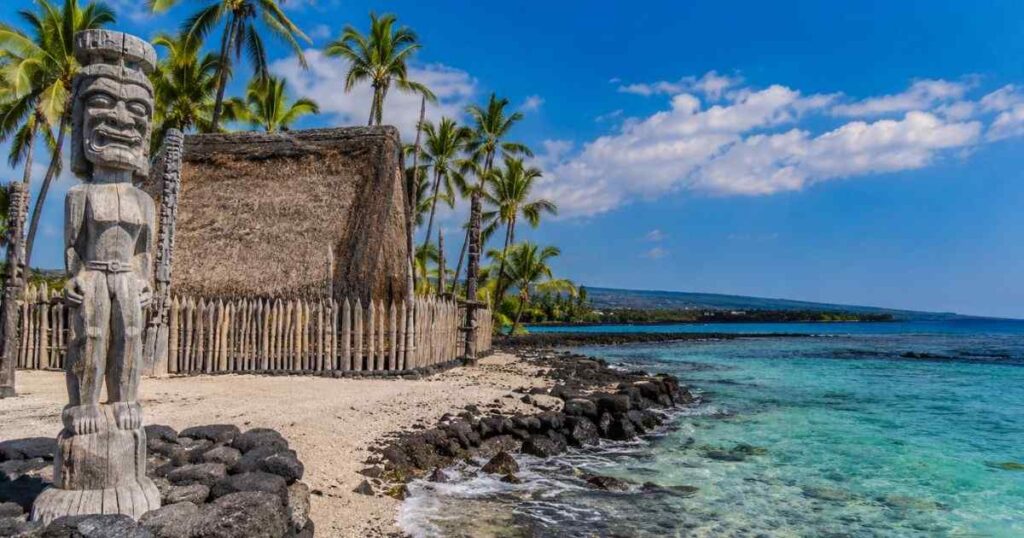
Among the lesser-known unique things to do in Kona for culturally curious travelers, Pu’uhonua O Hōnaunau National Historical Park demands the most attention and gets the least of it. Most Big Island visitors drive Highway 11 south with their sights set entirely on Hawaii Volcanoes National Park. They pass the turnoff for Pu’uhonua at mile marker 104 without a second look. This is one of the most consistent planning mistakes on this island.
The site preserves a royal ground and official place of refuge functioning from roughly 1400 CE until the Hawaiian kapu system collapsed in 1819. At its center stands the Great Wall 10 feet high, 17 feet thick at the base and 1,000 feet long built without mortar from fitted lava rock with such precision it has required virtually no structural restoration. Anyone who reached this ground during that era, a defeated enemy warrior, a kapu-breaker facing execution, a civilian trapped between warring ali’i received complete asylum the moment they crossed the wall.
The entrance fee is $20 per vehicle or $10 per person on foot, with the pass valid for 7 consecutive days (verify current fees at nps.gov). The self-guided trail covers 0.75 miles in about 45 minutes. Rangers deliver free cultural talks at 10:30 a.m. and 2:30 p.m. daily covering kapu law, the function of the reconstructed hale (thatched structures) and the oral histories of the ali’i buried here material the trail signs don’t touch. Minimum visit: 2 hours.
Two-Step beach, immediately north of the park entrance, earns its name from the two lava ledges you step off to enter the water. Resident sea turtles rest on the bottom in 8 to 15 feet, spinner dolphins pass through before 9 a.m. and the coral runs 200 yards offshore with zero boat traffic above. Free entry. Rent snorkel gear from Snorkel Bob’s in Kailua-Kona for $9–$35 per week rather than paying kiosk rates near the site.
Pro Tip: Go Tuesday through Thursday morning. Weekend crowds between November and April fill the 60-vehicle parking lot by 11 a.m. at which point the ranger closes the entrance gate.
Kona Coffee Farm Tours: How to Tell the Real Ones Apart
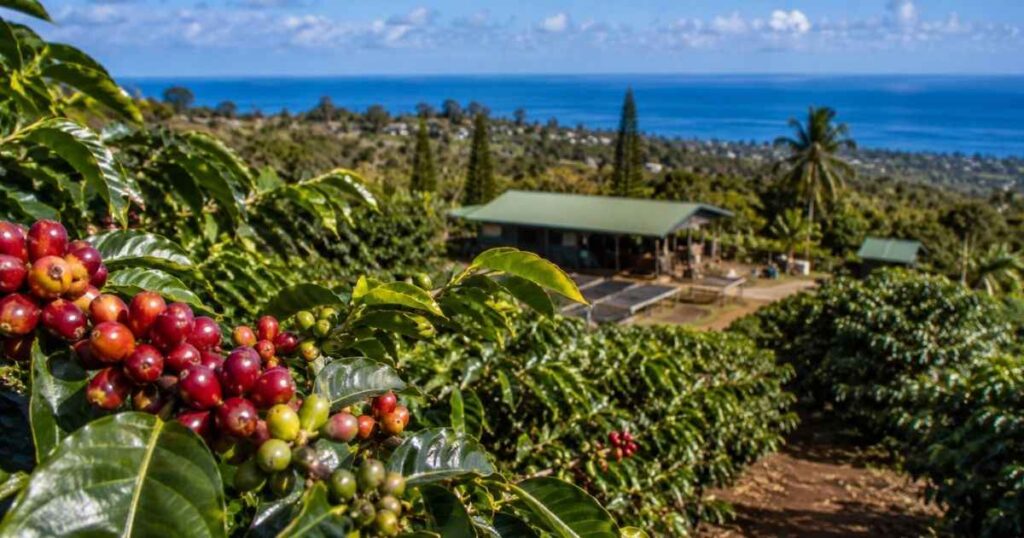
One of the most underrated unique things to do in Kona Hawaii is spending a morning inside a working coffee farm not a gift shop tour dressed up as one but an actual behind-the-scenes look at why Kona coffee sells for $45–$80 USD per pound retail and still commands a waiting list at certain micro-roasters.
The Kona Coffee Belt is a 30-mile strip of farmland running along the western slope of Mount Hualalai between Holualoa in the north and Honaunau in the south. Elevation ranges from 1,000 to 3,000 feet. The volcanic soil, near-daily afternoon cloud cover and temperature swings between morning and evening create a growing condition that no mainland farm replicates. Over 600 independent farms work this belt. Tour quality varies between genuinely excellent and borderline fraudulent.
Greenwell Farms, just off Highway 11 near Kealakekua, runs free walking tours daily at 9 a.m., 10 a.m., 11 a.m. and 1 p.m. No reservation required. The tour covers the full cherry-to-cup process in 30 minutes and ends with a cupping session. No pressure sales at the end. This is the best free option on the belt.
Mountain Thunder Coffee Plantation, in the hills above Kailua-Kona, offers a deeper 45-minute tour for $20 USD that walks through the wet mill, drying beds, roasting room and a side-by-side tasting of four roast profiles. Worth the cost for anyone who wants to genuinely understand the process rather than just observe it.
What most tourists miss: The Holualoa village loop, a two-lane road about 3 miles above Highway 11 has three family-run micro-roasters selling directly off their farms at 25–40% below resort gift shop prices. The road passes through active coffee trees on both sides for nearly a mile. The vast majority of Kona visitors never leave Highway 11 and have no idea this road exists.
One purchasing rule that every farm will tell you plainly: look for “100% Kona” on the label. Hawaiian law allows products labeled “Kona Blend” to contain as little as 10% Kona beans. The airport gift shops do not volunteer this information.
Pro Tip: Visit between August and January when the harvest is active. You can pick cherries, watch live wet mill processing and taste coffee picked the same morning, a fundamentally different experience from any off-season tour.
Unique Things to Do in Kona: Three Water Experiences That Beat Maui
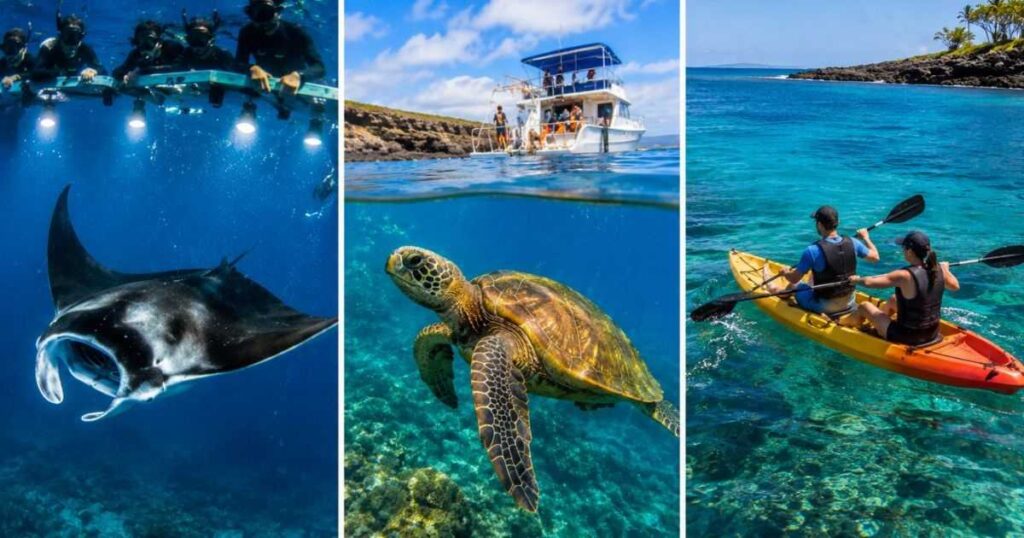
Kona’s underwater terrain is the direct result of lava coastline geology arches, tunnels and caverns that Maui’s coral reef geography does not produce. For experienced ocean travelers, these are the specific things to do in Kona Hawaii that no other island offers.
Otter Rock Lava Tube Dive
Four miles north of Honokohau Harbor, Otter Rock centers on a horizontal lava tube at 45 feet. You enter one side and swim through roughly 60 feet of enclosed lava before the exit drops you onto an open-ocean wall covered in Hawaiian wire coral and resident endemic species including the Hawaiian cleaner wrasse. Two-tank boat dives run $140–$175 USD with most operators. Open-water certification required comfort in enclosed spaces essential. For qualified divers, this is the most unusual dive site on the entire western Big Island coast.
Early-Morning Paddleboard and Spinner Dolphins
Spinner dolphins rest in Kailua Bay overnight and move to open water between 9 and 11 a.m. daily to feed. Stand-up paddleboard rentals along Alii Drive cost $20–$30 per hour. Being on the water before 7 a.m. gives near-certain contact with the dolphins, no tour operator, no guide, no boat. Just open water and wild animals resting at the surface while you paddle among them. No reservation needed.
Pelagic Open-Ocean Snorkel
Fair Wind Cruises departs Honokohau Harbor at 7 a.m. on trips that cover 12 miles of open ocean in water 3,000 to 6,000 feet deep. Target species include wahoo, mahi-mahi, sea turtles and whale sharks on roughly one in five trips. Cost is $159 USD per adult, including breakfast and snorkel gear. This is not a reef snorkel. It is blue-water snorkeling with open-ocean wildlife, an experience unavailable on standard beach snorkel tours anywhere in Hawaii.
Pro Tip: For the kayak route south from Alii Drive toward Keauhou Bay, rent from Kona Boys at $65 for a half-day double kayak. The route passes three sea turtle cleaning stations where green sea turtles hold position while surgeonfish pick algae from their shells. The 8:30 a.m. arrival window has the highest turtle density.
Hidden Beaches Near Kona That Most Tourists Never Reach
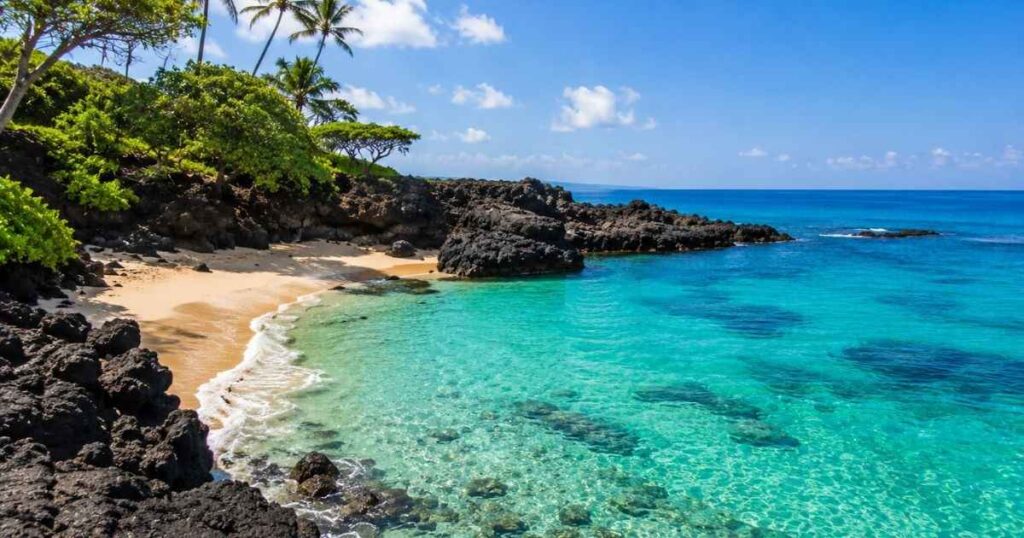
The stretch of sand directly fronting Kailua-Kona’s resort strip is clean, calm and forgettable. The beaches that justify the phrase “Kona beach destination” sit south of town and require either a drive, a short walk or both. These are among the most visually distinctive things to do in Kona Hawaii for travelers willing to leave the resort zone.
Manini’ōwali Beach (Kua Bay) sits 20 miles north of downtown on Queen Ka’ahumanu Highway near mile marker 88. The sand is white and deep, the water clears to 30 feet in calm conditions and the beach receives no shade structures, no rental kiosks and no food service. A 10-minute paved path connects the parking area to the sand. Arrive before 10 a.m. On weekends the lot fills completely and the gate closes.
Papakolea Beach (Green Sand Beach): Papakolea Beach is 75 miles south of Kona near South Point, the southernmost point in the United States. The sand is green because the cinder cone directly behind the beach is composed almost entirely of olivine crystals, a semi-precious mineral that erodes from the volcanic rock and collects on the shore. The walk from the parking area is 2.5 miles each way across exposed lava and dry grass. Local residents offer truck rides for $20 USD round trip per person worth taking on a hot day. No other beach in the country has this geology.
Punalu’u Black Sand Beach, 60 miles south of Kona, is carpeted in jet-black basalt granules formed when active lava flows entered the ocean and shattered on contact with cold seawater. Endangered hawksbill sea turtles haul out here daily to bask. Federal law requires staying at least 6 feet from any turtle that does not approach them regardless of how still they appear. Free entry, small parking area, basic facilities.
Pro Tip: Pack your own food for any beach south of Kona. Between Captain Cook and Naalehu a 40-mile stretch that includes both Papakolea and Punalu’u there are no restaurants and only two small convenience stores.
Stargazing on Mauna Kea: The Evening Trip Most Kona Visitors Skip
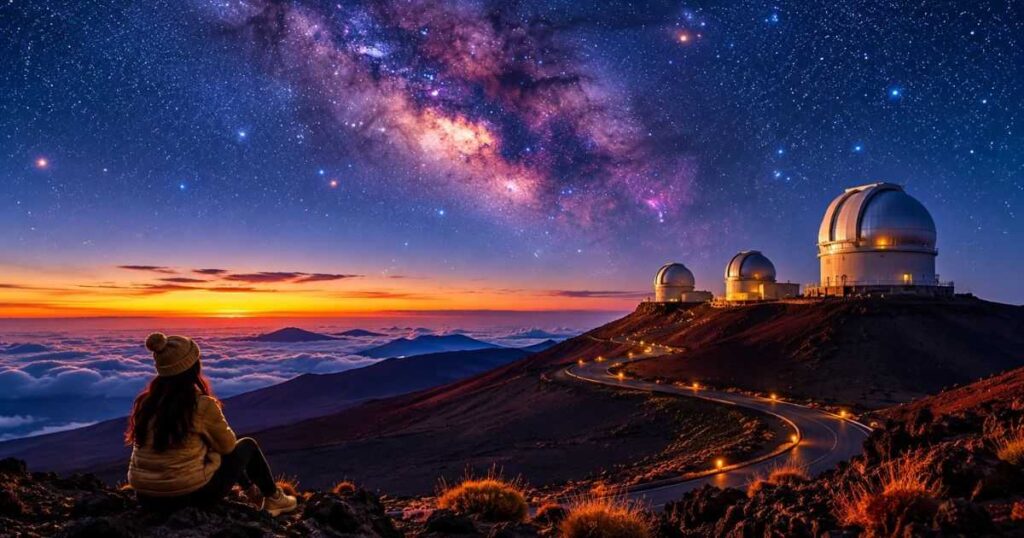
If you are building a list of truly unique things to do in Kona, the Mauna Kea stargazing drive belongs near the top and most visitors leave without doing it. The Visitor Information Station at 9,200 feet elevation sits 48 miles from Kailua-Kona, a 75-minute drive on a paved road open to standard rental cars. On a clear night roughly 300 per year at this elevation the sky shows more stars per square degree than almost any publicly accessible site on Earth. The Milky Way core is visible to the naked eye for most of the calendar year.
Thirteen working telescopes from 11 countries operate on the summit above, which tells you something precise about the atmospheric quality. The Visitor Information Station runs free nightly stargazing programs from 6 p.m. to 10 p.m., weather permitting. Staff set up telescopes, explain what you are looking at and provide hot chocolate temperatures at 9,200 feet regularly drop to 40°F even when the coast is 75°F. Free, no reservation required.
The summit (14 miles of unpaved road above the station) requires a 4WD vehicle with high clearance. Every major rental car contract prohibits driving rental vehicles above the Visitor Information Station the restriction is enforced and the road genuinely requires 4WD. Summit access is not recommended for anyone with cardiovascular conditions or altitude sensitivity.
Pro Tip: Eat a full dinner in Kona before leaving. The station has no food service and by the time you return to town after a complete stargazing program it will be 10:30 p.m. or later most Kona restaurants close by 9 p.m.
Getting Around Kona: Practical Facts That Actually Help
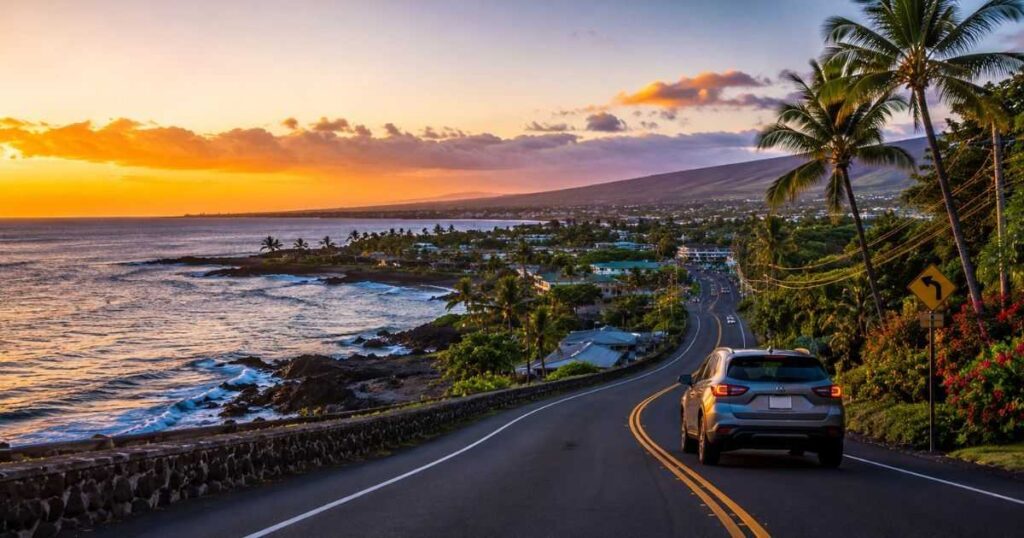
Every unique thing to do in Kona on this list requires a rental car. The Hele-On Bus connects Kailua-Kona to Hilo for $2 USD in 2.5 hours one useful route that covers nothing else on this guide. Without a car, you are limited to Alii Drive and whatever tours depart from Honokohau Harbor.
Rental cars at KOA Airport from major agencies (Hertz, Alamo, Budget, Enterprise) cost $55–$90 per day for a compact. Book at least two weeks ahead between December and March, when the Big Island sees peak visitor volume and inventory disappears quickly. A compact car handles every road in this guide except the summit drive above the Visitor Information Station on Mauna Kea.
Gas on the Big Island runs $0.50–$0.80 per gallon above Honolulu prices. Fill up in Kailua-Kona before driving south the single station in Captain Cook charges a marked-up rate and there is a 40-mile gap with nothing between Captain Cook and Naalehu on the southbound route.
Parking in downtown Kailua-Kona is free for 2 hours along Alii Drive and $1.50/hour in the central metered lots. Parking at Pu’uhonua O Hōnaunau and Manini’ōwali Beach fills completely on weekend mornings a 7 a.m. arrival solves both locations.
The one tourist trap to name explicitly: The Atlantis Submarine tour at Kailua Pier costs $139 per adult for a 48-minute ride to 100 feet in a pressurized submarine. For the same $139, a two-tank dive with a local operator puts you at 80–100 feet on a better reef with nothing between you and the water. Skip it unless you are traveling with children or non-swimmers for whom in-water diving is not possible.
Pro Tip: The parking pull-off for Manini’ōwali Beach has no highway signage. Before leaving your accommodation, set a GPS pin at 19.8322° N, 156.0064° W at highway speed, the unmarked turnoff is easy to miss.
You may also like:
Frequently Asked Questions
How many days do you need to experience the unique things to do in Kona?
Four full days is the minimum to cover the essential unique things to do in Kona, the manta ray night dive, a coffee farm tour, Pu’uhonua O Hōnaunau and at least two snorkel or dive sessions without feeling rushed between activities. Six days gives you room to add the Mauna Kea stargazing drive, a full-day green sand beach trip to South Point (75 miles south, plan the entire day) and one genuinely unplanned morning on a paddleboard. Anything under three days leaves you touching only the most visible stops on Alii Drive and missing everything that makes Kona distinct from any other Hawaiian resort destination.
What are the most unique things to do in Kona that most tourists miss?
The three experiences most tourists miss completely are the Keauhou Bay manta ray snorkel (less crowded than the main Manta Heaven site), the Holualoa micro-roaster loop above Highway 11 (coffee farms selling directly at 25–40% below resort prices) and the Otter Rock lava tube dive (a 60-foot horizontal swim through enclosed volcanic rock at 45 feet). Among free experiences, the Two-Step snorkel entry at Pu’uhonua O Hōnaunau, the early-morning paddleboard encounter with spinner dolphins in Kailua Bay and the Punalu’u black sand beach turtle haul-out are consistently missed by travelers who stay within the resort zone.
What is the best time to visit Kona for these activities?
April through June is the best time to visit Kona for nearly every activity in this guide. The dry season is fully established, ocean visibility for snorkeling and diving reaches 60 to 80 feet, temperatures hold between 78–84°F on the coast and accommodation rates sit 15–25% lower than the December–March peak season. September and October deliver identical conditions at similar pricing. Avoid July and August for beach activities. School holiday demand fills popular sites by 9 a.m. and pushes accommodation prices up noticeably. January through March is the only window when humpback whales are reliably present in Kona waters, which adds a whale-watch boat trip to the list of unique things to do in Kona during those months.
Are the unique things to do in Kona expensive compared to other Hawaii destinations?
Kona sits between budget and luxury for Hawaii cheaper than the Maui resort corridor, more expensive than most mainland beach destinations. A mid-range traveler spending $180–$280 USD per day covers accommodation ($120–$180/night), one paid activity ($85–$165), two restaurant meals ($40–$60) and daily car costs including gas ($25–$35). Budget travelers who rent a vacation rental with a kitchen, bring their own snorkel gear and build their days around free sites Two-Step, Punalu’u, the Holualoa loop and the Mauna Kea stargazing program can manage $100–$140 USD per day without cutting meaningful experiences. The biggest single cost lever is accommodation prices drop 30–40% when you move two miles inland from Alii Drive.
Is Kona better than Maui for unique activities and snorkeling?
Kona outperforms Maui specifically for things to do in Kona Hawaii that center on underwater geology, coffee culture, volcanic landscape and Hawaiian cultural sites. The lava tube dive network, nightly manta ray aggregation and the olivine green sand beach at South Point have no direct equivalent on Maui. Maui outperforms Kona on beach variety the Road to Hana, Hamoa Beach and the Wailea resort strip offer a range that Kona’s coastline does not match and on restaurant density and nightlife options. The clearest framing if your priority is unusual underwater terrain and a lower visitor density, Kona is the correct choice. If your priority is resort amenities, more beach options and easier access to beginner snorkel sites, Maui delivers that better.
Conclusion
Kona’s strongest single argument is the manta ray encounter at Garden Eel Cove fewer than 12 sites worldwide offer a reliable nightly wild manta aggregation accessible from shore and this is the most consistently accessible of all of them. But the unique things to do in Kona go far beyond one headline experience. The lava tube dive at Otter Rock, the 1,000-foot wall at Pu’uhonua O Hōnaunau built without mortar in 1550 CE, the olivine green sand at the country’s southernmost point and 300 nights per year of summit-quality stargazing on a 13,796-foot volcano no comparable density of genuinely unusual experiences exists at any other Hawaiian destination.
Book the manta ray tour for your second evening not your first to give yourself a buffer for rough seas or a delayed flight. On your last full day in Kona, arrive at the Two-Step entry at Pu’uhonua at 7 a.m. before the parking lot fills, snorkel until the dolphins move offshore, then drive the Holualoa loop and buy your coffee directly from the farm that grew it.

