
Most visitors to Hawaii assume Maui owns the best sunsets in the islands. They are wrong. The sunset on Big Island hits differently you can watch the sun drop into the Pacific from a black-sand shoreline, from the deck of a catamaran or from a volcanic summit sitting at 13,796 feet above sea level, with clouds floating a thousand feet below your feet. No two evenings look the same here. This guide covers every top sunset location on the island, what each one costs to access, which months deliver the most dramatic skies and the one thing most tourists skip that makes the difference between a good sunset and an unforgettable one.
In This Guide You Will Find:
- The five best spots to catch a sunset on Big Island, with exact distances and access details
- How to reach Mauna Kea’s summit for sunset and why most rental cars can’t take you there
- What a sunset cruise from Kona actually costs and which operators are worth booking
- The dry-season window (April through October) that gives you the clearest skies
- A hidden north-shore sunset location that sees a fraction of the Kona crowds
- Practical tips on timing, parking, clothing and altitude sickness prevention
Quick Info
| Detail | Info |
| Location | Big Island (Hawaiʻi Island), Hawaii, USA |
| Nearest Airports | Kona (KOA) west side Hilo (ITO) east side |
| Best Time to Visit | April through October (dry season, clearest skies) |
| Travel Time from Kona to Key Spots | Hapuna Beach: 30 min Mauna Kea summit: 90 min |
| Days Recommended | 5–7 days |
| Average Daily Cost | $150–$250 per person including meals, transport and one activity |
Best Spots to Watch Sunset on Big Island
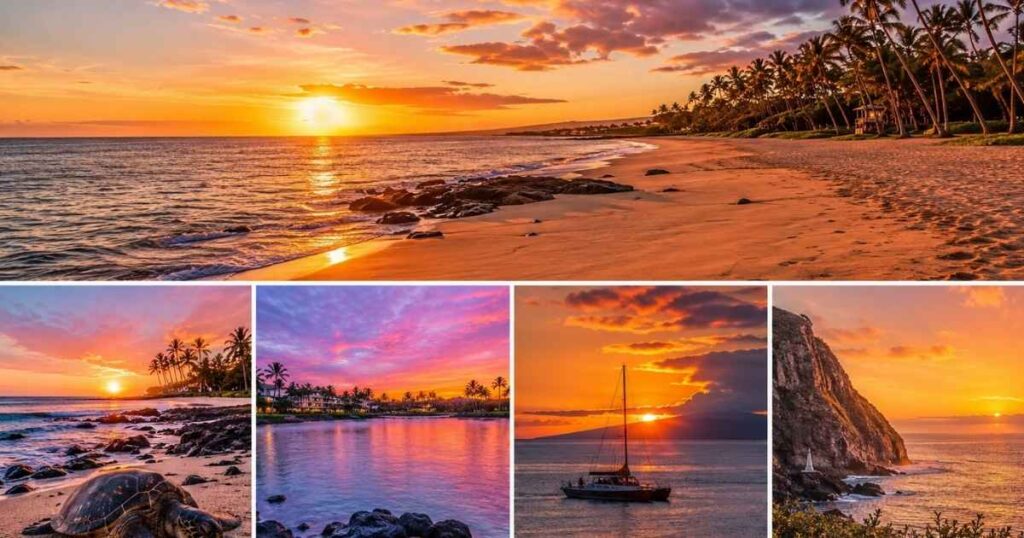
The west-facing Kohala and Kona coasts give you the most consistent sunset views on the island. The sun sets directly over the open ocean here and the volcanic rock along the shoreline turns deep orange and rust as the light fades. Hapuna Beach State Recreation Area sits at the top of every serious list. It is a half-mile of white sand facing directly west, wide enough that you never feel crowded even during peak season. Parking costs $5 per vehicle and fills up by 5:30 PM on clear evenings, so arrive by 4:30 PM to guarantee a spot. Spencer Beach Park, just 10 minutes north of Hapuna along Highway 19, offers the same west-facing exposure with far fewer people and free parking most visitors drive straight past it.
Anaehoʻomalu Bay, known locally as A-Bay, sits in front of the Waikoloa Beach Resort area and gives you a crescent-shaped shoreline with calm water that reflects the sky perfectly as the sun drops. The bay faces southwest, which means the color show starts about 20 minutes before the sun actually touches the horizon. You can rent a kayak for around $25 per hour and watch the sunset on Big Island from the water, one of the most underrated ways to experience it. Kealakekua Bay, roughly 12 miles south of Kona town, adds a layer of history to the visual: this is where Captain Cook arrived in 1779 and the white Captain Cook Monument across the bay catches the last light of the evening like a spotlight.
Pro Tip: Skip Kailua Pier in downtown Kona for sunset it faces southwest and gets blocked by boats and foot traffic. Drive 3 miles north to Kaloko-Honokōhau National Historical Park instead, where green sea turtles rest on the sand at dusk and the bay stays quiet even on busy evenings. Entry is free.
Sunset on Big Island from Mauna Kea The Summit Experience
Nothing on the island compares to watching the sun set on Big Island from the summit of Mauna Kea at 13,796 feet. The moment the sun drops below the cloud layer which sits roughly 8,000 feet below you the entire sky turns a shade of purple-pink that photographers struggle to capture accurately. You are, in the most literal sense, watching the sunset from above the clouds. The summit is open to visitors in 4WD vehicles until 30 minutes after sunset and parking is limited to 115 vehicles on a first-come basis. No admission fee applies but only 4WD vehicles with at least half a tank of fuel may proceed past the Maunakea Visitor Information Station most major rental car companies prohibit their vehicles on the summit road.
If you do not have an eligible 4WD vehicle, the Visitor Information Station at 9,200 feet still delivers a striking sunset on Big Island. The altitude puts you well above much of the cloud cover and the station is open daily from 9 AM to 9 PM with no entry fee. For a fully guided experience, operators like Hawaiian Eyes Tour charge around $234 per adult for an 8-hour summit, sunset and stargazing package that includes hotel pickup from Kona or Waikoloa. This is the smartest option for most visitors because the guides handle the altitude, the 4WD access and the astrophotography. Allow 90 minutes of driving from Kailua-Kona to the summit and bring a warm jacket temperatures at 13,796 feet drop to 30–40°F even when it is 85°F at the beach.
Pro Tip: Spend at least 30 minutes at the Visitor Information Station before continuing to the summit. Acclimatizing at 9,200 feet first reduces the risk of altitude sickness significantly and the station rangers can confirm current road and weather conditions before you commit to the final push.
Sunset Cruises Watching Sunset on Big Island from the Water
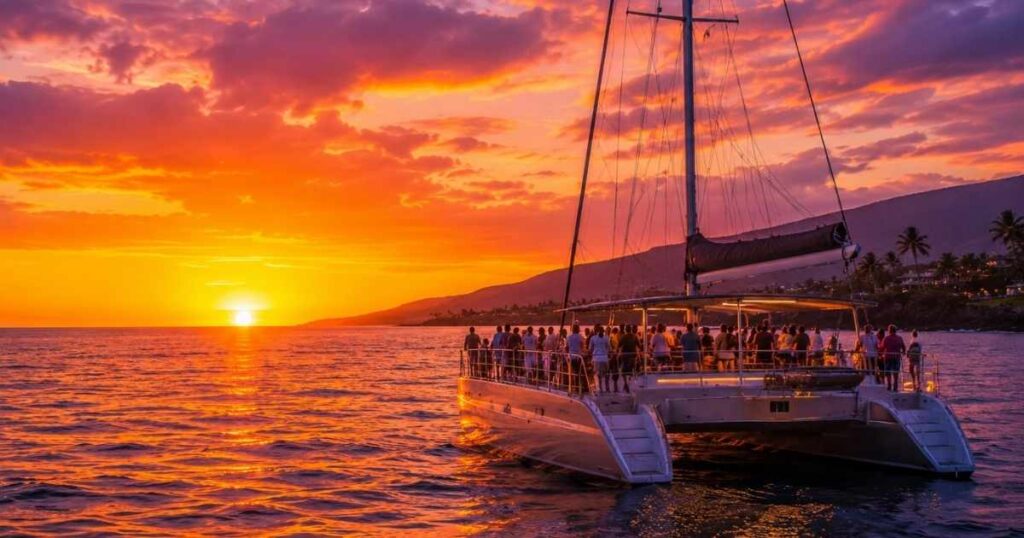
A sunset cruise from Kona puts the entire coastline in front of you as the light changes, which is a perspective you simply cannot get from the shore. The Kona Coast faces west across open Pacific and from a catamaran about a mile offshore, you see the volcanic cliffs, the black lava fields and the sky all reflected together in the water. Most Big Island sunset cruises depart from Honokōhau Harbor or Anaehoʻomalu Bay and run for two hours. Prices typically range from $150 to $200 per adult, with drinks included or available at minimal cost on board operators like Spirit of Aloha on the 54-foot catamaran include the first two cocktails in the ticket price. Budget operators on Viator start around $139 per person.
The Body Glove and Hawaii Nautical operators both run reliable evening departures from Kona pier. If you want a completely private experience for your group only, no strangers Paradise Sailing Hawaii offers private charters starting at $1,095 for up to eight guests, departing from Honokōhau Harbor about 30 minutes south of Waikoloa. Manta ray snorkel sunset combos are available through several operators for around $175–$200 per person: you watch the sunset on Big Island from the water, then drop anchor at a cleaning station where manta rays gather under lights after dark. Most operators guarantee a manta ray sighting or rebook you for free. Book at least three days ahead during July and August when tours sell out regularly.
Pro Tip: Kealakekua Bay sunset cruises include a stop at the Captain Cook Monument that solo beach visitors never reach easily. The 50-point narrated commentary on these tours covers the bay’s history in detail and adds real context to the visual.
Hidden Sunset Spots and What Most Tourists Miss
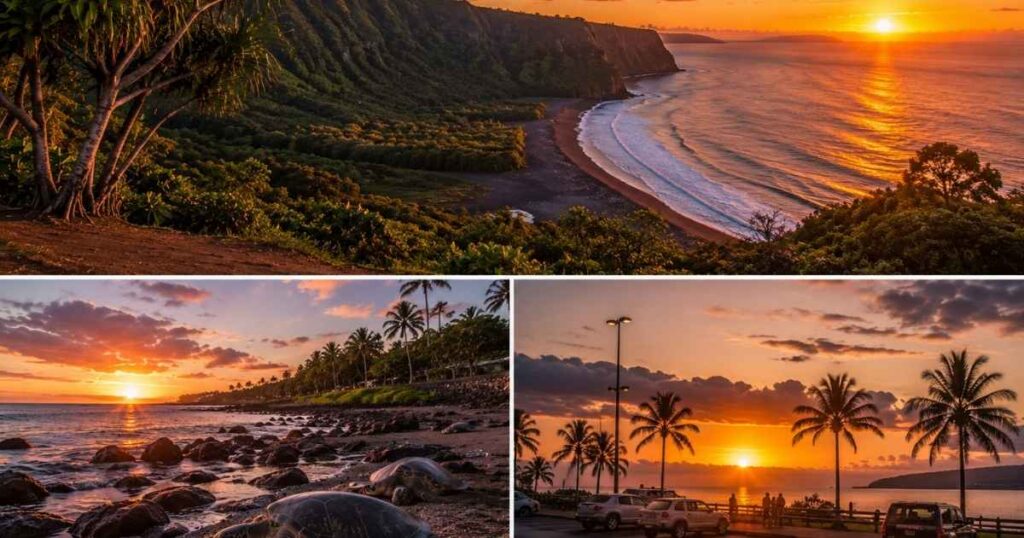
The north shore of the Big Island sees a fraction of the tourist traffic that the Kona Coast absorbs and Pololu Valley delivers a sunset on Big Island that very few visitors ever experience. The valley sits at the end of Highway 270, roughly 55 miles north of Kona (about 75 minutes by car) and a steep 20-minute trail leads down to a black-sand beach framed by dramatic cliffs. The sun sets behind the headlands to the west, casting long shadows across the valley floor as the sky turns from gold to deep red. Wear proper shoes. The trail is muddy year-round, bring water and give yourself 45 minutes for the round trip before it gets dark. There is no fee, no facilities and almost always, no crowd.
Kaloko-Honokōhau National Historical Park, just 3 miles south of Kona airport on Highway 19, solves the problem that most sunset spots on the Kona Coast have: crowds. The park’s coastal trail runs past ancient Hawaiian fishponds and sacred heiau temples and the south-facing bay at the trail’s end consistently attracts 20–30 green sea turtles at dusk. This is the sunset trifecta ocean, turtles and sky all in a park that sees a fraction of the visitors that Hapuna Beach gets. The park closes at sunset, so time your arrival to give yourself 90 minutes before the sun drops. Entry is free. The dry season from April through October gives you the best chance of clear skies with minimal cloud interference, while November through March brings heavier trade winds and more frequent afternoon cloud cover over the west coast.
Pro Tip: The Walmart parking lot on Henry Street in Kailua-Kona sits elevated above the town and faces west over the ocean. It sounds absurd, but locals genuinely use it as a sunset viewing spot. Palm trees line the lot, the view is unobstructed and it costs nothing. Use it as a backup if you miss the beach timing.
Practical Tips for Sunset on Big Island
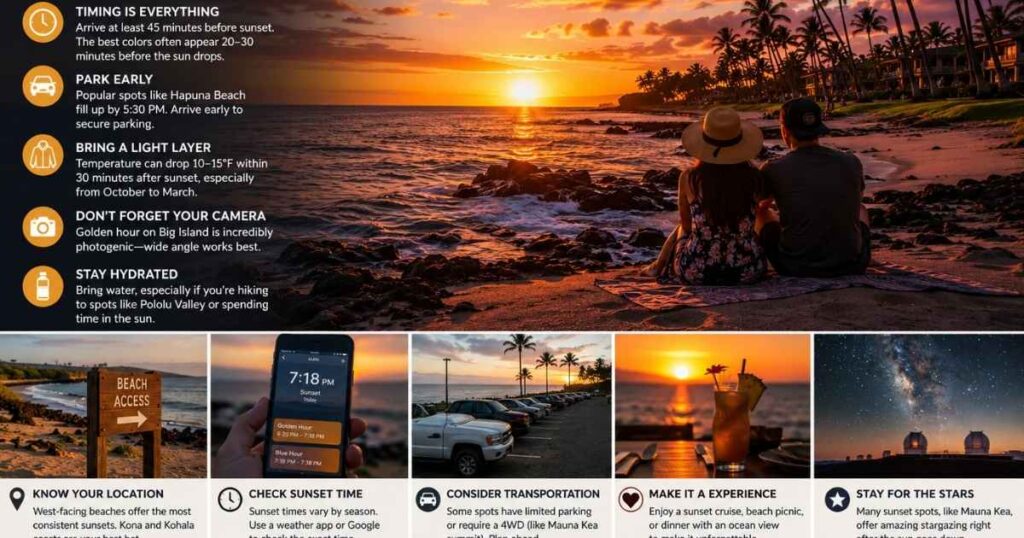
Timing is everything for sunset on Big Island. During summer months (May through August), the sun sets between 7:00 PM and 7:30 PM local time. In winter (November through January), it drops as early as 5:45 PM, which catches many first-time visitors off guard when they are still finishing dinner. Check the exact time for your travel dates and back-calculate: arrive at your chosen spot at least 45 minutes before sunset, because the best color often builds 20–30 minutes before the sun actually touches the horizon. Hapuna Beach fills its parking lot by 5:30 PM on clear evenings regardless of season, so the 45-minute rule is not just a suggestion.
Kona town itself works as a casual evening option. Ali’i Drive runs along the waterfront facing west and restaurant patios, coffee shops and grassy areas along the strip all face the ocean. A Mai Tai at any oceanfront bar along Ali’i Drive costs $14–$18 and comes with an unobstructed Pacific view. For a meal during golden hour, Huggo’s on the Rocks at the north end of Ali’i Drive puts tables on a wooden platform directly over the water, with the sun setting straight ahead. Expect to spend around $35–$55 per person for dinner here. If you plan to visit Hawaii Volcanoes National Park, the park entrance fee is $35 per vehicle (valid for 7 days) and the Jaggar Museum overlook although currently closed for renovation will eventually reopen with one of the most dramatic sunset views anywhere in the Pacific: an active lava lake glowing as the sky darkens.
Pro Tip: Pack a light layer even for beach sunsets. The temperature on the Kona Coast can drop 10–15°F within 30 minutes of sunset, especially from October through March and most visitors in shorts and t-shirts leave earlier than they want to.
You may also like:
Big Island Waterfalls You Can Swim In
Best Things to Do in Kona Hawaii
White Sand Beaches Big Island
Frequently Asked Questions
How many days do you need on Big Island to see the best sunsets?
Plan at least 5 days to cover the main sunset locations properly. Three evenings on the Kona and Kohala coasts cover Hapuna Beach, A-Bay and a sunset cruise, while a fourth evening at Mauna Kea’s summit requires a full afternoon dedicated to the drive and acclimatization. Pololu Valley on the north shore adds a fifth worthwhile evening.
Is sunset on Big Island better than Maui?
Sunset on Big Island offers more variety than Maui because the terrain is more dramatic. You can watch the sun drop from a beach, a valley floor or a 13,796-foot volcanic summit. Maui’s Haleakalā crater delivers a comparable summit experience but the Big Island adds active volcanic landscapes and far more sunset locations within a single island.
What is the best time of year to see the sunset on Big Island?
April through October is the best window for sunset on Big Island. The dry season on the Kohala and Kona coasts brings consistently clear skies and minimal cloud interference along the western shore. November through March increases the chances of afternoon cloud buildup that can obscure the horizon just as the sun reaches it.
Is it expensive to watch the sunset on Big Island?
Most beach sunsets on the Big Island are completely free. Hapuna Beach charges $5 for parking, Kaloko-Honokōhau park has no fee and Pololu Valley costs nothing at all. The main expense is optional: sunset cruises run $139–$200 per person and guided Mauna Kea summit tours cost around $234 per adult. You can have an exceptional sunset experience on the Big Island for $5 or less.
Can you watch the volcano glow at sunset on Big Island?
Yes, Hawaii Volcanoes National Park on the east side of the island offers a completely different sunset experience the Kīlauea caldera glows red-orange as daylight fades and the contrast between the darkening sky and the active lava is unlike any sunset view on the Kona side. Park entry costs $35 per vehicle (valid for 7 days) and the Kīlauea Overlook area gives the best angle for the glow at dusk. Check the National Park Service website for current lava activity status before your visit, as visibility varies by week.
Final Thoughts
The sunset on Big Island is not a single experience it is five or six entirely different ones depending on where you stand. Hapuna Beach delivers the classic postcard moment. Mauna Kea’s summit puts you above the clouds. Pololu Valley frames the sky between ancient sea cliffs. The Kona sunset cruise turns the ocean into a mirror. No other Hawaiian island packs this much variation into a single evening ritual. Choose your spot based on how much effort you want to invest and what kind of silence or company you want around you. For the most unforgettable version, drive to Pololu Valley on a clear evening in May or June, hike the 20-minute trail down to the black sand and stay until the last purple light disappears behind the headlands.

