
Most people treat the Split to Plitvice Lakes trip as a checkbox to get there, take photos and come back. That mindset costs you the best parts of the park.
Plitvice Lakes National Park sits 240 km north of Split in the Dinaric karst highlands at 367 meters elevation. It holds 16 interconnected lakes, 90 waterfalls and Croatia’s tallest waterfall Veliki Slap dropping a full 78 meters into a limestone gorge. The water carries dissolved calcium carbonate from the surrounding rock, which is exactly why it turns that impossible mineral-blue color you see in every photograph. This is not a filter. This is geology.
The journey from Split itself passes through a region most tourists fly over without looking down the Krka River canyon, the fortress town of Knin and the edge of the Dinaric Alps. Done right, the Split to Plitvice Lakes route is half the experience not just a means to an end.
This guide gives you everything: how to get there, what it costs, when to go, what to walk and what almost every first-time visitor gets wrong.
In This Guide You Will Find:
- Exact bus schedules, ticket prices and which companies serve the Split to Plitvice Lakes route
- The fastest driving route with two road options and a realistic fuel cost breakdown
- Organized tour vs. independent travel which one actually saves you money
- Plitvice Lakes entrance fees for every season and how to skip the queue
- The most common timing mistake day-trippers make and which trail fixes it
- Where to stay overnight if you want to beat the crowds on your second morning
Quick Info
| Detail | Info |
| Distance | ~240 km |
| Drive Time | 2.5 to 3 hours |
| Bus Journey | 3.5 to 4.5 hours |
| Nearest Airport | Split Airport (SPU) 25 km from city center |
| Best Months to Visit | May–June, September–October |
| Days Recommended | 1 full day minimum, overnight strongly recommended |
| Average Daily Cost | €50–€90 including transport, entry and food |
How to Get from Split to Plitvice Lakes
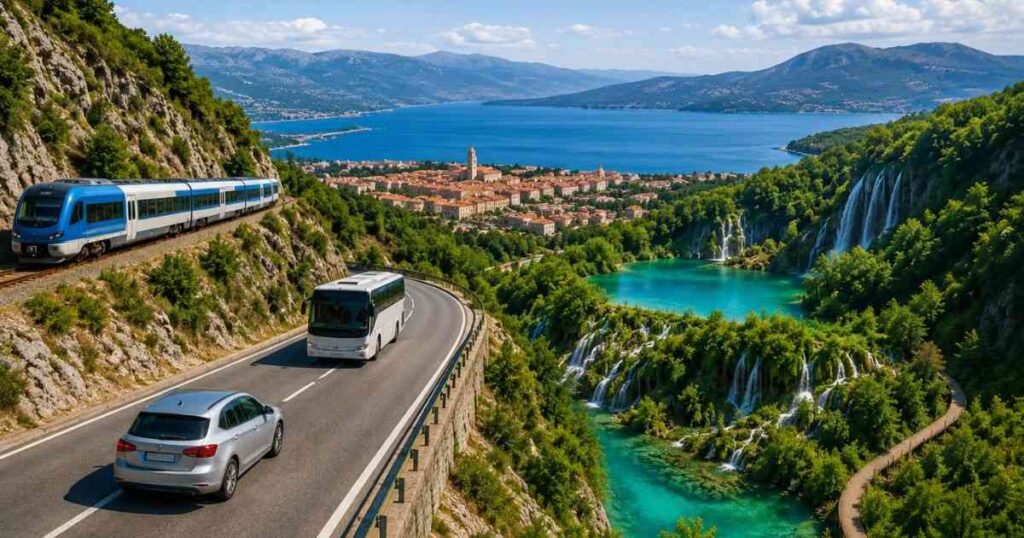
The Split to Plitvice Lakes connection is one of Croatia’s busiest tourist routes and it has more options than most visitors realize. The three main methods bus, car and private transfer each suit a different type of traveler and the cost difference between them is smaller than you would expect once you do the real math.
By Bus Flixbus and Autotrans both run direct services from Split Bus Station on Domovinskog rata street. Morning departures leave at 07:00 and 09:00 and the journey takes 3.5 to 4.5 hours depending on stops. One-way tickets cost €15 to €25. The bus drops you at a stop 500 meters from Entrance 1, which is the better entrance for starting Route B the full lake circuit.
Book at least 48 hours ahead in summer. The 07:00 departure in July and August sells out regularly and missing it means arriving at noon when the park is at peak congestion.
By Car The drive takes 2.5 to 3 hours using the A1 motorway through Šibenik and Knin, then the D1 road north to the park. Motorway tolls cost approximately €10 each way. Petrol for a return trip runs €25–€30 for a standard car. One-day car rental in Split costs €40–€70 depending on the season. The total driving cost for two people works out close to the bus fare per person once you split it.
By Private Transfer A private return transfer from Split to Plitvice Lakes costs €150–€220 for up to four passengers. For a group of three or four, this is the most cost-effective option per person and eliminates every logistical variable: no schedule, no parking stress, no missed bus.
Pro Tip: Book bus tickets at least 48 hours ahead in July and August morning departures sell out fast and afternoon buses arrive too late to walk more than one trail before the park closes.
Plitvice Lakes Entrance Fees and What You Actually Get
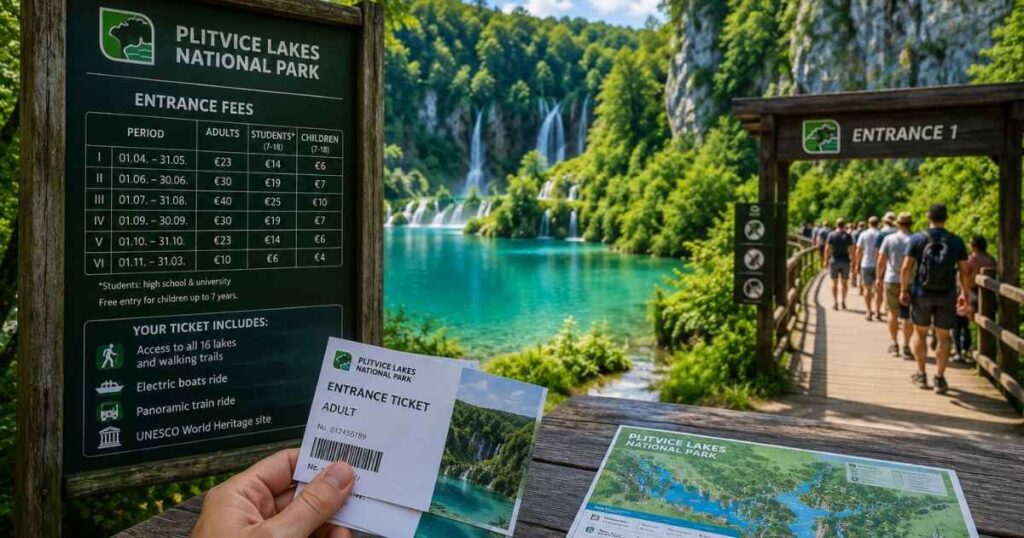
The park charges tiered entrance fees by season and the difference is large enough to genuinely affect your travel planning. In peak season (July–August), adult tickets cost €40. In the shoulder season (April–June and September–October), the fee drops to €23–€30. Off-season tickets (November to March) cost €10–€15.
Your ticket covers access to all 16 lakes, the complete boardwalk network and the free electric boats and panoramic trains connecting the Upper and Lower Lakes. The park spans 296 square kilometers but the visitor trail network runs 18 km total across all routes.
There are four main route options labeled A through K. Route B takes 3–4 hours and covers both lake systems Upper and Lower including Veliki Slap at 78 meters. Route A is the shorter loop at 2–3 hours covering only the Lower Lakes. For anyone making the full Split to Plitvice Lakes journey, Route B is the only version that justifies the travel time.
Most day-trippers coming from Split make one consistent mistake: the bus drops them near Entrance 2, they start walking toward the Lower Lakes and they run out of time before reaching the Upper Lakes or the tallest waterfall. Ask at the entrance desk specifically for the Route B starting direction and start walking counter-clockwise.
Pro Tip: Book your entrance ticket at np-plitvicka-jezera.hr at least 3 days before visiting the park limits daily visitors to 8,000 and sells out on peak days from June through August.
Best Time for the Split to Plitvice Lakes Trip
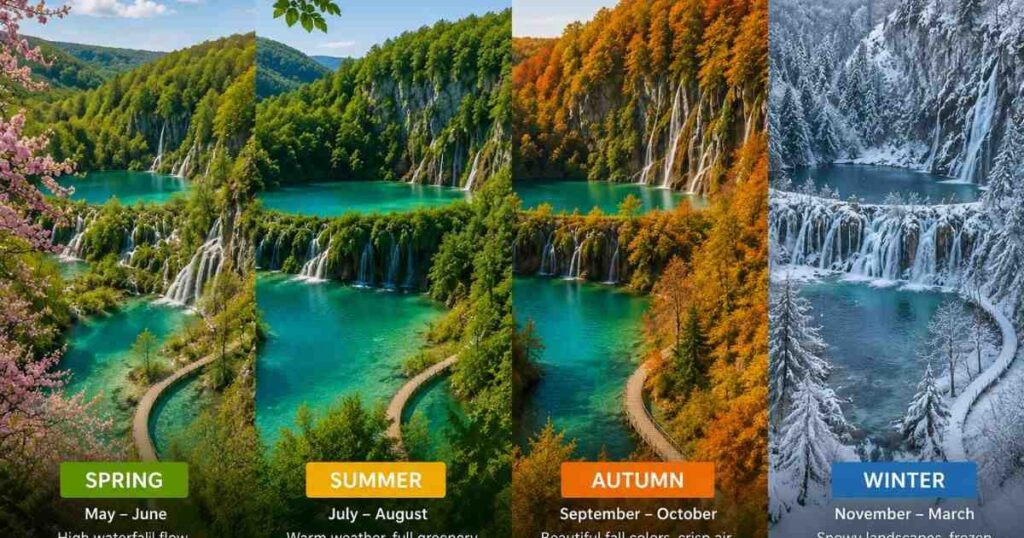
May is the single strongest month for this journey. Snowmelt from the Mala Kapela mountain range keeps waterfall volume at its highest, entrance fees sit in the lower price tier and daily visitor numbers run roughly 40% below the July peak. The water temperature is cold around 8°C but the turquoise color is most vivid in spring light, particularly between 08:00 and 10:30 when morning sun hits the Lower Lakes gorge at a low angle.
June remains excellent and adds warmth for swimming. The park permits swimming at one designated section near Entrance 1 at the lake called Novakovića Brod. Water temperature reaches 18–22°C by late June.
July and August offer the longest daylight hours the park stays open until 20:00 but the 8,000-visitor daily cap fills before noon, boardwalks get congested and the electric boat queues run 20–40 minutes. If summer is your only option, arrive before 08:00, have your ticket pre-booked and start walking immediately.
September and October balance everything well. Autumn color begins on the surrounding beech forest by early October, waterfall flow remains steady and the average afternoon temperature in the park sits at 15–20°C. This is the window most repeat visitors choose.
Winter visits (November to March) are possible and occasionally dramatic ice forms on the falls and boardwalk edges but some electric boat routes stop and the D1 road from Knin can carry black ice without warning.
Pro Tip: For the best light and lowest crowds on the same day, arrive at the park gate at 07:00 in shoulder season you will have the Lower Lakes boardwalks almost entirely to yourself for the first 90 minutes.
Organized Tour vs. Independent Travel from Split
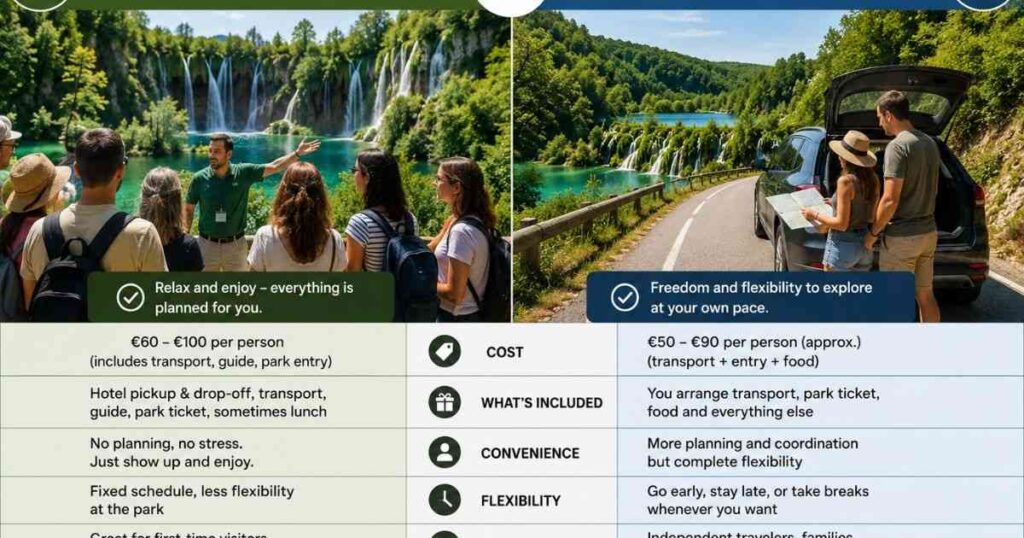
Tour operators along Split’s Riva waterfront sell Plitvice day trips starting at €55 per person. That price typically includes return coach transport, a park guide for the first two hours and help with entrance ticket logistics. Companies like Sugaman Tours and Split Excursions run this route with morning departures around 07:00–08:00.
Independent travel costs more than most people expect when they add everything up. A return bus ticket costs €30–€50. Park entrance in peak season costs €40. Lunch near Entrance 2 costs €12–€18 for a main dish. Total: €82–€108. An organized tour at €55–€75 all-in actually beats that range during summer months. The math favors the tour if cost is your main concern.
The one area where independent travel wins decisively is time. Organized tours allocate 3–4 hours inside the park, which covers Route A. Route B needs 5–6 hours. If walking both lake systems is your goal, take the 07:00 bus independently, enter at 08:30 and take the 18:00 return bus that gives you the full experience that no group tour currently offers.
One detail almost no visitor notices: the restaurant at Entrance 2 charges 30–40% more than the cafes in Plitvička Jezera village, 3 km up the D1 road. If you are driving, stop in the village for lunch and skip the park restaurant entirely.
Pro Tip: When booking an organized tour, ask the operator specifically whether the itinerary includes Route B or only Route A. The answer tells you immediately whether the tour is worth the price.
Practical Tips for the Split to Plitvice Lakes Journey
Footwear matters more than you think. The wooden boardwalks sit 1 meter above the water surface and collect spray from the falls constantly. Smooth-soled shoes and flip-flops turn the descent into the Lower Lakes gorge into a genuine slip hazard. Wear trail runners or hiking shoes with rubber grip.
Carry cash. Croatia joined the Eurozone in January 2023, so the currency is euros. The park entrance accepts cards reliably but roadside fuel stops between Knin and the park, some parking areas and village cafes often run card-only terminals that fail under poor signal. Keep €30–€40 in cash as a backup.
The drive through Knin is worth a short stop. The Knin Fortress sits on a 345-meter limestone cliff above the town and is visible from the A1 motorway. It costs €4 to enter and takes 45 minutes. Knin was the capital of the self-declared Republic of Serbian Krajina during the 1991–1995 war and fell to Croatian forces in Operation Storm in August 1995 context that gives weight to the quiet of the park afterward.
Download the offline map before leaving Split. Mobile coverage drops in the gorge sections of the Lower Lakes. The official park map at np-plitvicka-jezera.hr includes an offline version that shows electric boat stops and trail connectors absent from the printed entrance map.
Pro Tip: Check the return bus board at Entrance 1 info desk the moment you arrive seasonal timetables shift and the times printed on booking sites are often 2–3 weeks out of date.
You may also like:
Frequently Asked Questions
How many days do you need for a Split to Plitvice Lakes trip?
One full day covers the park if you take an early morning departure from Split and walk Route B. Two days is the better choice, staying overnight in Mukinje village (€50–€90 per night) lets you enter at 07:00 on the second morning before day-trippers arrive and walk both routes at a relaxed pace across two sessions.
Is the Split to Plitvice Lakes trip worth it?
The trip is worth making for anyone who has not seen a travertine lake system before. The mineral-blue water, active waterfall terraces and 78-meter Veliki Slap are unlike anything else in Central Europe. Visitors who leave disappointed almost always spend fewer than 3 hours inside usually because they booked a short tour or arrived after noon in peak season.
What is the best time to visit Plitvice Lakes from Split?
May and early June offer the best combination of high waterfall volume, shoulder-season entrance fees (€23–€30) and crowd levels roughly 40% below the summer peak. September is the second-best window with similar advantages minus the waterfall height. Avoid mid-July through August unless you book a pre-dawn arrival.
How much does the Split to Plitvice Lakes trip cost in total?
An independent day trip costs €65–€110 per person: €15–€25 one-way bus, €23–€40 park entrance and €15–€25 for food. Driving costs €35–€40 return in fuel and tolls for the whole car. An organized tour from Split costs €55–€85 all-in and competes directly with independent travel once all costs are combined.
Can you do Plitvice Lakes as a day trip from Split?
Yes, take the 07:00 bus from Split Bus Station, arrive at the park by 10:30, walk Route B over 5–6 hours and return on the 18:00 departure. The total door-to-door day runs 13–14 hours and is tiring but it is feasible and thousands of travelers complete it weekly between May and October.
Conclusion
The Split to Plitvice Lakes journey rewards the people who plan it properly and punishes everyone who treats it as an afterthought. Book the 07:00 bus or leave by car before 07:30. Pre-book your entrance ticket online. Walk Route B not Route A. When you reach the base of Veliki Slap and look up at 78 meters of falling water through the gorge mist, you will understand why Plitvice has held UNESCO World Heritage status since 1979.
One specific action before you book anything else: go to np-plitvicka-jezera.hr right now, check your travel date’s availability and secure the entrance ticket before you touch bus or hotel bookings a sold-out entry is the only thing that can ruin an otherwise perfect trip.

