
Most people picture white sand when they think of Maui’s beaches. Red Sand Beach Maui defies every expectation this is a crimson cove carved into a volcanic cinder cone, where rust-red cliffs drop straight into water so blue it looks digitally enhanced. The sand is not beige or black it is a deep iron-red, ground to grit over thousands of years from the eroding Ka’uiki Head cinder cone above. No other beach on the island looks remotely like it.
Kaihalulu Beach (the official Hawaiian name, meaning “roaring sea”) sits just south of Hana Bay on Maui’s rugged east coast. It draws visitors who have driven the 64-mile Road to Hana and want one final stop that feels genuinely off the beaten path. This guide covers exactly how to reach red sand beach Maui safely, what trail conditions to expect, when to go, what to do once you arrive and which nearby beaches are worth combining into the same day.
IN THIS GUIDE YOU WILL FIND:
– Step-by-step directions from Uakea Road to the beach, with specific landmarks
– Honest safety assessment of the trail what makes it risky and who should skip it
– The best months to visit for dry conditions and calmer water
– What to do at the beach photography, snorkeling and the lava cove itself
– How Kaihalulu compares to Hamoa Beach and Wai’anapanapa Black Sand Beach
– Costs, parking logistics and the one thing most tourists forget before arriving
QUICK INFO BOX
| Detail | Info |
| Location | Kaihalulu Cove, south of Hana Bay, East Maui |
| Nearest Airport | Kahului Airport (OGG) ~55 miles / 2.5–3 hrs by car |
| Best Time to Visit | May–September (dry trail, calmer water) |
| Drive from Kahului | 2.5–3 hrs non-stop; 10–12 hrs roundtrip with Hana stops |
| Days Recommended | Full day combine with Road to Hana |
| Average Daily Cost | $50–$80 per person (gas + food + $5 entry / $10 parking at Wai’anapanapa) |
What Makes Red Sand Beach Maui So Unusual
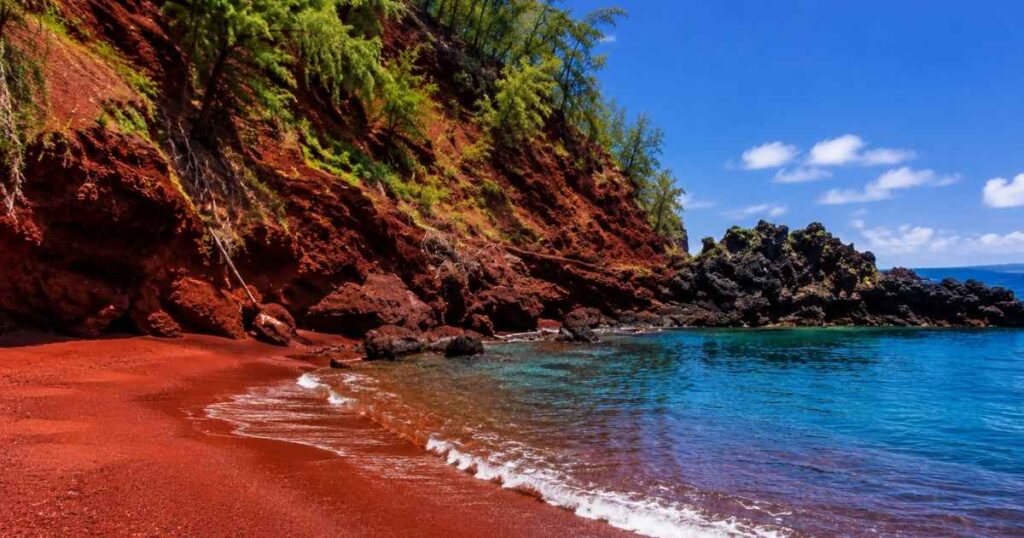
Red Sand Beach Maui owes its color to Ka’uiki Head, a volcanic cinder cone that rises directly above the cove. Iron-rich lava cinders from this cone have eroded over thousands of years, settling into a beach unlike anything else in Hawaii. The sand shifts in color from rust-orange to deep brick-red, with flecks of black volcanic rock mixed throughout. A crescent of dark lava boulders sits just offshore, forming a natural barrier that breaks the force of the open Pacific before it reaches the shoreline.
The cove is small, roughly 100 feet across and surrounded on three sides by steep red cliffs hung with ironwood trees. Those trees continuously drop pine-like needles onto the trail, which is one reason the path becomes slippery even when it has not rained recently. The overall effect is disorienting in the best possible way the red sand, turquoise water, green ironwood canopy and black lava wall create a color combination that stops most visitors in their tracks.
Kaihalulu is one of fewer than a dozen naturally occurring red sand beaches in the world. Most tourists on the Road to Hana pass within 0.5 miles of it without knowing it exists, because there is no signage directing visitors toward the beach. The local Hana community has historically discouraged tourism here partly because of rescue callouts on the trail and partly because the path crosses land disputed as private property. Neither issue should stop an informed, physically capable adult from visiting responsibly but both are worth understanding before you make the drive.
Pro Tip: Search “Kaihalulu Beach” or “Red Sand Beach Maui” in Google Maps before leaving your car. The pin is accurate and will navigate you directly to the end of Uakea Road, the correct starting point for the trail.
How to Get to Red Sand Beach Maui: Trail Directions and Safety
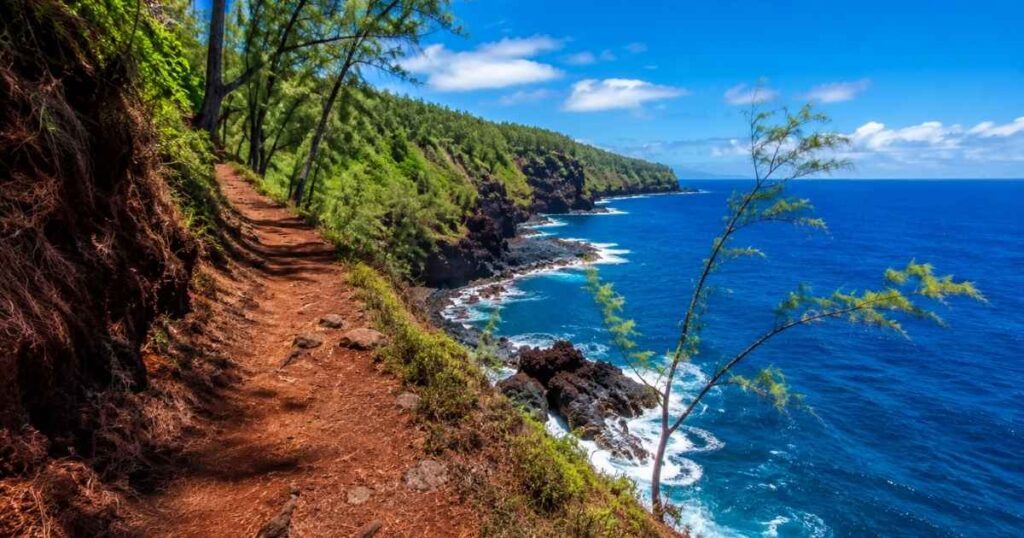
Getting to red sand beach Maui requires a 0.5-mile hike along an unmaintained coastal trail. The trailhead starts at the dead end of Uakea Road, just past the Hana Community Center and the Hana Ball Park. Park on the street in the dead-end section of Uakea Road there is no dedicated lot and space fills up fast after 9:00 a.m. Walk past the yellow gate, cross the open grass field and find the dirt trail on the far edge. From there, the path follows the cliff face for 0.5 miles to the cove.
The trail takes most adults 10–15 minutes to walk one way. The surface is loose volcanic cinder and pine needles both become dangerously slippery when wet. Several sections of the path sit within a few feet of an exposed cliff edge with no railing. A landslide in recent years erased a portion of the original trail, leaving a narrower replacement route. Local emergency services including helicopter rescues have responded to injuries here and children and anyone with balance or mobility limitations should not attempt this hike.
On a dry morning with proper footwear, most fit adults navigate the trail without serious difficulty. Wearing closed-toe shoes with real grip sandals is not appropriate here. Arrive before 8:00 a.m. to secure street parking, avoid trail crowds and reach the cove while water conditions are at their calmest. Do not attempt the trail within 24 hours of heavy rain the cinder and needle surface needs time to dry after a downpour. If you see any posted “Kapu” or “No Trespassing” signs upon arrival, respect them and turn back.
Pro Tip: Keep hiking shoes in your car specifically for this stop. Many Road to Hana visitors arrive in sandals, look at the trail and turn back missing one of the most visually striking beaches on the island.
What to Do Once You Reach the Cove
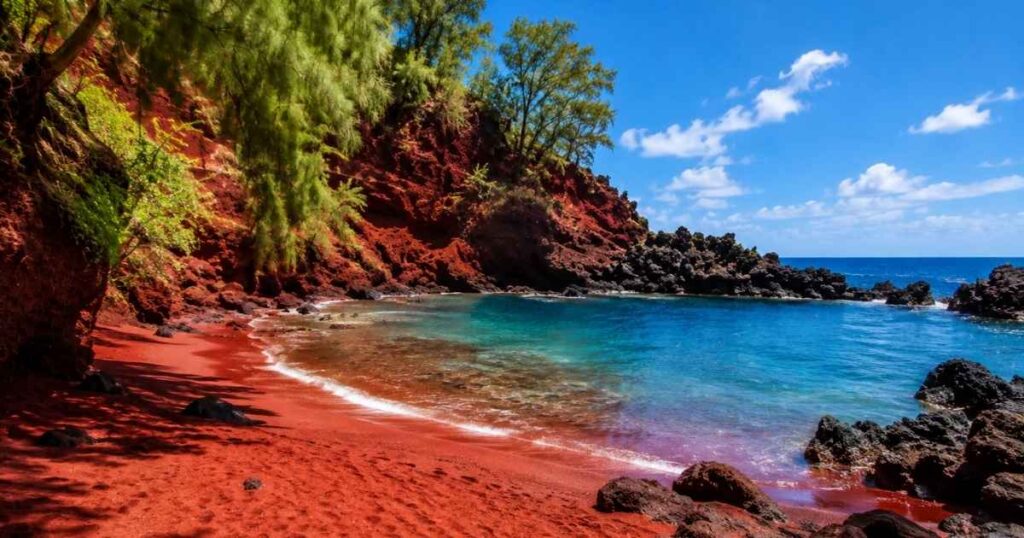
Once you reach the beach, the main activity is simply being there. The cove is compact enough that it feels intimate to sit on the red sand, look out through the gap in the lava wall and watch the deep blue ocean surge against the black rock. Most visitors spend 30–60 minutes on the beach itself. Photography drives most visits. The contrast between the iron-red sand, the turquoise water inside the cove and the rust-colored cliffs above produces a composition found nowhere else in Hawaii and nowhere that looks like it on the entire island chain.
Snorkeling is possible inside the cove on calm days but requires judgment. The lava rock barrier offshore blocks the largest waves and creates a partially protected pool but rip currents still form particularly at the northern end of the cove near the gap in the rocks. Never snorkel past the lava wall. Inside the cove, the water is shallow enough to spot small reef fish and occasional sea turtles without diving. Bring a mask and fins if snorkeling interests you but assess wave conditions from the cliff above before entering the water.
Kaihalulu has been informally clothing-optional for decades. Most visitors on a typical morning wear swimwear but you may encounter nudists. The beach has zero facilities, no restrooms, no freshwater, no food vendors and no lifeguards. Carry all water, reef-safe sunscreen and snacks before you start the trail and pack out every piece of trash. The cove’s isolation is exactly what preserves its visual quality.
Pro Tip: Arrive at sunrise for the strongest photography conditions. Low morning light hits the red cliffs from the east and intensifies the color contrast between the sand and water by midday, harsh overhead light flattens everything considerably.
Kaihalulu vs. Nearby Beaches: How to Plan Your Day
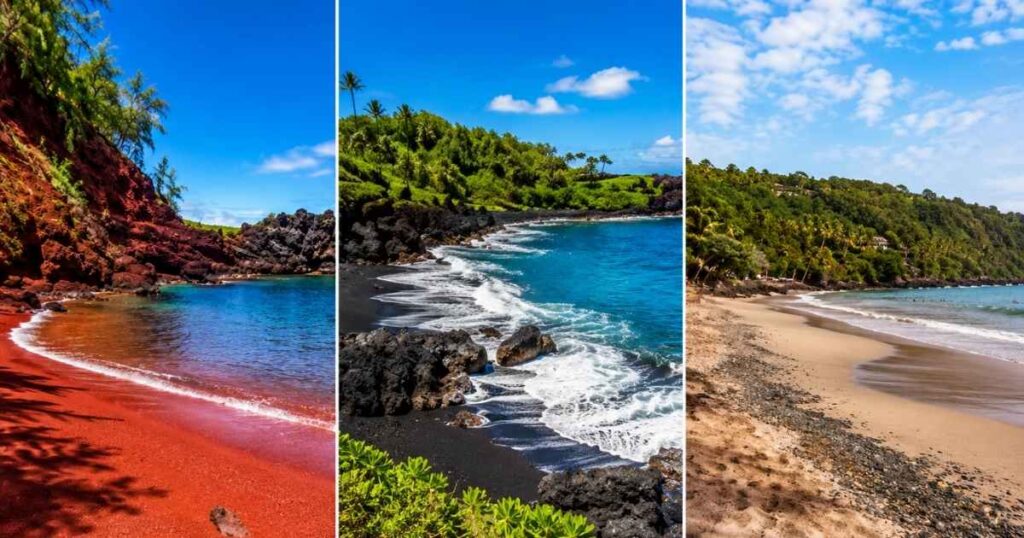
Kaihalulu is not the only spectacular beach near Hana and knowing how each one fits together helps you build a realistic itinerary. Wai’anapanapa State Park sits about 3 miles north of Hana at mile marker 32 on the Hana Highway. It has Maui’s most accessible black sand beach, plus sea caves, restrooms and a coastal trail. Entry costs $5 per person plus $10 for parking for non-residents and advance reservations through the DLNR website are mandatory they fill weeks ahead during peak months. Wai’anapanapa suits families and anyone who wants a proper beach facility with structure and safety.
Hamoa Beach, roughly 2 miles south of Hana town, is a wide crescent of grey-white sand backed by tropical vegetation. It has no entry fee, no permit requirement and a short staircase rather than a cliff trail. The surf at Hamoa runs stronger than at Kaihalulu, which limits swimming in winter but makes it a dramatic place to watch waves roll in from the open ocean. If you are traveling with children or want a second beach stop without the trail challenge, Hamoa is the right pick.
Red sand beach Maui fills a specific niche it rewards physically capable visitors willing to accept minor trail risk in exchange for an experience that is genuinely singular. Most Road to Hana drivers stop at Wai’anapanapa, glance at Hana town and turn back north. Kaihalulu sits slightly south of Hana in the direction most visitors are already driving. Adding it to a Wai’anapanapa day costs an extra 45–60 minutes total and delivers an entirely different type of beach.
Verdict: If you are doing the Road to Hana for a full day and are physically comfortable on uneven terrain, visit both Wai’anapanapa and red sand beach Maui. They are 3 miles apart and offer contrasting experiences, one structured and accessible, one raw and tucked out of sight.
You may also like:
Frequently Asked Questions
How many days do you need to visit Red Sand Beach Maui?
Red sand beach Maui itself needs only 1–2 hours on the ground, including the 10–15 minute trail each way and time at the cove. However, the drive from Kahului takes 2.5–3 hours one way, which means a full day is the minimum to make the trip worthwhile. Most travelers combine it with the complete Road to Hana drive, which runs 10–12 hours roundtrip with stops.
Is Red Sand Beach Maui worth visiting?
Yes, for physically capable adults who enjoy off-trail experiences and dramatic coastal scenery. Red sand beach Maui is one of the few naturally red sand beaches in the world and the volcanic cove has no parallel anywhere else on the island. It is not a suitable stop for visitors with children, balance issues or mobility limitations or for anyone arriving within 24 hours of heavy rain when the trail becomes dangerously slippery.
What is the best time to visit Red Sand Beach Maui?
May through September offers the most reliable conditions. During these months the trail surface stays driest, ocean conditions inside the cove are calmer and the risk of closure due to storm damage is lowest. Within any given day, arrive by 7:30–8:00 a.m. This gives you the best parking on Uakea Road, the calmest water and the best photography light before other visitors arrive.
Is Red Sand Beach Maui expensive?
The beach itself has no entry fee. Your primary costs are getting there rental car, gas (fill up in Kahului or Pa’ia no stations exist between Pa’ia and Hana, roughly 50 miles) and food along the way. Budget $50–$80 per person for the full Road to Hana day, including a meal at a Hana farm stand ($12–$18 per person for local food). If you add Wai’anapanapa State Park the same day, add $5 per person entry plus $10 parking for non-residents.
Can you do a day trip from Kahului to Red Sand Beach Maui?
Yes but it is a long one. Kahului Airport (OGG) to Kaihalulu Beach runs approximately 2.5–3 hours non-stop. Roundtrip with Road to Hana stops takes 10–12 hours total. Leave by 7:00 a.m. from Kahului to reach the beach before Uakea Road parking fills and plan to be back on the highway by 4:00 p.m. The narrow road to Hana is significantly more stressful to drive in the dark.
Final Thoughts
Red sand beach Maui earns its reputation as one of Maui’s most unusual natural features not because it is easy to reach but because nothing else on Maui looks anything like the red sand beach. The iron-red cinders, the black lava barrier, the startling blue of the sheltered water, this combination stays with you long after the white-sand beaches of Ka’anapali have blurred together in memory. If you are driving the Road to Hana and are physically comfortable on uneven terrain, skipping Kaihalulu is a genuine mistake. Arrive early in the morning, wear closed-toe shoes with grip, check the trail surface before you descend and plan to spend at least 45 minutes inside that crimson cove then sit facing the lava wall gap and watch how the Pacific light changes on the red sand as the sun climbs.

