
Most first-time visitors assume Cathedral Rock Sedona is just another scenic overlook they can snap from the parking lot and move on. That assumption is wrong. The final quarter mile is a hands-on rock scramble not a stroll and the reward at the top is a saddle view of Oak Creek Valley that most tourists never reach because they turn back too early. This guide walks through exactly what to expect, when to go and how to avoid the mistakes that send half the parking lot back to their cars within twenty minutes.
In this guide you will find:
- The exact trailhead location and parking situation at Cathedral Rock Sedona
- Why the middle section of the trail catches people off guard
- The two best times of day to photograph the formation
- How Cathedral Rock compares to Bell Rock and Airport Mesa
- What a Red Rock Pass costs and where to buy one
- A realistic difficulty rating for hikers with knee or balance concerns
Quick Info
Location: Village of Oak Creek, just south of Sedona, Arizona
Nearest Airport: Phoenix Sky Harbor International Airport, about 2 hours by car
Best Time to Visit: Early morning for cooler temperatures and fewer crowds or about 2 hours before sunset for the best light
Travel Time from Sedona Uptown: Approximately 15 minutes by car
Trail Length: 1.2 miles round trip
Elevation Gain: Around 600 feet, mostly during the final rock scramble
Time Needed: 1.5 to 2.5 hours, depending on hiking pace and time spent at the summit
Average Daily Cost: $40–$80 per person, including a Red Rock Pass, lunch and parking expenses (if applicable)
Getting to Cathedral Rock Sedona and What the Trail Actually Involves
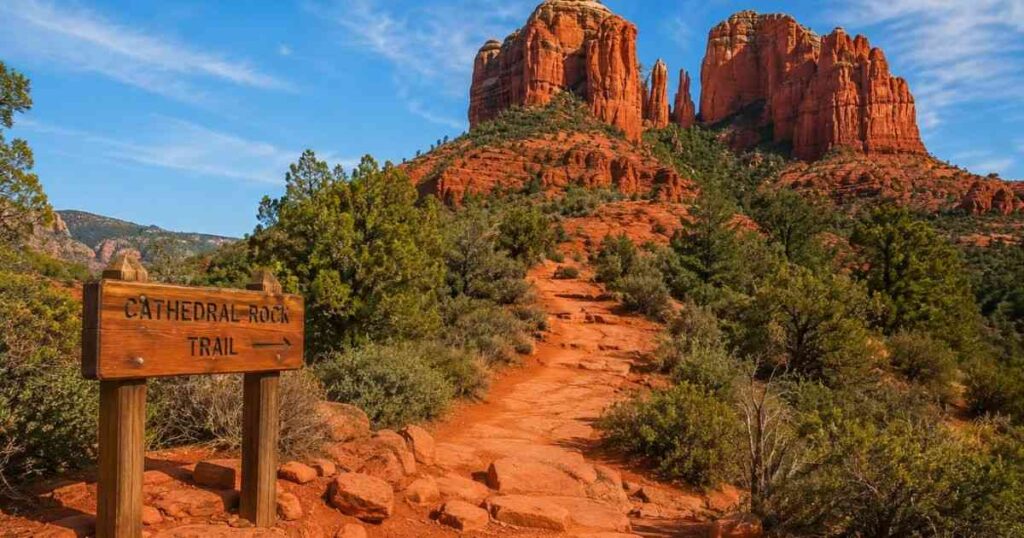
The trailhead sits on Back O’ Beyond Road, a quiet residential street about four miles south of Uptown Sedona. The parking lot holds roughly 20 vehicles and it fills by 8:30 a.m. on weekends between March and May. Arriving before 7:30 a.m. is the only reliable way to get a spot without circling the neighborhood.
Driving in from Phoenix, most visitors take Interstate 17 north to State Route 179, then follow signs toward the Village of Oak Creek. This route avoids the tighter switchbacks of Oak Creek Canyon and tends to run smoother for a first visit. Rideshare pickup is limited in this residential area, so a rental car or a booked shuttle is the more dependable option if you don’t want to rely on walking from a nearby resort.
The first half of the Cathedral Rock trail is a well-graded path through juniper and manzanita, easy enough for sandals. Then the terrain changes fast. You reach a section of sloped sandstone where the trail effectively disappears into the rock itself and you climb using hand and foot holds for about 200 vertical feet. This is where Cathedral Rock Sedona earns its reputation as deceptively strenuous for a 1.2-mile round trip. Closed-toe shoes with real tread matter here flip-flops are the single most common cause of turned ankles on this stretch.
Once past the scramble, the trail opens into a saddle between two spires. This is the postcard shot and it is also where most visitors realize the summit proper is a technical climb reserved for experienced scramblers not casual hikers. The saddle view alone justifies the trip.
From the saddle, you can see Oak Creek Valley stretching west and the rooftops of the Village of Oak Creek below, with juniper-covered hills rolling toward the horizon. Hikers with a fear of heights sometimes stop short of the final ledge and that is a reasonable call since there is no railing and the drop-off is real. Bring a small daypack rather than a large backpack, since the narrower sections of the scramble make bulky gear awkward to maneuver.
Pro Tip: Wear shoes with actual grip and carry at least one liter of water even for this short distance, since the sandstone scramble takes far longer than the mileage suggests.
Cost, Permits and What You Need Before You Arrive
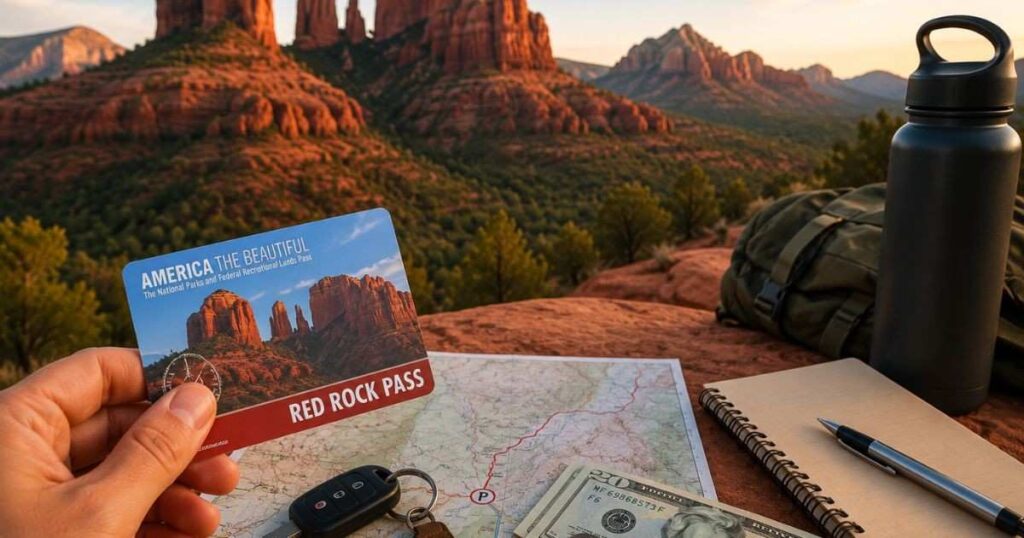
Every vehicle parked near Cathedral Rock Sedona needs a Red Rock Pass, which costs $5 for a day pass or $15 for a week, sold at the trailhead kiosk via card or cash box. National park annual pass holders can display that instead. Beyond the pass, there are no entrance fees to hike the trail itself.
Budget travelers can see Cathedral Rock Sedona and the surrounding Village of Oak Creek area for well under $50 a day. A casual lunch at one of the cafes along Highway 179 runs $12 to $18 per person and gas from Phoenix and back adds roughly $30 depending on your vehicle. Guided jeep tours that stop at the base of Cathedral Rock typically run $80 to $120 per person if you would rather skip the parking search entirely and let someone else navigate the dirt roads.
If you plan to hike several trails during your stay, a weekly pass at $15 pays for itself after just three visits and it covers every trailhead in the surrounding national forest not just this one. Gear costs are worth planning for too. A decent pair of trail shoes with real traction runs $60 to $100 if you don’t already own a pair and a two-liter hydration pack adds another $25 to $40. Neither is mandatory but skipping both is the fastest way to end up as one of the turned-ankle stories the local rangers tell.
Compared to Bell Rock, which charges the same Red Rock Pass fee but offers a flatter, longer trail network, Cathedral Rock costs the same to access but delivers a shorter, more intense experience. Most travelers pair both destinations in a single day since they sit less than ten minutes apart on Highway 179.
Verdict: A Red Rock Pass plus a packed lunch keeps the visit well within a modest travel budget, making Cathedral Rock Sedona one of the more affordable iconic hikes in Arizona.
The Best Time of Day and Season to Experience Cathedral Rock Sedona
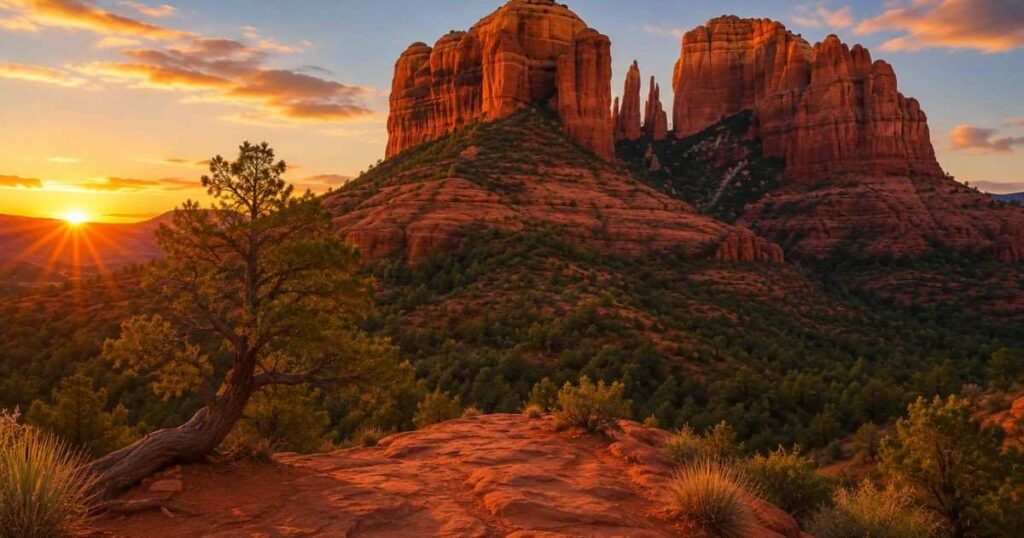
Sunrise and the two hours before sunset are when Cathedral Rock Sedona photographs best, since the low-angle light turns the sandstone a deep orange-red that flattens out under the midday sun. Locals call this the golden window and serious photographers arrive at the saddle at least 45 minutes before sunset to claim a spot.
Spring and fall offer the most comfortable hiking temperatures, typically in the 65 to 80 degree range, while summer afternoons regularly push past 100 degrees on the exposed rock face with almost no shade. Winter brings occasional ice on the sandstone scramble section, which turns an already technical climb genuinely dangerous, so check trail conditions after any freeze.
Most visitors don’t realize that the parking situation shifts dramatically by season. During slower months, arriving by 9 a.m. is usually enough to find a spot, while peak season demands arrival before sunrise. If the main lot at Cathedral Rock Sedona is full, an overflow lot exists a short walk down Back O’ Beyond Road, though it adds ten minutes to your total hike time.
Pro Tip: Check the trail alert page for the Coconino National Forest before visiting in winter, since ice closures on this specific scramble happen more often than on flatter Sedona trails.
Practical Tips for Hiking Cathedral Rock Sedona and Nearby Alternatives
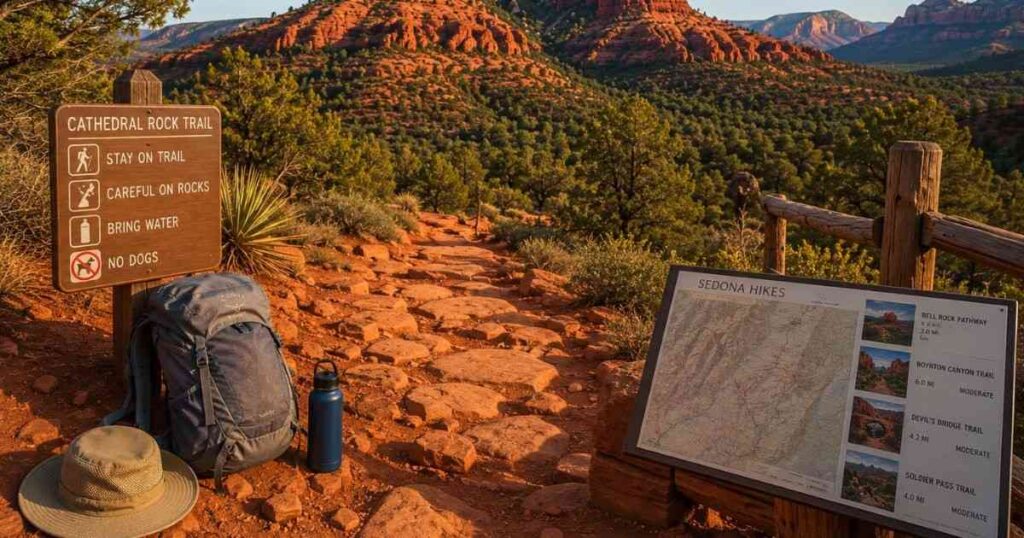
Cell service is unreliable past the first quarter mile, so download offline maps before you start. There are no restrooms at the trailhead itself, though a portable toilet is usually available at the overflow lot during busy months. Pack out everything you bring in, since there are no trash receptacles on the trail.
Dogs are permitted on leash but the scramble section is genuinely difficult for most dogs to climb safely and several owners end up carrying smaller breeds through the steepest stretch. Trekking poles help on the lower switchbacks but become more of a hindrance than a help once you reach the hand-and-foot section, so many hikers stash them in a daypack before that point. If you’re traveling with kids under ten, budget extra time and expect to help lift them over a few of the taller rock steps.
For hikers who want the view without the scramble, the Little Horse Trail offers a lower vantage point of Cathedral Rock from across the valley, reachable by a flatter three-mile path. Bell Rock, roughly five minutes north, provides a similar red rock experience with far less technical difficulty, making it the better choice for families with young children or anyone uneasy on exposed rock.
Sedona’s vortex sites draw a different crowd entirely and Cathedral Rock happens to be one of the four commonly cited vortex locations in the area, alongside Airport Mesa, Boynton Canyon and Bell Rock. Whether or not you put stock in the vortex claims, the physical hike itself stands on its own as one of the more rewarding short climbs in the region.
Verdict: Cathedral Rock rewards hikers who come prepared with the right footwear and timing, while Bell Rock and Little Horse Trail serve as easier backups for anyone who wants the scenery without the scramble.
You may also like:
Frequently Asked Questions
How many days do you need to see Cathedral Rock Sedona?
A single morning or evening is enough to hike Cathedral Rock Sedona itself, since the round trip rarely takes more than 90 minutes including photo stops. Most travelers pair it with Bell Rock or a Jeep tour on the same day, turning it into a half-day itinerary rather than a standalone trip.
Is Cathedral Rock Sedona worth visiting?
Yes, Cathedral Rock Sedona consistently ranks among the most photographed rock formations in Arizona and the saddle view justifies the short but steep climb. The scramble section adds a genuine sense of accomplishment that flatter Sedona trails don’t offer.
What is the best time to visit Cathedral Rock Sedona?
Early morning or the two hours before sunset offer the best light and coolest temperatures for climbing the sandstone scramble. Spring and fall bring the most comfortable air temperatures, while summer midday heat on the exposed rock face should be avoided entirely.
Is Cathedral Rock Sedona expensive for tourists?
No, a Red Rock Pass costs only $5 for the day and there are no additional entrance fees to hike the trail. Total daily costs including food and gas typically stay between $40 and $80 per person for independent travelers.
Is Cathedral Rock Sedona better than Bell Rock for beginners?
Bell Rock suits beginners better because its trail network is flatter and longer, while Cathedral Rock Sedona involves a genuine hand-and-foot scramble near the top. Hikers who want both should visit Bell Rock first as a warm-up before tackling the steeper terrain at Cathedral Rock.
Final Thoughts
Cathedral Rock Sedona delivers one of the shortest, most intense climbs in the entire Sedona trail system and the saddle view between the twin spires remains the single most rewarding payoff for the least mileage in the region. Arrive with real hiking shoes, water and a plan to reach the trailhead before the lot fills. Time your visit for the hour before sunset, climb the sandstone scramble at your own pace and sit at the saddle until the canyon walls turn fully orange before you start back down.

