
Big Sur doesn’t hand you its best moments easily. The fog rolls in most mornings and burns off on its own schedule, the cell signal disappears for miles and half the trailheads have no signage at all. That’s exactly why people keep coming back. This guide covers the things to do in Big Sur that actually justify the drive, along with the timing tricks, parking realities and cost details that most articles leave out.
In This Guide You Will Find:
- A full rundown of the best things to do in Big Sur for a first-time visitor
- The exact pullouts and trailheads worth stopping for along Highway 1
- Which beaches are safe to walk and which ones will get you swept out
- How much state park parking and camping actually cost
- The best restaurants and where locals actually eat
- When to visit to avoid both fog and crowds
- A realistic day-by-day plan for two to three days
Quick Info
Location: Central California coast, between Carmel and San Simeon
Nearest Airport: Monterey Regional Airport (about 45 minutes north)
Best Time to Visit: Late spring and early fall, when morning fog usually clears by mid-morning
Travel Time from Nearest Major City: About 2.5 hours from San Francisco or 5 hours from Los Angeles
Days Recommended: 2 to 3 days
Average Daily Cost: $150–$300 per person, including lodging, food and park entrance fees
Best Things to Do in Big Sur Along Highway 1
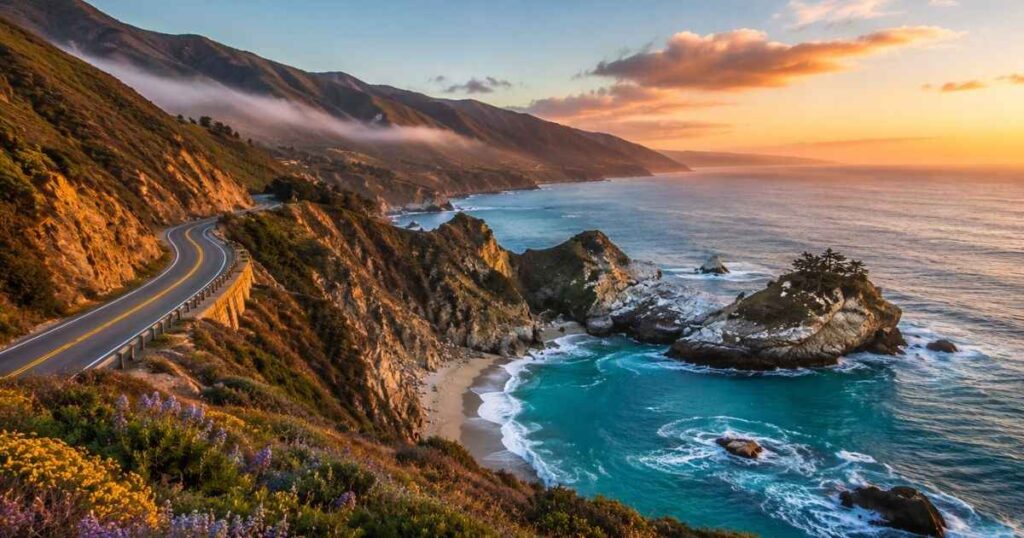
The single best introduction to the things to do in Big Sur starts at Bixby Creek Bridge, about 13 miles south of Carmel. Park at the small lot on the north side before 9am, because it fills by mid-morning from April through October. The 360-foot arch spans a canyon that drops straight to the Pacific and photographers gather here specifically for the golden hour light around sunset. From the bridge, continue eight minutes south to Hurricane Point, a pullout with no barrier between you and a 400-foot drop, so keep kids close.
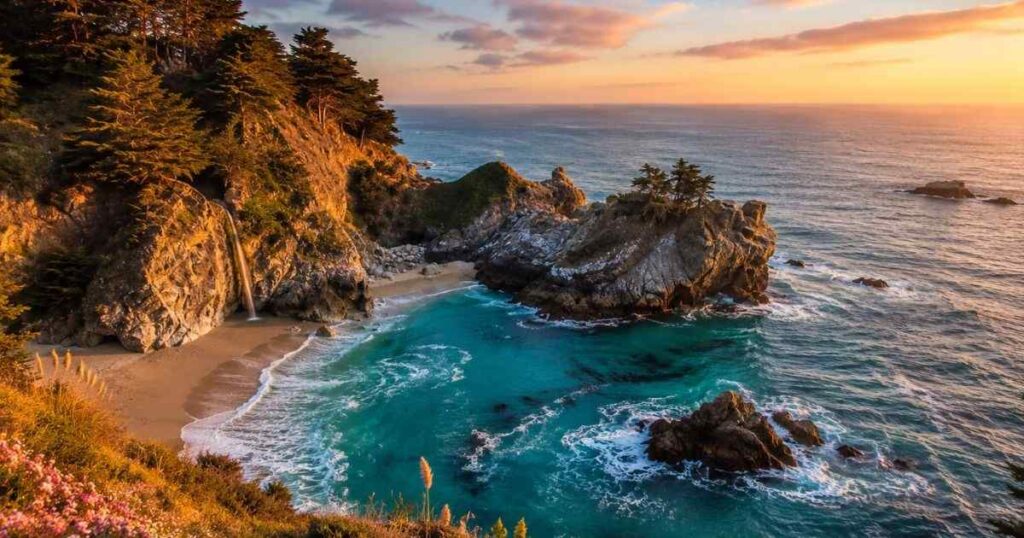
McWay Falls sits inside Julia Pfeiffer Burns State Park, roughly 37 miles south of Carmel. A flat, five-minute walk from the parking lot leads to an overlook where an 80-foot waterfall drops directly onto a beach you can’t actually reach on foot. Parking costs $10 per vehicle and the lot has about 30 spaces, so arrive before 10am on weekends. Most visitors don’t realize the cove is closed to swimmers year-round due to unstable cliffs, so this stop is strictly a viewing spot not a beach day.
Pro Tip: Download offline maps before you go, because cell service disappears almost entirely between Carmel and the Big Sur River.
Beaches and Coastal Spots Worth the Detour for Things to Do in Big Sur
Pfeiffer Beach is the one purple-sand beach among the things to do in Big Sur and it’s easy to miss because the turnoff on Sycamore Canyon Road has no highway sign. The unmarked road sits about 0.6 miles south of the Big Sur Station ranger office and it’s a narrow two-mile drive to a $12 per vehicle lot. The manganese garnet deposits that tint the sand purple show up best after a fresh rain, usually between November and March. Swimming here is dangerous year-round because of a rock formation that creates strong rip currents close to shore.
Garrapata State Beach, about 6.7 miles south of Carmel, gets a fraction of the visitors that Pfeiffer Beach does because there’s no formal parking lot, just roadside pullouts. A steep, sandy path drops down to over two miles of open beach that’s usually near-empty on weekday mornings. Tide pools appear at the beach’s south end during low tide, best checked against a NOAA tide chart before you go. This is one of the few free things to do in Big Sur that rivals the paid attractions nearby.
Verdict: For dramatic photos, choose Pfeiffer Beach for solitude and tide pools, Garrapata wins.
Hiking and Outdoor Activities
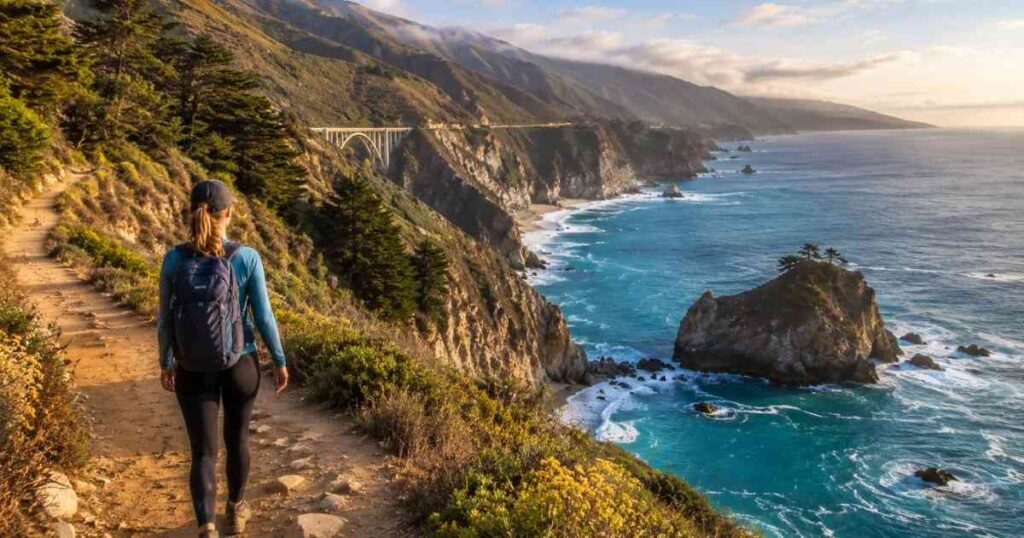
Pfeiffer Big Sur State Park holds several of the best things to do in Big Sur for hikers, including the Valley View Trail, a 2-mile round-trip climb that gains 700 feet in under a mile. The payoff is a clear view down the Big Sur River valley to the ocean, best done in the two hours before sunset. Park entry costs $10 per vehicle and the lot rarely fills before noon even in July. Bring at least one liter of water per person, since there’s no shade for the last third of the climb.
Limekiln State Park, about 56 miles south of Carmel, holds a shorter but steeper option: a 2-mile trail past four 19th-century lime kilns to Limekiln Falls, a 100-foot cascade tucked into a redwood grove. The trail crosses the creek three times on log bridges that can be slick after rain. Parking runs $8 per vehicle and the park closes its gate at sunset sharp. Fewer than a dozen cars typically use this lot on any given weekday, making it one of the quieter things to do in Big Sur for hikers avoiding crowds.
Pro Tip: Start any hike here before 8am between June and August, since the exposed sections turn brutally hot by midday.
Where to Eat, Stay and Spend Your Money
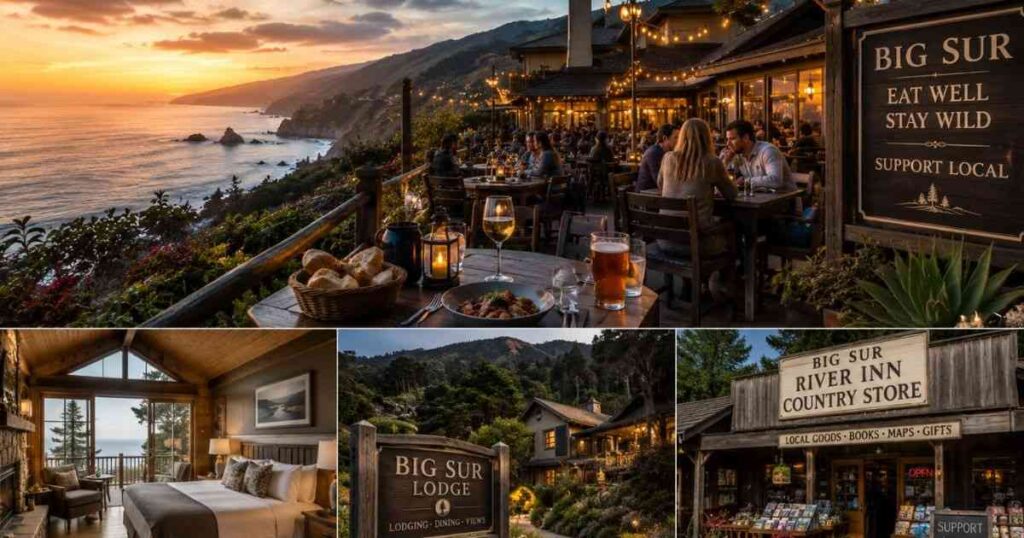
Nepenthe restaurant, perched 800 feet above the ocean about 29 miles south of Carmel, serves a $28 Ambrosia Burger with a view that draws a 45-minute wait most weekend afternoons. Below it, Cafe Kevah offers the same cliffside view with breakfast plates under $16 and no reservation needed. Deetjen’s Big Sur Inn, a cluster of rustic 1930s cabins, runs $200 to $350 a night and often books out four to six weeks ahead in summer. For a cheaper base, camping at Pfeiffer Big Sur Campground costs $50 to $70 a night and puts you within walking distance of the Valley View Trail.
Gas stations are scarce and expensive along this stretch, often $1 to $1.50 more per gallon than Monterey prices, so fill up before you leave Carmel or San Simeon. A single day exploring the coast, including park fees, lunch and gas, typically runs $60 to $90 per person if you’re not staying overnight. Add lodging and dinner and a two-day trip with camping lands closer to $250 total, while a stay at an inn like Deetjen’s pushes it past $500. Budget travelers often base themselves in Monterey and drive down for day trips instead of paying Big Sur lodging rates, since most of the things to do in Big Sur don’t require an overnight stay to enjoy.
Verdict: Camp if budget matters most or book an inn at least six weeks out if you want a cliffside room.
Planning Your Big Sur Itinerary
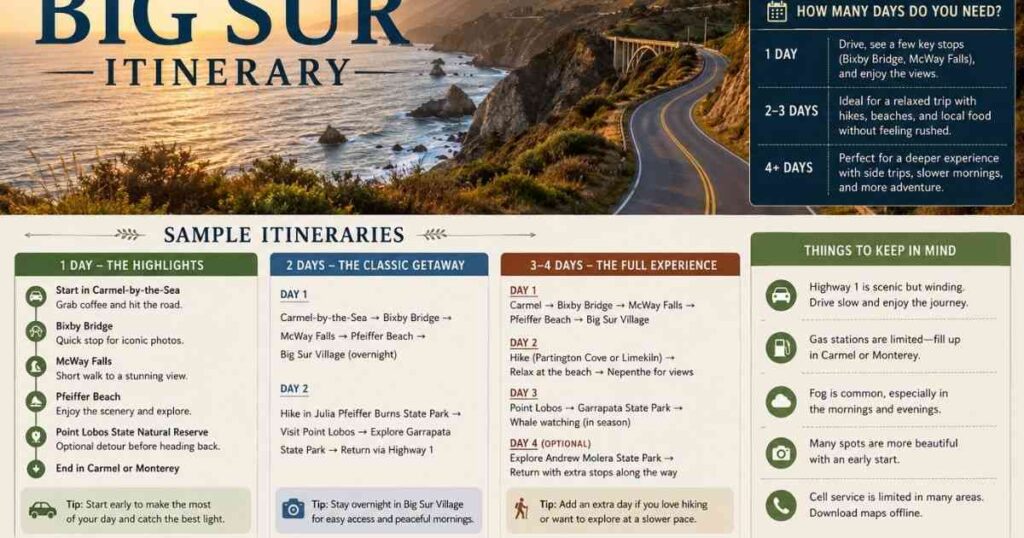
Anyone mapping out the things to do in Big Sur for the first time should resist the urge to drive the entire stretch in one day. A realistic day one covers Bixby Creek Bridge, Hurricane Point and McWay Falls, ending with dinner at Nepenthe before the drive back to Carmel or a night at a nearby campground. Day two shifts inland slightly, pairing a morning hike on the Valley View Trail with an afternoon at Pfeiffer Beach timed for the golden hour light on the sea stacks.
Travelers with a third day should push south to Limekiln State Park, since it sits far enough from the main cluster of things to do in Big Sur that most day-trippers skip it entirely. Families with young kids get more value spacing the drive across two days rather than packing every stop into one, since several pullouts sit right at the cliff edge with no guardrail.
Couples chasing photos should prioritize sunset at Pfeiffer Beach and sunrise at Hurricane Point, the two windows when the light does the most work. Solo travelers on a tight budget can knock out most of the free things to do in Big Sur, the pullouts, Hurricane Point and Garrapata State Beach, without spending more than the cost of gas and a sandwich.
Pro Tip: Book any inn or campground at least a month ahead for June through August, since same-week availability is rare along this stretch.
Getting Around and Practical Tips
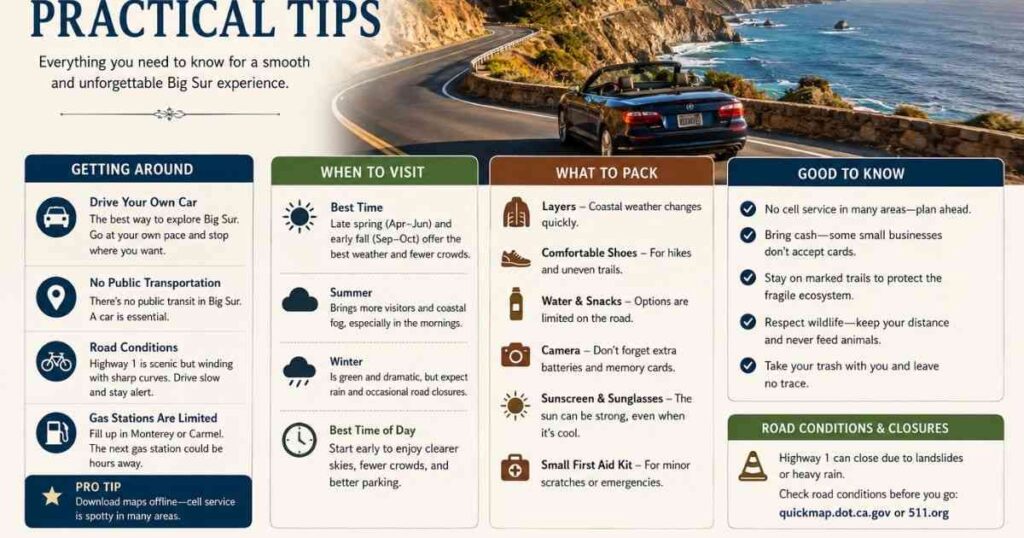
Highway 1 through this stretch is a two-lane road with no cell service for long sections, so download offline maps and let someone know your rough itinerary before you go, especially if your plan covers several of the more remote things to do in Big Sur. Fog typically clears by 10am or 11am between May and September, so save the coastal overlooks for late morning rather than sunrise.
Rockslides close sections of the highway most winters, sometimes for weeks, so check current road status before planning a trip between December and March. Weekday visits, especially Tuesday through Thursday, cut parking wait times at the popular pullouts by more than half compared to weekends.
Most visitors don’t realize that many of the best things to do in Big Sur require no admission fee at all, since roadside pullouts, Hurricane Point and most of the coastal viewpoints are completely free. The paid stops, McWay Falls, Pfeiffer Beach and the state park trailheads, rarely exceed $12 per vehicle.
Bathrooms are limited to the state parks and a handful of restaurants, so plan stops accordingly on the drive. Compared to a coastal drive through nearby Carmel-by-the-Sea, which charges for parking almost everywhere, Big Sur’s free pullouts make it the better value stretch of coastline.
Pro Tip: Fill your gas tank and download maps in Carmel or San Simeon, since both are scarce once you’re on the Big Sur stretch of Highway 1.
You may also like:
Frequently Asked Questions
How many days do you need in Big Sur?
Two full days cover the main things to do in Big Sur comfortably, including Bixby Bridge, McWay Falls and one hike. Three days lets you add Limekiln State Park and a slower pace at Pfeiffer Beach and Garrapata without rushing between stops.
Is Big Sur worth visiting?
Yes and the things to do in Big Sur go well beyond the postcard shots most people see online. The combination of free coastal pullouts, accessible waterfalls and quiet redwood trails makes it worth a dedicated trip rather than a quick drive-through.
What is the best time to visit Big Sur?
Late May through early October offers the most reliable weather for outdoor things to do in Big Sur, with fog usually clearing by mid-morning. April and November are quieter with fewer crowds, though fog can linger longer and some trails may be muddy.
Is Big Sur expensive for tourists?
It can be, mainly due to limited lodging that books out weeks ahead at $200 or more a night. Day trips are affordable, typically $60 to $90 per person, since most of the best things to do in Big Sur, the viewpoints and pullouts, cost nothing to visit.
Can you do a day trip from San Francisco to Big Sur?
Yes, though it’s a long one at roughly 2.5 hours each way plus stops, making for a 10 to 12 hour round trip. Most visitors get a better experience splitting it into two days with one night in Carmel or camping at Pfeiffer Big Sur, which leaves room to actually enjoy the things to do in Big Sur instead of rushing back for the drive home.
Final Thoughts
The things to do in Big Sur reward people who slow down rather than rush the highway in one long drive. Skip the crowded pullouts at midday, time your stops around the fog and set aside at least one full day for a hike that takes you off Highway 1 entirely. Whether you’re chasing waterfalls at McWay Falls or watching the sunset from Hurricane Point, the coastline here holds up to repeat visits in every season. Park at Pfeiffer Beach an hour before sunset, walk past the crowd clustered near the parking lot and watch the light hit the sea stacks until the purple sand disappears into shadow.

