
Lisbon is one of the best-positioned capital cities in Europe for leaving it behind. Within 90 minutes in any direction you reach a UNESCO World Heritage palace town, a Roman-walled medieval city, Atlantic surf beaches and a peninsula with dolphins visible from shore. Most visitors spend their entire trip inside the city and miss the fact that day trips from Lisbon are faster, cheaper and more varied than almost any other capital in Southern Europe.
This guide covers the six strongest day trips from Lisbon with exact transport costs, departure points, arrival tips and the specific mistakes that turn a great excursion into a wasted afternoon.
In This Guide You Will Find:
- The six best day trips from Lisbon ranked by travel time and value
- Exact train, bus and driving costs for each destination
- Which destinations get dangerously crowded and what time to arrive
- The one palace in Sintra that most Lisbon visitors skip entirely
- Seasonal recommendations which months work best for each trip
- What a full day costs per person at each destination, including food
Quick Info
| Detail | Info |
| Base City | Lisbon, Portugal |
| Nearest Airport | Lisbon Humberto Delgado Airport (LIS) |
| Best Months for Day Trips | March–May, September–October |
| Furthest Destination Covered | Nazaré : 120 km / 1 hr 30 min by car |
| Closest Destination | Cascais :30 km / 40 min by train |
| Average Day Trip Cost | €20–€55 per person |
The Best Day Trips from Lisbon by Train
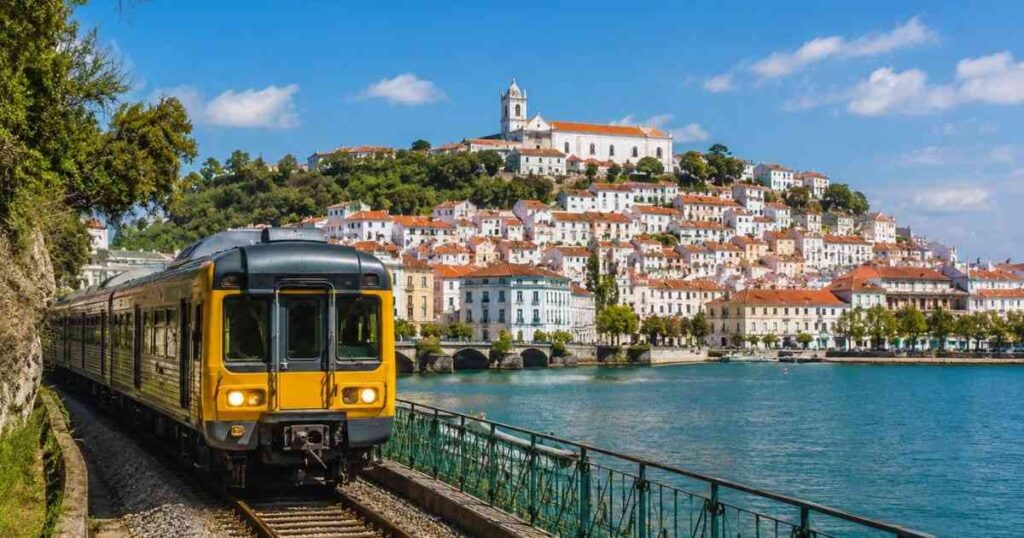
The train network out of Lisbon makes four of the six best day trips from Lisbon completely car-free. Cascais leaves from Cais do Sodré station every 20 minutes, takes 40 minutes and costs €2.35 each way on the Linha de Cascais. The route hugs the Tagus estuary and then the Atlantic coast. For the final 15 minutes you see the open ocean from your seat before you even arrive.
Sintra departs from Rossio station every 20–30 minutes, costs €2.35 each way and reaches the town in 40 minutes. The platform at Sintra station puts you 2 km from the palace entrance gates, which means either a 25-minute uphill walk, a €5 tuk-tuk or a €3 bus connection. Most visitors walk down and ride up your legs and will thank you for doing it that way.
Setúbal on the Arrábida coast requires a train to Setúbal station (55 minutes, €3.55 each way from Oriente) followed by a local bus toward Portinho da Arrábida. The bus runs infrequently to check Transportes do Barreiro schedules before you leave Lisbon, because missing the last return connection means a €35 taxi back to the train station.
Évora does not connect by train from central Lisbon in any practical way. The bus from Sete Rios bus terminal costs €12–€14 return and takes 1 hour 30 minutes. Rede Expressos runs this route multiple times daily. Évora is the one day trip from Lisbon that genuinely rewards renting a car. You can stop at the megalithic stone circles at Almendres (15 km outside Évora) that almost no bus-tour visitor ever reaches.
Pro Tip: Load a Viva Viagem card at any Lisbon metro station and charge it with €10. Train fares across all suburban lines run on this card and you avoid queuing for individual tickets at Rossio or Cais do Sodré on busy mornings.
Sintra: The Day Trip Most Visitors Get Wrong

Sintra is the most-visited day trip from Lisbon and also the most frequently mishandled. The town receives over 3 million visitors per year. On summer weekends, the single road up to Pena Palace backs up with tour buses and taxis to the point where visitors wait 45 minutes just to enter the palace grounds. The fix is simple and almost nobody does it: arrive on the first train from Rossio, which departs at 7:07 AM and you reach the Pena Palace ticket office before it opens at 9:30 AM.
Pena Palace entry costs €14 for the palace and gardens combined. The Moorish Castle directly across the ridge costs €8. Quinta da Regaleira, a neo-Gothic estate with an initiation well that descends 27 meters underground through a spiral staircase costs €10 and receives a fraction of Pena’s visitors despite being the more genuinely strange and memorable experience. Most visitors from Lisbon go to Pena, photograph the exterior and leave. Walking 600 meters further to Regaleira and descending into that well is the specific thing that separates a good Sintra day from a great one.
The historic center of Sintra town sits at the base of the hills around the National Palace, which is free to walk past and €10 to enter. The town square has pastelarias selling traves seiros, a puff pastry filled with almond cream that has been made here since the 1940s for €1.80 each. Piriquita on Rua das Padarias is the original shop. The queue moves fast.
Budget €35–€45 per person for a full Sintra day including train return (€4.70), two palace entries (€22–€24), lunch (€12–€15) and pastries. If you visit between November and February, Pena Palace entry drops to €8 and crowds shrink to a fraction of peak season levels.
Pro Tip: Book Pena Palace and Quinta da Regaleira tickets online at parquesdesintra.pt at least 3 days before your visit in any month from June through September. Walk-up tickets sell out before noon on summer days and you cannot enter without a timed slot.
Évora: The Day Trip That Feels Nothing Like Lisbon

Évora sits 130 km east of Lisbon in the Alentejo plains and the moment you arrive through the medieval city gate you understand why it holds UNESCO World Heritage status. The Roman Temple of Évora 14 Corinthian columns standing intact in the center of the city was built in the 1st century AD and has not moved since. It stands 10 meters from a café terrace where you can sit with a €1.20 espresso and look directly at it.
The Capela dos Ossos (Chapel of Bones) inside the Igreja de São Francisco is the specific reason most people make this day trip from Lisbon. The walls and ceiling columns of the chapel are built from the bones and skulls of approximately 5,000 monks. The entrance fee is €5. The inscription above the door translates as “We bones that are here, for yours we wait.” Most visitors spend 15 minutes inside and leave unsettled in a way that stays with them.
Évora’s cathedral (Sé de Évora) dates to the 12th century and charges €4 entry. The rooftop walkway at the top gives a 360-degree view over the white-walled city and the Alentejo plain extending flat to the horizon in every direction. The walk takes 20 minutes and the rooftop access is worth the entry fee alone.
Lunch in Évora costs €10–€16 per person at a sit-down restaurant. Migas à Alentejana, a bread-based dish fried with garlic, coriander and olive oil, served with pork is the regional dish that every restaurant in the city makes differently. Taberna Típica Quarta-Feira on Rua do Inverno serves one of the most consistent versions in the city for €12–€14 per main course.
Pro Tip: Leave Lisbon on the 8:00 AM Rede Expressos bus from Sete Rios and arrive in Évora by 9:30 AM. The Roman Temple and Chapel of Bones are both quieter before 10:30 AM and you have the full afternoon to walk the walls and eat a long lunch before the 6:00 PM return bus.
Cascais and Setúbal : Coast Day Trips from Lisbon
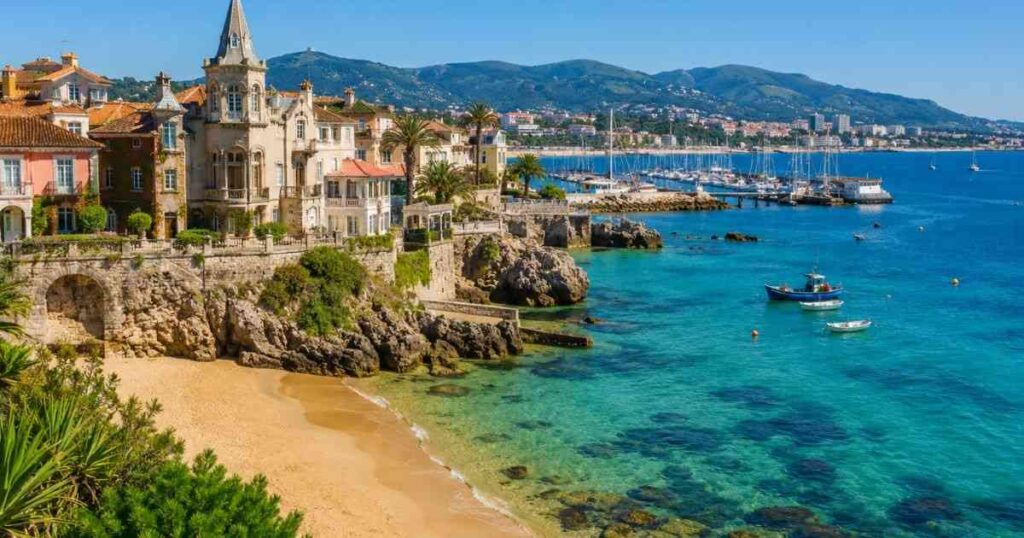
Cascais is the easiest day trip from Lisbon and the one that requires the least planning. The 40-minute train from Cais do Sodré costs €2.35 each way and drops you 300 meters from the town beach. Cascais itself is a former royal fishing village with a working harbor, three beaches within walking distance of the station and a pedestrian center compact enough to cover in two hours on foot.
The Boca do Inferno, a sea cave eroded into coastal cliffs 2 km west of the train station, is free to visit and takes 25 minutes to walk from the center. Most visitors stop at the main viewpoint, look at the cave opening and leave. Walk the path another 200 meters west to the secondary cliffs where the sea comes in from a different angle and the spray reaches the path when the Atlantic swell is running. That section of coastline sees a tenth of the visitors and is more dramatic.
Setúbal and the Arrábida Natural Park require more effort but deliver something Cascais cannot: limestone cliffs dropping into turquoise water that reads as Caribbean in color in photographs and, more importantly, in person. The water temperature at Portinho da Arrábida reaches 22–24°C in August and September. The beach itself is 400 meters of white sand backed by 500-meter cliffs of the Serra da Arrábida. Dolphins live in the strait between the peninsula and the island of Setúbal year-round and local boat tours from Setúbal harbor run 2-hour trips for €35–€45 per person.
Cascais day trip costs run €20–€30 per person including train, lunch and the coastal walk. Arrábida costs €35–€50 per person factoring in train to Setúbal, local transport and a meal.
Pro Tip: For Arrábida, go on a Tuesday, Wednesday or Thursday. The beach access road applies a vehicle limit on summer weekends and you can be turned away if you drive. Arriving by bus avoids that restriction entirely.
Practical Tips for All Day Trips from Lisbon
Every day trip from Lisbon benefits from the same core principle: leave by 8 AM or accept that you are sharing the destination with tour groups. Organized day tours from Lisbon depart between 9 and 10 AM, arrive at their first stop around 10:30–11 AM and leave by 3 PM. If your schedule mirrors that pattern, you are at every destination during the worst window.
Weather matters differently for each trip. Sintra sits 500 meters above sea level and generates its own microclimate the hilltops are frequently wrapped in cloud and light rain even when Lisbon is sunny and 28°C. Pack a light layer regardless of what the Lisbon forecast says. Évora, 130 km inland, runs 4–6°C hotter than Lisbon in summer and has no coastal breeze. A hat and 1.5 liters of water per person are not optional in July and August.
March, April and May are the strongest months for day trips from Lisbon across all destinations. Temperatures range from 17–24°C, wildflowers cover the Arrábida cliffs and Alentejo plains, crowds are 50–60% of summer levels and entrance fees for most sites are held at off-peak rates. September and October match those conditions on the other side of summer with the addition of warm sea temperatures.
Most day trips from Lisbon that involve historic sites Sintra palaces, Évora cathedral, Óbidos castle close on Mondays or charge reduced hours. Check individual site websites before planning a Monday excursion. Óbidos, a walled medieval town 80 km north of Lisbon reachable by bus from Campo Grande station for €5 each way, is the one destination on this list where Monday closures matter least the town walls, cobblestone streets and cherry liqueur ginjinha shops are all free and open every day.
Pro Tip: Carry cash for day trips from Lisbon. Smaller towns like Óbidos and villages in the Arrábida area have cafés and food stalls that only accept cash. ATMs exist in most town centers but charge €3–€5 withdrawal fees on foreign cards.
You may also like:
Best Things to Do in Split, Croatia
Frequently Asked Questions
What are the best day trips from Lisbon?
The best day trips from Lisbon are Sintra (40 min by train), Évora (1.5 hrs by bus), Cascais (40 min by train), Arrábida Natural Park (1 hr by train and bus), Óbidos (1 hr 15 min by bus) and Nazaré (1 hr 30 min by car or 2 hrs by bus). Sintra and Évora consistently deliver the most distinct experiences relative to the city itself.
How much do day trips from Lisbon cost?
Day trips from Lisbon range from €20 to €55 per person for a full day. Cascais is the cheapest at around €20–€25 including train and lunch. Sintra runs €35–€45 with palace entries. Évora costs €30–€45 including bus and meals. Arrábida with a dolphin boat tour can reach €55–€60 per person.
What is the best time of year for day trips from Lisbon?
March through May and September through October are the best months for day trips from Lisbon. These months combine mild temperatures of 17–25°C, lower crowd levels, cheaper accommodation if you extend overnight and full site opening hours. July and August are viable but require 7–8 AM to beat tour group arrivals.
Can you do day trips from Lisbon without a car?
You can reach Sintra, Cascais and Setúbal entirely by train from central Lisbon stations. Évora connects by direct bus from Sete Rios terminal. Óbidos runs by bus from Campo Grande. A car adds flexibility for Arrábida coastal villages and the megalithic sites near Évora but none of the six main destinations require one.
Is Sintra or Évora the better day trip from Lisbon?
Sintra and Évora offer completely different experiences. Sintra delivers 19th-century Romantic palaces, dense forest and Atlantic-influenced architecture within 40 minutes of the city. Évora gives you a Roman temple, bone chapel and Alentejo food culture in a city where medieval walls still define the city boundary. For first-time visitors, Sintra edges ahead on visual impact. For travelers who have already done Sintra, Évora is the stronger and less-crowded alternative.
Conclusion
Day trips from Lisbon work because the city sits at the exact center of a 90-minute radius that contains more historical, geological and culinary contrast than most countries offer across their entire territory. A Roman temple, a bone chapel, Atlantic surf cliffs, a palace built by a king who collected tiles all of it reachable before lunch and back in time for dinner on the Alfama hillside.
Pick one destination, leave Lisbon by 8 AM and give the place a full seven hours. The visitors who get the most out of day trips from Lisbon are not the ones who try to combine three stops they are the ones who arrive at Quinta da Regaleira before the tour buses and descend alone into that spiral stone well with nothing but a flashlight and no queue behind them.

