
Most people picture Napa when they think of California wine country but Paso Robles quietly holds more than 200 wineries spread across rolling hills that stay open long after Napa’s tasting rooms close their doors. The town sits roughly halfway between San Francisco and Los Angeles, which makes it an easy stop for road trippers rather than a separate weekend commitment. Locals will tell you the best tables at downtown restaurants fill up by 6 PM and the tasting rooms along Highway 46 rarely feel crowded even on a Saturday afternoon. This Paso Robles itinerary walks through exactly how to spend two to four days here without wasting time driving in circles.
In This Guide You Will Find:
- A day-by-day Paso Robles itinerary broken into wine country, downtown and hot springs segments
- Specific winery names organized by growing region so you don’t drive back and forth
- Real price ranges for tastings, hotel stays and dinner reservations
- The one downtown detour most first-time visitors skip
- Seasonal timing advice based on harvest and heat patterns
- Simple logistics for getting around without relying on rideshare apps that run thin here
Quick Info
| Location | Central California, San Luis Obispo County |
| Nearest Airport | San Luis Obispo County Regional Airport (SBP) 30 minutes away |
| Best Time to Visit | April–June or September–October |
| Travel Time from Nearest Major City | 3.5 hours from Los Angeles, 3.5 hours from San Francisco |
| Days Recommended | 2–4 days |
| Average Daily Cost | $200–$400 per person (wine tastings, meals and hotel included) |
.
Building Your Paso Robles Itinerary: Where to Start
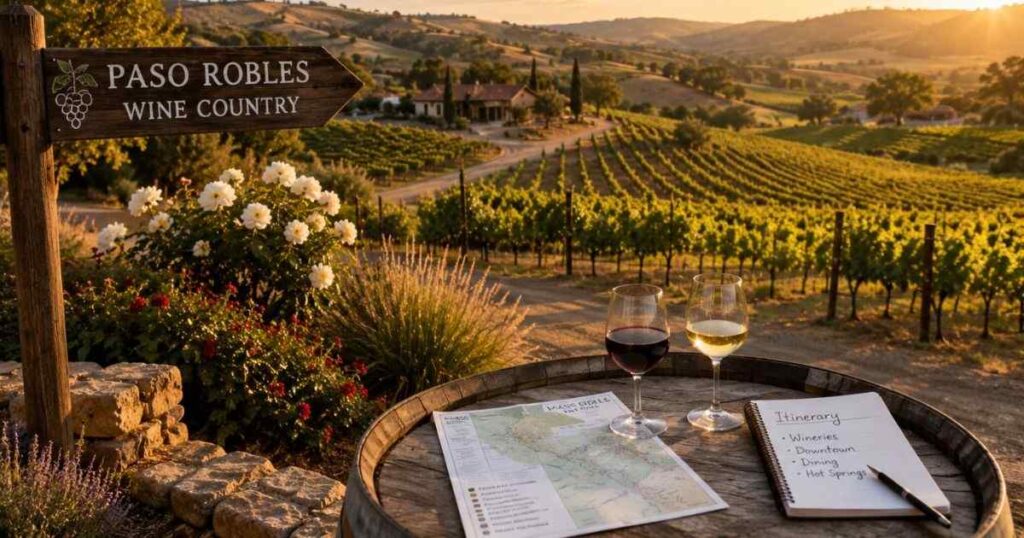
Any solid Paso Robles itinerary should begin with geography, because the wine region splits into distinct zones that don’t sit close together. The Willow Creek District west of town holds cooler, foggier vineyards suited to Rhone varietals, while the Eastside along Highway 46 East runs hotter and produces bolder Zinfandels and Cabernets. Downtown Paso Robles sits in the middle, built around a central park that hosts a farmers market every Saturday morning from 8 AM to noon. A two-day Paso Robles itinerary should dedicate one full day to each wine district rather than bouncing between both, since the drive between Willow Creek and the Eastside takes close to 35 minutes each way.
Downtown parking stays free and plentiful around the park, which matters if you’re bouncing between wineries and lunch spots without wanting to pay for a garage. Most vineyards close their tasting rooms between 5 PM and 6 PM, so plan your last pour to end by 4:30 PM if you still want time to shower and change before dinner reservations. Cell service drops out in patches along the backroads between the Westside and Eastside districts, so download offline maps before you head out for the day.
Start day one on the Westside, hitting three to four wineries at most since tasting flights run 45 minutes to an hour each. Tablas Creek Vineyard, Justin Vineyards and Halter Ranch all sit within 15 minutes of each other and represent the range of Rhone-style wines the area is known for. Tasting fees here run $25 to $40 per person, though most wineries waive the fee with a bottle purchase. Book your Halter Ranch tasting in advance during summer weekends, since walk-ins get turned away once the patio fills.
Pro Tip: Designate a driver or book a wine tour van for $80 to $120 per person, since the wineries sit far enough apart that a DUI risk isn’t worth it after four tastings.
Downtown Paso Robles: Food, Sleep and the Detour Most Visitors Skip
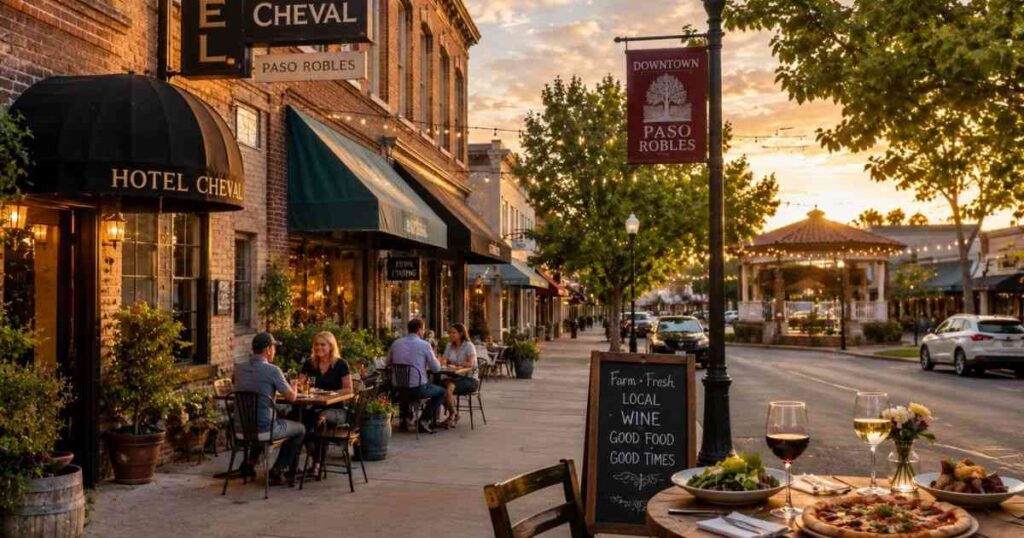
No Paso Robles itinerary is complete without at least one evening spent downtown around the central park, where the town’s best restaurants cluster within a five-block radius. A well-rounded Paso Robles itinerary also treats downtown as a rest point between wine districts rather than an afterthought squeezed in on the last night. Thomas Hill Organics serves a farm-to-table menu with entrees running $28 to $42 and reservations matter on Friday and Saturday nights. Six Test Kitchen offers a tasting menu experience for $95 per person if you want one memorable splurge dinner during your trip.
For a casual lunch between wineries, Basil Thai Cuisine on Park Street keeps prices under $18 per entree and turns tables fast enough that you won’t lose an hour of tasting time. Hotel Cheval sits right on the park and runs $350 to $450 a night, putting you within walking distance of dinner without needing a car.
Budget travelers should look at the Adelaide Inn instead, which runs $130 to $170 a night and sits a five-minute drive from downtown. The detour most first-time visitors skip is Paso Robles Pioneer Museum, a free stop that explains how the town shifted from cattle ranching to wine country over the past four decades. It only takes 30 to 40 minutes to walk through, making it an easy addition to any Paso Robles itinerary that has a gap between a late checkout and an afternoon tasting.
Pro Tip: Eat downtown on your first night before you’ve settled into a wine-heavy rhythm, since your palate and your budget both handle it better early in the trip.
Hot Springs, Day Trips and Rounding Out Your Paso Robles Itinerary
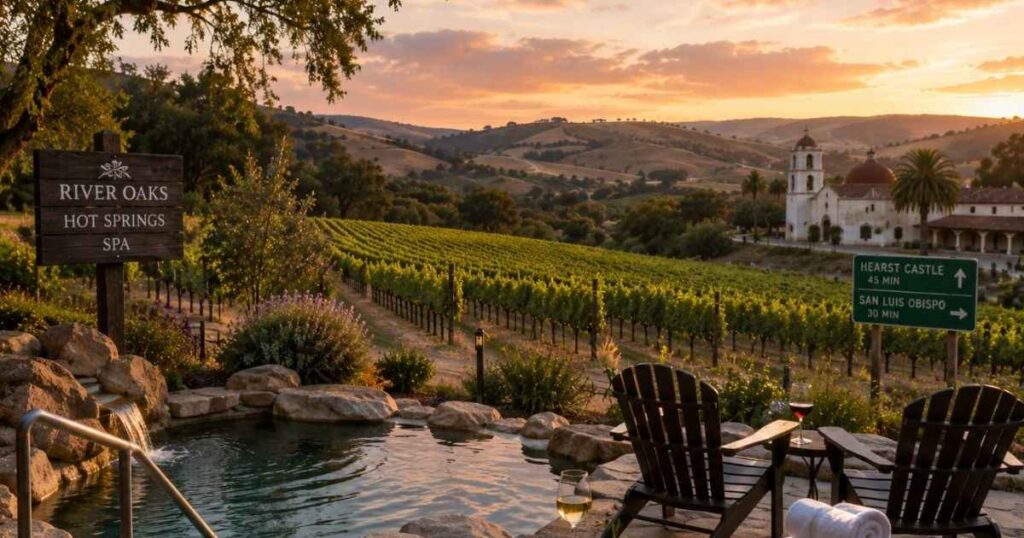
A three-day Paso Robles itinerary has room for something beyond wine and the River Oaks Hot Springs Spa delivers exactly that with private outdoor mineral tubs starting at $25 per person for 50 minutes. The water draws from a natural hot spring that locals have used for over a century and booking a slot for late afternoon lets you soak right as the heat of the day breaks. Franklin Hot Springs offers a similar experience with slightly more rustic tubs at a lower price point, usually $20 per person.
Either spot works well as a recovery stop between heavy tasting days. Both hot springs sit roughly 10 minutes south of downtown along Highway 101, close enough that you can squeeze in a soak even on a day packed with wine tastings. Bring your own towel to Franklin Hot Springs, since the rustic setup doesn’t include rentals the way River Oaks does.
If you have a fourth day, Hearst Castle sits 45 minutes west near San Simeon and makes for a solid day trip that pairs wine country with California coastline. General tours run $30 for adults and take about an hour and 45 minutes including the bus ride up the hill. Combine that with a stop in Cambria on the way back, a small coastal town with tide pools and a boardwalk that most Paso Robles itinerary guides skip entirely because it falls outside the wine region proper. Most visitors don’t realize how close the coast actually sits until they make this drive themselves.
Pro Tip: Book Hearst Castle tickets online at least two weeks ahead during summer, since same-day tours regularly sell out by 10 AM.
Travelers building a longer Paso Robles itinerary sometimes add a stop at Barrel 27 or Sculpterra Winery on the way back from Hearst Castle, since both sit closer to the Eastside route and stay open until 5 PM most days. This works well if you left the coast by early afternoon and still have energy for one more tasting before dinner. Sculpterra doubles as a sculpture garden, so even non-drinkers in your group get something to do while you finish a flight. Keep this addition light, though, since a long coastal drive plus a winery stop can make for a tiring day if you also have dinner reservations downtown.
Practical Tips: Getting Around and What to Avoid
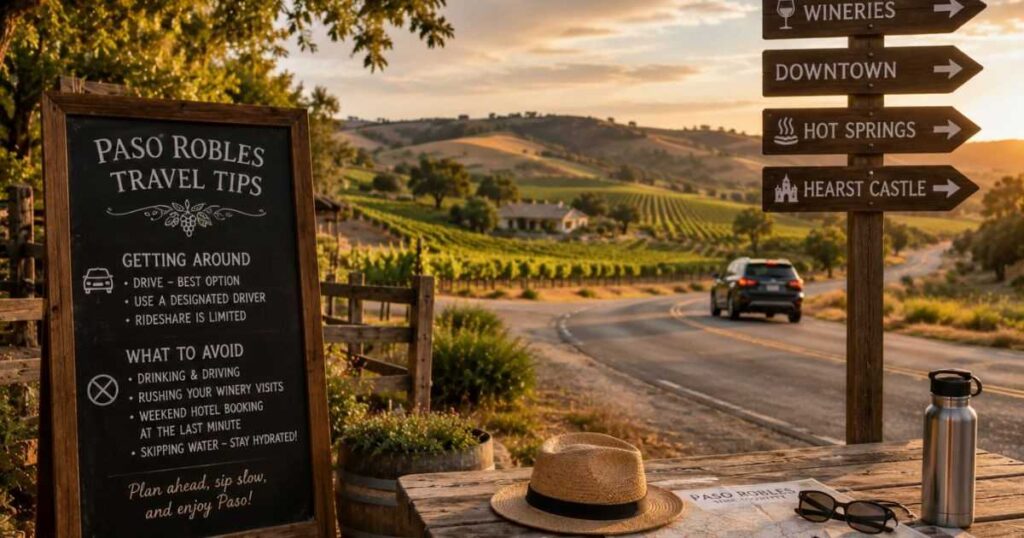
Rideshare apps like Uber and Lyft run thin in Paso Robles wine country, so any Paso Robles itinerary needs a car rental or a pre-booked driver as a backup plan. Renting a car for three days typically costs $150 to $220 depending on season and it gives you the flexibility to adjust your route based on which wineries have availability that day. Avoid scheduling more than five tastings in a single day, since palate fatigue sets in hard after the fourth pour and you’ll stop noticing the differences between wines. Many first-timers also underestimate summer heat, which regularly hits 95°F to 100°F between June and September, so carry water in the car even during short winery hops.
The best time to build a Paso Robles itinerary around good weather runs from April through June or September through October, when daytime temperatures sit closer to 75°F to 85°F and harvest activity in the fall adds extra energy to the wineries. Winter months bring cooler days around 55°F to 65°F with far fewer crowds, which suits travelers who prioritize quiet tasting rooms over warm weather. Avoid peak Fourth of July weekend if you dislike crowds, since tasting rooms across both districts book out completely.
Pro Tip: Pack a cooler in your trunk for the wine you’ll inevitably buy, since summer heat can damage bottles left in a hot car for hours between stops.
You may also like:
Things to Do in Paso Robles Besides Wineries
Frequently Asked Questions
How many days do you need for a Paso Robles itinerary?
Two full days covers the wine country basics but three days lets you add hot springs or a Hearst Castle day trip without rushing. A single day works only if you’re passing through on a longer coastal road trip and want a quick taste of two or three wineries. Most repeat visitors settle on a three-day Paso Robles itinerary as the sweet spot between depth and pace.
Is Paso Robles worth visiting?
Yes, particularly for travelers who want a wine region without Napa’s crowds or price tags. Tasting fees run roughly half of what you’d pay in Napa Valley and the town itself feels walkable and low-key rather than built for tour buses. The combination of hot springs, a genuine downtown and over 200 wineries makes a Paso Robles itinerary worth the detour for most California road trippers.
What is the best time to visit for a Paso Robles itinerary?
April through June and September through October offer the most comfortable weather, with daytime temperatures between 75°F and 85°F. September and October add harvest activity, which brings extra events and a livelier atmosphere across the wineries. Avoid mid-summer if you’re sensitive to heat, since afternoons regularly climb past 95°F.
Is Paso Robles expensive for tourists?
It runs moderate compared to Napa or Sonoma, with tasting fees averaging $25 to $40 and hotel rooms ranging from $130 for budget stays to $450 for downtown luxury options. Dinner at a mid-range restaurant costs $25 to $45 per entree and many wineries waive tasting fees with a bottle purchase. A well-planned Paso Robles itinerary for two people can run $600 to $1,200 total for three days, tasting fees and hotel included.
Can you do a day trip to Paso Robles from Los Angeles?
Yes, the drive from Los Angeles takes about three and a half hours, making a day trip possible though tight. You’ll get time for two or three wineries and a quick downtown lunch before heading back but an overnight stay lets you actually relax into the pace this Paso Robles itinerary is built around. Most visitors coming from LA choose to stay at least one night to justify the drive.
Final Thoughts
A well-planned Paso Robles itinerary rewards travelers who split their time deliberately between the Westside’s cooler vineyards, the Eastside’s bolder reds and downtown’s walkable restaurant scene. The region delivers real value against Napa’s higher prices without sacrificing quality and the hot springs add a recovery option most wine regions simply don’t offer. Whether you have two days or four, pace yourself to five tastings a day at most and leave room for one unplanned stop. Arrive at River Oaks Hot Springs for a late-afternoon soak on your final day and let the mineral water work out whatever the wine tastings left behind.
Planning a California road trip? Bookmark this Paso Robles itinerary so you’ll have winery recommendations, budget estimates, hotel options and practical travel tips ready before your trip.

