
Most travelers assume the journey between Portugal’s two biggest cities takes most of a day. It doesn’t. The Lisbon to Porto route runs through rolling vineyards and quiet river towns and on the fastest train you can step off in central Porto with enough afternoon left to walk along the Douro before dinner. This guide breaks down every practical detail of traveling from Lisbon to Porto, from ticket prices to which seat to pick on the train.
In this guide you will find:
– Exact train schedules and prices for the Lisbon to Porto route
– A breakdown of bus and rental car alternatives, with real cost comparisons
– The best towns to stop in if you turn the trip into a road trip
– Specific seat and timing tips that most tourists never figure out
– A clear answer on which season makes the journey most worthwhile
– Honest advice on whether you need more than one day in Porto
Quick Info
Route: Lisbon to Porto
Distance: 313 km (194 miles)
Fastest Travel Time: 2 hours 45 minutes by high-speed train
Nearest Airports: Lisbon Humberto Delgado Airport / Porto Francisco Sá Carneiro Airport
Best Time to Travel: April through June or September and October
Average Daily Cost in Porto: 60 to 90 EUR per person
How to Travel from Lisbon to Porto
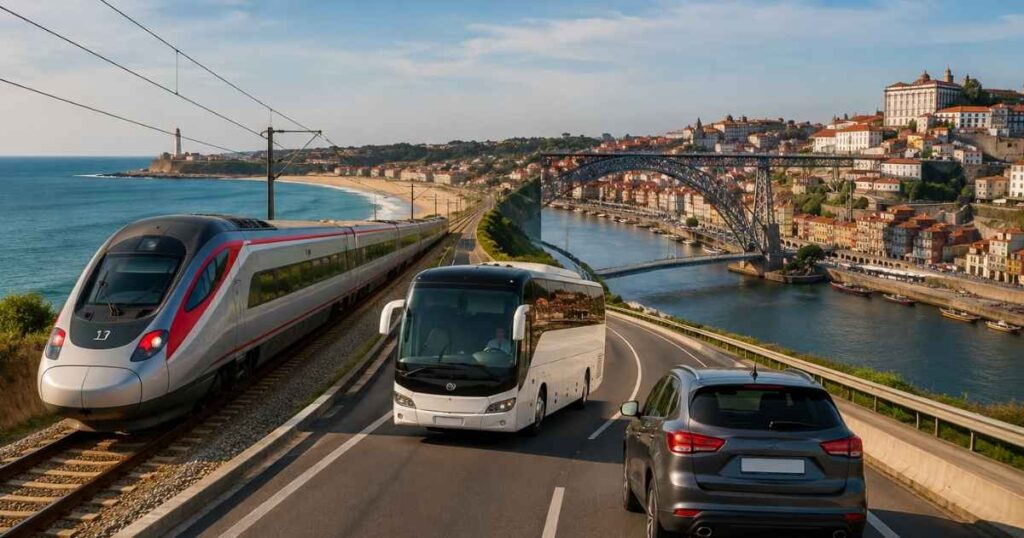
Three real options exist for covering the Lisbon to Porto distance: the train, the bus and a rental car. The train is the fastest and most comfortable choice for almost everyone. Comboios de Portugal runs the Alfa Pendular service, which covers Lisbon to Porto in 2 hours 45 minutes, departing from Lisboa Oriente station roughly every hour during the day. A second-class ticket costs between 25 and 35 EUR depending on how far in advance you book, while first class runs 35 to 45 EUR and includes a power outlet at every seat.
The slower Intercidades train also runs this route and takes about 3 hours 15 minutes but tickets often drop to 20 EUR if booked two weeks out. Buses operated by FlixBus and Rede Expressos take 3 hours 30 minutes to 4 hours and cost 15 to 25 EUR, making them the cheapest way to make this journey if your schedule isn’t tight. Driving the A1 motorway takes 3 hours without stops but tolls add roughly 21 EUR each way on top of fuel and a rental car.
Choosing Your Seat and Timing
Seat reservations matter more than most travelers realize on the Alfa Pendular. Window seats on the right side of the carriage, heading north, give you the best views of the Tagus estuary near the start and the Douro near the end. The train has a small café car selling coffee for 1.20 EUR and pastéis de nata for 1.50 EUR, which beats anything you’ll find at either station. Wi-Fi onboard works reliably enough to stream music but not video, so download anything you want to watch before boarding.
When a Rental Car Makes More Sense
If you’re traveling with more than two people, the math often favors a rental car over individual train tickets. A compact car from Lisbon airport runs 35 to 50 EUR per day and splitting that plus tolls and fuel across three or four passengers usually beats four separate train fares. Parking in central Porto costs 1.50 to 2.50 EUR per hour, though, so factor that into your total before deciding.
Pro Tip: Book the Alfa Pendular online through the CP website at least five days ahead. Same-day tickets can run 10 to 15 EUR higher and the 7:30 AM departure sells out first.
What to See Along the Way
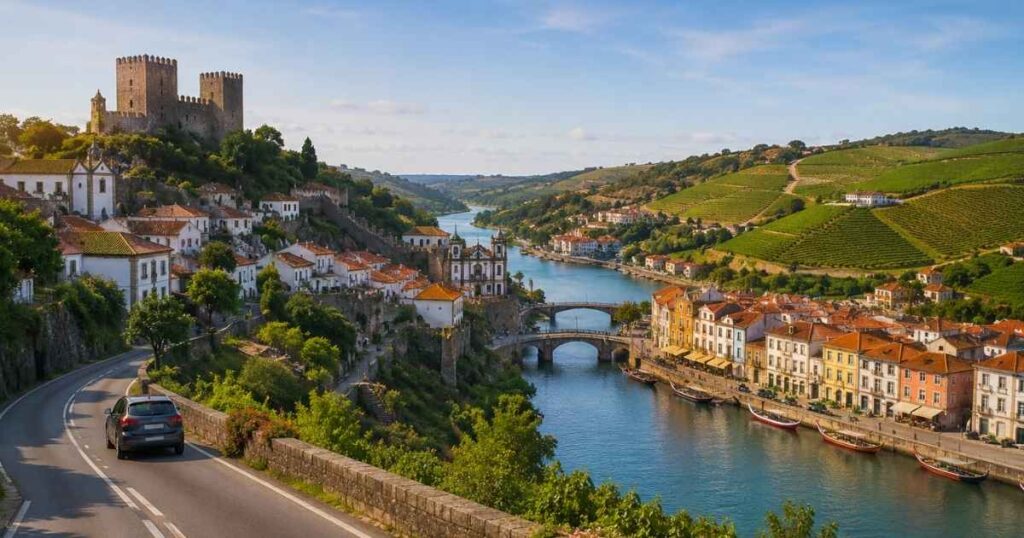
The fixed train route from Lisbon to Porto skips most towns in between but a road trip opens up the Centro region. Óbidos sits 90 minutes north of Lisbon, a walled medieval town small enough to cover on foot in under two hours, with cherry liqueur served in chocolate cups for 2 EUR a shot. Coimbra, roughly the halfway point, holds Portugal’s oldest university and entry to the famous Joanina Library costs 13.50 EUR with timed-entry slots that sell out by midday in summer.
Aveiro: The Overlooked Stop
Aveiro, just 45 minutes south of Porto, gets called the Venice of Portugal for its canals and colorful moliceiro boats and a 45-minute boat ride costs around 12.50 EUR per person. Most tourists driving north skip Aveiro entirely because it’s not directly on the highway, which means the town stays far less crowded than Óbidos or Coimbra. If you’re taking the train instead, none of these stops are realistic detours since the express service runs nonstop.
The Douro Valley Detour
The Douro Valley sits about an hour east of Porto by car and deserves its own day if you have one to spare. Vineyard tours with tastings typically run 25 to 40 EUR and the river views from Pinhão’s terraced hillsides rank among the most photographed landscapes in the country. Fátima, the major pilgrimage site, lies roughly halfway along an alternate inland route and adds about 30 minutes to a road trip if you choose to stop there. None of these detours are accessible if you stick to the direct train, so weigh how much you value extra stops against the time you’d save by going straight through.
Verdict: Renting a car turns a 3-hour transfer into a full day of sightseeing but only if you have at least one extra day to spare beyond your Porto plans.
Best Time to Make the Trip
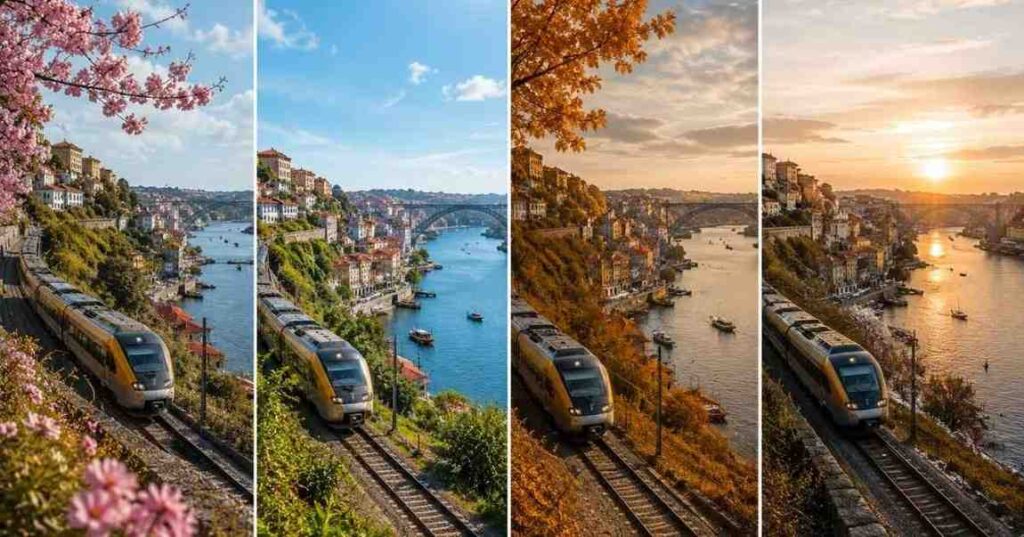
Weather changes what this journey feels like more than people expect. April through June brings mild temperatures around 18 to 23°C and far fewer tourists than peak summer, making it the easiest window to find affordable Lisbon to Porto train tickets without booking weeks ahead. July and August push temperatures past 30°C in both cities and double hotel prices in Porto, especially during the Festa de São João in mid-June when the entire city celebrates outdoors.
September and October offer warm days near 22°C and the grape harvest season in the Douro Valley, which is less than an hour from Porto by car. Winter travel between Lisbon and Porto stays comfortable on the train, with average highs around 14°C and you’ll find hotel rates in Porto drop by 30 to 40 percent compared to summer. Rain is more frequent from November through February, so pack a real waterproof jacket rather than an umbrella, since wind off the Atlantic makes umbrellas nearly useless in Porto.
Festivals and Holiday Pricing
Holiday weekends and the week around Easter push prices up across every transport option, so book at least two weeks ahead if your trip falls during those dates. Carnival, usually in February, brings smaller crowds to Porto than to Lisbon, making it a quieter window if you don’t mind cooler weather. São João in late June turns Porto into an outdoor festival for two full days, with fireworks over the Douro and plastic hammers sold on every corner, fun to experience once but expect hotel prices near the river to double.
Pro Tip: If your trip allows flexibility, shift your Lisbon to Porto travel date to a weekday train prices run noticeably lower Tuesday through Thursday than on Friday or Sunday afternoons.
What Most Tourists Get Wrong About This Route
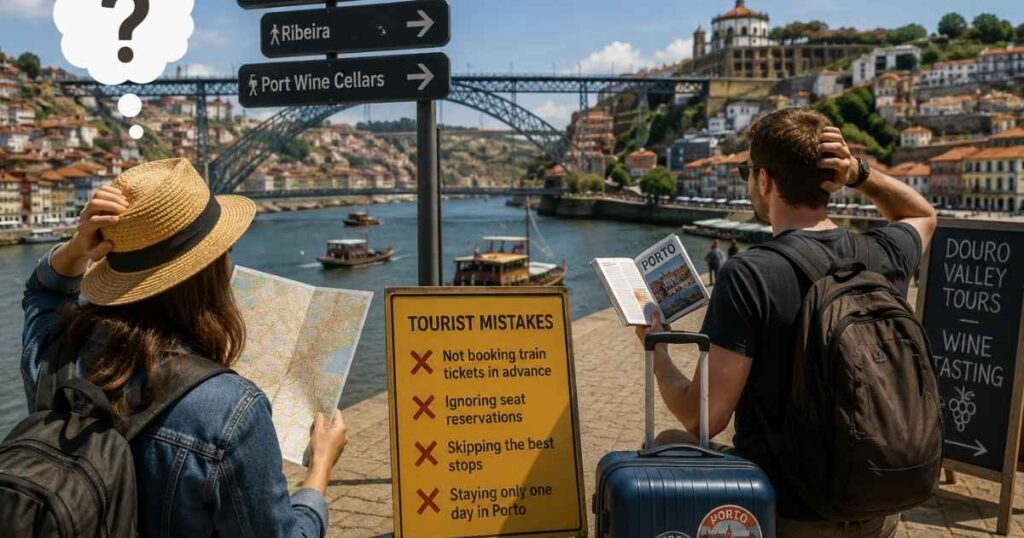
Most visitors book a one-way Lisbon to Porto ticket and assume they’ll see both cities equally well in a short trip but Porto rewards a minimum of two full days while Lisbon’s highlights can be rushed in less time without losing much. Many travelers also pick a morning train without checking which side of the carriage faces the Tagus estuary near Lisbon and the Douro near Porto seats on the right heading north catch both rivers. Skip the temptation to base yourself in one city and day-trip to the other. A same-day round trip eats 5 to 6 hours in transit alone.
Hotel Location and Station Confusion
Another common mistake is ignoring Porto’s compact size and booking a hotel far from the historic center to save money. Ribeira and Bolhão both sit within a 15-minute walk of São Bento station and staying here saves taxi costs that quickly outweigh a cheaper room rate. Finally, don’t assume every northbound train stops at the same station some terminate at Porto Campanhã, requiring a short metro or taxi ride into the city center.
Practical Extras: Luggage, Cash and Tipping
Luggage storage trips up plenty of travelers too. Both Lisboa Oriente and Porto Campanhã have paid lockers running 5 to 8 EUR for a few hours, useful if you arrive before check-in or have a late departure after checking out. Currency isn’t an issue since both cities use the euro but smaller cafés outside tourist zones often don’t accept cards under 10 EUR, so keep some cash on hand. Tipping isn’t expected the way it is in the US. Rounding up a restaurant bill or leaving 1 to 2 EUR for good service is standard in both cities.
Verdict: Treat Lisbon and Porto as two separate multi-day stops rather than a rushed loop and the journey between them becomes a highlight instead of a chore.
You may also like:
Lisbon to Pena Palace Day Trip
How to Get from Athens to Pylos
Frequently Asked Questions
How long does it take to get from Lisbon to Porto?
The fastest option, the Alfa Pendular train, takes 2 hours 45 minutes between Lisboa Oriente and Porto Campanhã stations. Buses take 3 hours 30 minutes to 4 hours and driving takes about 3 hours without stops. Add 20 to 30 minutes if your train terminates at Campanhã rather than central São Bento.
Is the train from Lisbon to Porto worth it over the bus?
Yes, if your schedule values time over price, since the train saves roughly 45 minutes to an hour compared to the bus. The train also offers reclining seats, onboard food service and stations directly in each city center. The bus only makes sense if you’re traveling on a strict budget under 20 EUR.
What is the best time to visit Porto after arriving from Lisbon?
April through June and September through October offer the most comfortable temperatures, between 18 and 23°C, with smaller crowds than peak summer. July and August bring heat above 30°C and the loudest, busiest version of the city during Festa de São João. Winter remains mild for sightseeing but brings more frequent rain off the Atlantic.
Is traveling from Lisbon to Porto expensive?
No a one-way train ticket costs 20 to 45 EUR depending on the class and how early you book and the bus runs even cheaper at 15 to 25 EUR. Once in Porto, daily costs average 60 to 90 EUR per person including meals, transport and one paid attraction. Driving costs more once you factor in roughly 21 EUR in tolls plus fuel and rental fees.
Can you visit Porto as a day trip from Lisbon?
Technically yes but it’s not a smart use of your time, since the round trip alone takes 5.5 to 8 hours depending on your transport choice. Porto’s main sights, including Ribeira, the Livraria Lello and a riverside boat tour, need closer to six hours on the ground to see properly. Staying at least one night lets you see the city lit up after sunset, which the train schedule otherwise forces you to miss.
Final Thoughts
The journey from Lisbon to Porto deserves more credit than it gets it’s short enough to do without exhaustion and scenic enough to remember on its own. Whether you choose the Alfa Pendular train, a budget bus or a slower road trip through Óbidos and Coimbra, the route connects two cities that feel genuinely different from each other within a single afternoon. Book your Lisbon to Porto train seat on the right-hand side heading north and watch for the Douro River appearing just before the train crosses into Porto Campanhã. That view alone is worth skipping your phone for the last ten minutes of the ride.

