
Most visitors to Hawaii fly straight to Oahu and spend their entire trip within five miles of Waikiki. Kona sits on the opposite end of that experience 330 sunny days a year, warm water you can snorkel in without a wetsuit and a coastline that rewards people who actually show up. The Big Island’s western shore runs 30 miles from Kawaihae in the north down to Honaunau in the south and almost every mile holds something worth your time. This guide covers the top things to do in Kona, exactly how much each activity costs, when to go and what most tourists skip entirely.
In This Guide You Will Find:
- How to swim with manta rays at night off Keauhou Bay including which tour operators charge $70 vs $130
- The three Kona coffee farms worth visiting and what a proper farm tour includes
- Which beaches reward the drive and which are overrated
- How to snorkel Captain Cook Monument without paying for a boat
- The best things to do in Kona when the ocean is too rough for water activities
- Practical getting-around tips including whether you actually need a rental car
| Detail | Info |
| Location | Kailua-Kona, Big Island, Hawaii |
| Nearest Airport | Ellison Onizuka Kona International Airport (KOA) 7 miles from town |
| Best Time to Visit | April to October (driest months, calmest ocean) |
| Travel Time from Honolulu | 45-minute flight |
| Days Recommended | 3 to 5 days |
| Average Daily Cost | $150 to $250 per person (mid-range) |
Top Water Activities The Core of Things to Do in Kona
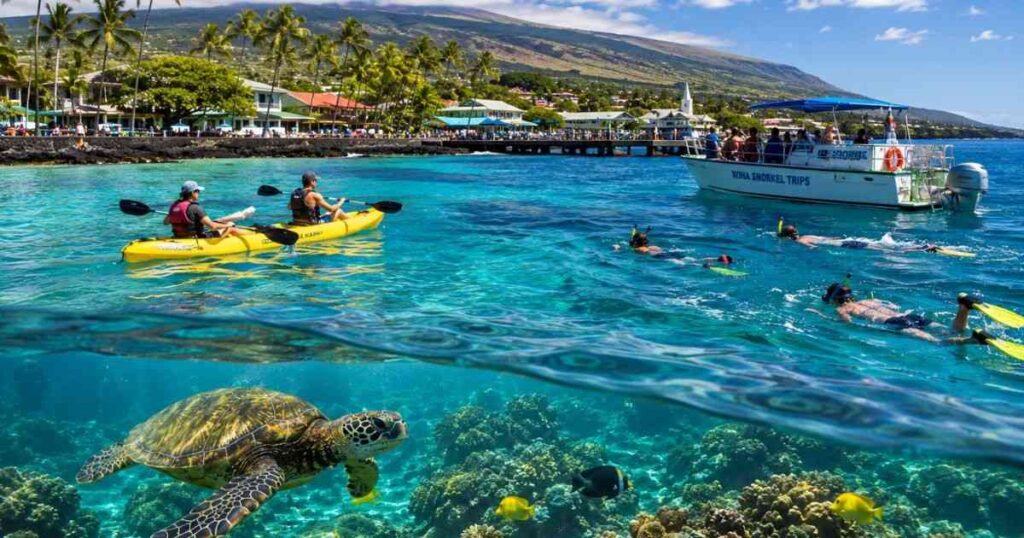
The things to do in Kona that matter most happen in the water. Kailua Bay in front of the Kona pier is calm enough for beginners most mornings. You can rent a kayak from Kona Boys for $45 per half day and paddle south toward Kahaluu Beach Park in under 25 minutes. Kahaluu itself costs nothing to enter and holds one of the most reliable snorkel spots on the Big Island green sea turtles rest on the rocks at the south end of the beach every single day. The water depth runs between 3 and 10 feet, making it accessible for anyone who can float.
When people ask what things to do in Kona stand apart from the rest of Hawaii, the manta ray night snorkel tops the list every time. Manta rays with wingspans up to 14 feet gather off Keauhou Bay nightly because underwater lights attract the plankton they eat. Tour operators run boats from the Kona pier Kona Snorkel Trips charges $70 per person, while Sea Paradise charges $95 and includes all equipment. You float face-down on the surface for 45 minutes while rays loop beneath you in a feeding spiral. Book three days in advance during peak season (June through August) because spots sell out fast.
Captain Cook Monument at Kealakekua Bay requires either a $55 boat tour or a 2.2-mile hike down a steep trail from the highway. The hike takes 45 minutes down and 75 minutes back up. The snorkeling at the monument is the best on the island visibility exceeds 60 feet on calm days and the coral formations start right at the surface. Most tourists pay for the boat and miss the quiet morning window when the bay is least crowded. Hike down by 7 AM and you will have the water almost entirely to yourself.
Beyond snorkeling, the things to do in Kona on the water include outrigger canoe paddling, deep-sea fishing charters from Honokohau Harbor and whale watching between December and April when humpbacks migrate through the channel. Sportfishing charters start at $150 per person for a shared boat and run 4 to 8 hours depending on the target species.
Pro Tip: Kahaluu Beach Park gets crowded by 10 AM. Park on Alii Drive and walk in before 8 AM to find turtles resting undisturbed on the south rocks.
Kona Coffee Farms Things to Do in Kona That Surprise Most Visitors
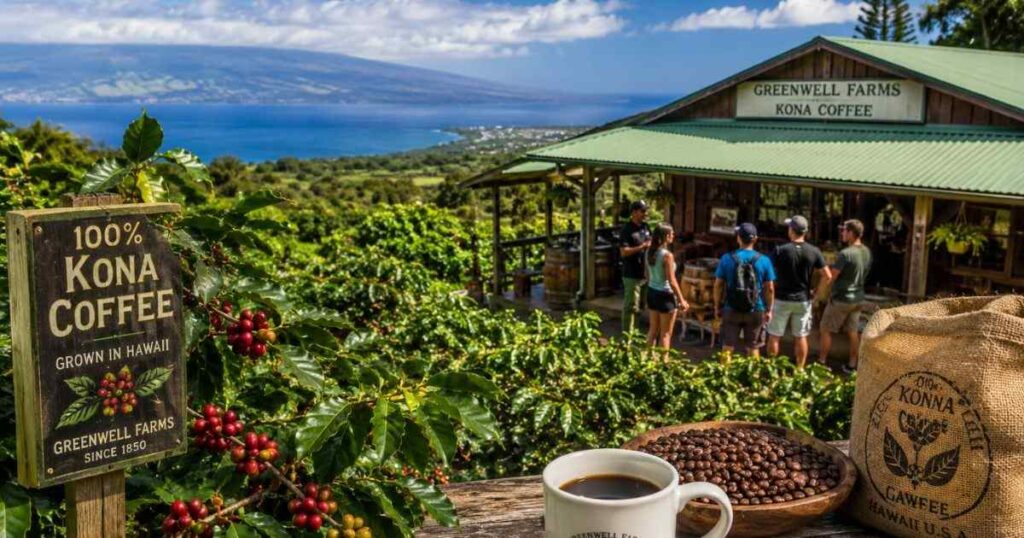
The Kona coffee belt runs along the slopes of Hualalai volcano between 1,000 and 2,500 feet elevation, just 10 miles inland from the coast. This is the only commercially grown coffee in the United States and a cup of 100% Kona coffee at the source costs $4 to $6 about the same as a specialty cafe in Portland or Chicago. The difference is that you are drinking it while looking down at the Pacific Ocean from a working farm.
Greenwell Farms runs free 30-minute tours daily from 8:30 AM to 4 PM and offers the clearest explanation of how Kona coffee differs from blended Kona-style products (blends only need to contain 10% Kona beans by law). Mountain Thunder offers a more detailed 75-minute roasting tour for $20 per person and lets you watch the roasting process live. Hula Daddy Kona Coffee grows rare varieties including Bourbon and Typica that you cannot find in grocery stores. Their tasting room charges $15 for a guided cupping of five single-origin coffees.
Most tourists buy a bag of coffee at ABC Stores in town and call it done. The coffee farm visits take half a morning and cost little to nothing. They rank among the most rewarding things to do in Kona for travelers who want something beyond the beach. Drive the Mamalahoa Highway (Route 11) south from Kailua-Kona and you will pass six farms within eight miles. If you can only visit one, make it Greenwell Farms for the free tour and the widest selection of varieties.
The harvest season runs October through February, when coffee cherries are hand-picked on the slopes. Visiting during harvest gives you a completely different experience. You can watch pickers moving through the rows and see the wet-milling process that separates the bean from the fruit. It is one of the things to do in Kona that most visitors never plan for because they do not know the harvest window exists.
Pro Tip: Buy directly from the farm to guarantee 100% Kona content. Look for the Kona Coffee Council certification seal on the bag before purchasing.
Kona Beaches What Most Tourists Miss When Planning Things to Do in Kona
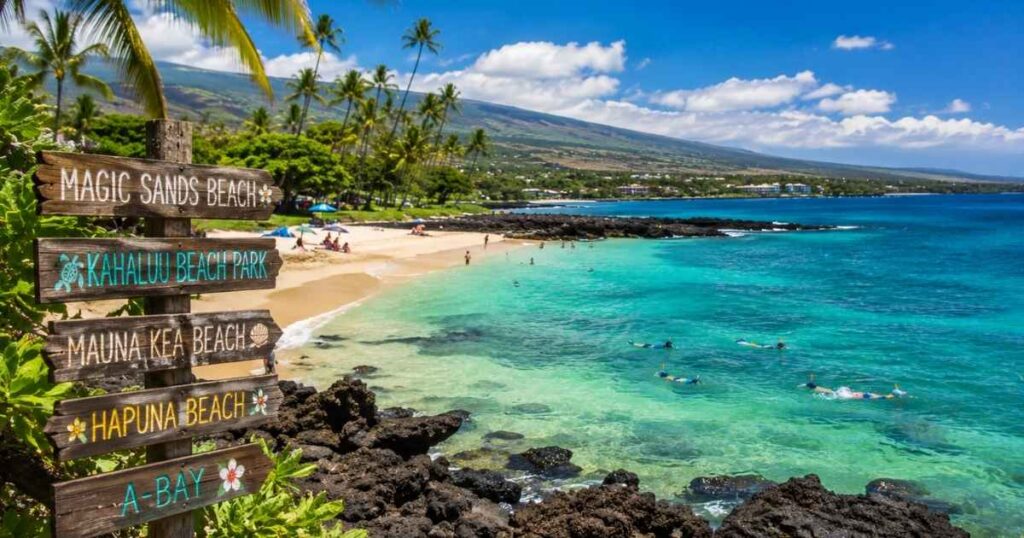
Alii Drive runs 6 miles south from downtown Kailua-Kona along the waterfront and most visitors drive it once, see the pier and stop there. The beaches north of town require a short drive on rough roads but offer calm, clear water with almost no crowds. Magic Sands Beach (also called White Sands Beach) sits 4 miles south of downtown it is a 200-foot pocket beach that literally disappears underwater during winter swells and reappears each spring. Entry is free and parking costs nothing.
Mauna Kea Beach and Hapuna Beach sit 35 miles north of Kona, about a 45-minute drive. Hapuna Beach State Recreation Area charges $10 per car and offers a half-mile stretch of white sand with body-surfing waves that average 3 to 5 feet in summer. This beach consistently ranks among the top ten in the United States, yet most visitors planning things to do in Kona never make the drive north. Mauna Kea Beach next door has calmer water and a snorkel-friendly reef on its north end.
Honokohau Harbor, 3 miles north of Kailua-Kona, has a small beach inside the harbor used almost exclusively by locals. Hawaiian spinner dolphins cruise the bay between 7 and 10 AM most mornings. No tour operator runs trips here you park at the harbor and walk south along the shoreline for five minutes. It costs nothing and delivers something you will not find in any tour brochure.
Anaehoomalu Bay (A-Bay) at the Waikoloa Beach Resort, 25 miles north of Kona, combines a calm swimming beach with a historical fishpond and ancient petroglyphs within a 10-minute walk. Day visitors can use the beach for free resort equipment rentals run $20 to $30 per day. It sits right off the Queen Kaahumanu Highway and requires no special vehicle to reach.
Pro Tip: Visit Magic Sands Beach between May and September. Winter swells between November and February push all the sand offshore and leave only bare rock.
Practical Tips for Getting Around and Making the Most of Things to Do in Kona
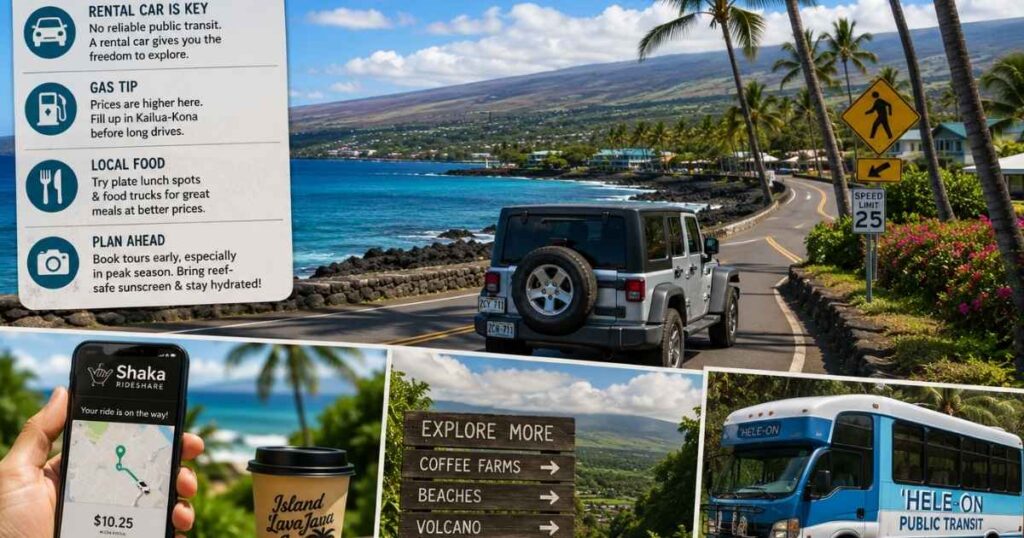
Kona does not have a functional public transit system. The Hele-On bus runs limited routes that cover the main highway but not the beaches, coffee farms or Mauna Kea access road. A rental car is not optional, it is the only practical way to access the full range of things to do in Kona. Book your car at Kona Airport (KOA) at least two weeks in advance on-site rental counters run out of economy cars quickly in summer and daily rates jump from $60 to $120 when inventory drops.
Gas on the Big Island costs about $0.50 more per gallon than the US mainland average. Fill up in Kailua-Kona before driving to Waimea or the Volcano area stations become sparse and expensive heading inland or south. Food costs run $14 to $18 for a plate lunch at local spots like Island Lava Java or Lemongrass Thai on Alii Drive. Da Poke Shack on Alii Drive sells poke bowls starting at $13 and consistently ranks among Hawaii’s best. Avoid waterfront restaurants right next to the Kona pier they charge $30 to $40 per entree for views that do not improve the food.
Kona sits on the leeward (dry) side of the Big Island while Hilo sits on the windward side Hilo receives 130 inches of rain per year versus Kona’s 25 inches. If outdoor activities and sunshine are your priority, the weather comparison makes Kona the correct base. A day trip to Hawaii Volcanoes National Park costs $35 per car for park entry and takes 2.5 hours each way leaving by 7 AM to spend four hours at the park and return before dark.
Pro Tip: Download the Shaka rideshare app before you land. It operates across the Big Island and covers short town trips for $8 to $12, which beats renting a car for a single-day beach visit.
You may also like:
Frequently Asked Questions
How many days do you need in Kona?
Three days cover the essential things to do in Kona: one day for water activities, one for inland exploration including coffee farms and one for the Volcanoes National Park day trip. Five days gives you time to reach the northern beaches and take a second snorkel trip on a calmer morning. Fewer than three days means you will feel rushed between the coast and the highlands.
Is Kona worth visiting?
Kona consistently earns its place on any list of things to do in Kona because no other Hawaiian island combines this range of water, land and cultural activity in a single town. Travelers who prioritize warm, calm water, outdoor activities and diverse terrain within a short drive will not feel short-changed. The manta ray snorkel is an experience unavailable on Maui or Oahu.
What is the best time to visit Kona?
The best time to visit Kona is between April and October rainfall is minimal and ocean conditions are calmest, which matters for the things to do in Kona that center on the water. June through August brings the most stable weather overall. December and January see occasional Kona storms that produce heavy rain and rough water for several consecutive days.
Is Kona expensive for tourists?
Kona runs slightly more affordable than Maui for accommodation but sits above US mainland pricing overall. Budget travelers can manage $100 per day using vacation rentals and plate lunch spots. Mid-range travelers spending $180 to $220 per day will access boat tours, coffee farm visits and sit-down restaurants without stress.
Is Kona better than Hilo for a base?
Kona wins for beach access, snorkeling, water sports and consistent sunshine. The majority of things to do in Kona center on the coastline and easy access to the north shore. Hilo wins for waterfall hikes, botanical gardens and the east entrance to Volcanoes National Park. Most Big Island visitors base themselves in Kona and take a single day trip across to Hilo, a 2-hour drive on the Saddle Road.
Final Thoughts
The things to do in Kona cover more range than most visitors expect from a town of 20,000 people. Manta rays feeding 20 feet below you at night, 100% Kona coffee on a hillside farm with the Pacific spreading out below, snorkeling at Kealakekua Bay with 60-foot visibility and dolphins at a harbor locals keep to themselves none of these require a tour package or a resort itinerary. Book your manta ray snorkel for your second evening not your last night if seas run rough on your first attempt, you will want a backup date available. That one adjustment separates the visitors who leave with the full experience from those who fly home with a half-finished list of things to do in Kona still open on their phone.

