
Most visitors picture fog rolling over the Golden Gate Bridge and that image barely covers a fraction of what this city offers. The real list of things to do in San Francisco stretches from a former federal prison on an island to a taqueria line that locals defend like a religion.
This guide skips the filler and gets straight into what actually fills a three-day itinerary, what it costs and when to show up so you’re not fighting a tour bus for a photo spot. Whether you have a short weekend or a full week, the things to do in San Francisco covered here are ranked by what genuinely earns your time not by what happens to show up first on a generic search result.
In This Guide You Will Find:
- The exact ferry schedule and ticket price for Alcatraz Island
- Which Golden Gate Bridge viewpoint locals actually use
- A neighborhood-by-neighborhood breakdown of where to eat and what it costs
- The one cable car route that’s worth the wait and the one that isn’t
- A realistic day-trip plan to Muir Woods and Sausalito
- Answers to the questions most first-time visitors search before booking flights
Quick Info Box
| Detail | Information |
| Location | San Francisco, California, USA |
| Nearest Airport | San Francisco International Airport (SFO), 13 miles / 21 km from downtown |
| Best Time to Visit | September and October |
| Travel Time from Nearest Major City | 1 hour from San Jose, 6 hours from Los Angeles by car |
| Days Recommended | 3 to 4 days |
| Average Daily Cost | $150 to $250 per person |
Alcatraz, Golden Gate Bridge and the Classic Things to Do in San Francisco
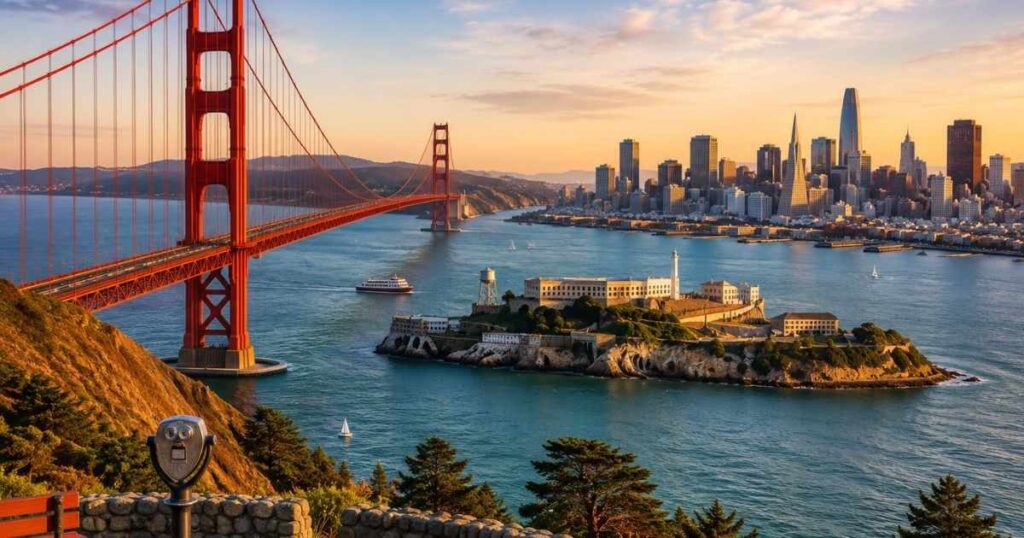
Alcatraz Island sits at the top of nearly every list of things to do in San Francisco and it earns the spot. The ferry leaves from Pier 33 and a standard day tour with audio guide runs $45.50 for adults, booked through Alcatraz City Cruises. Tickets sell out 2 to 3 weeks ahead in July and August, so book the moment your travel dates are fixed. The audio tour itself runs about 45 minutes and includes recordings from former guards and inmates, which makes the cell block far more vivid than a silent walk-through.
The Golden Gate Bridge is the second unmissable stop and most tourists only see it from the parking lot at the Welcome Center. Skip that and walk 15 minutes north to Battery Spencer on the Marin side, where you get the full span with the city skyline behind it. Crossing the bridge on foot takes about an hour round trip from the toll plaza to the first vista point and back.
Bike rental shops near Fisherman’s Wharf charge $32 to $45 for a full day and riding across to Sausalito then taking the ferry back is one of the most repeated recommendations among things to do in San Francisco for a reason it’s flat, scenic and takes under 3 hours total.
Pro Tip: Book Alcatraz for the first ferry of the day (usually 8:45 AM) to avoid the cell block crowds that build up by mid-morning. Between the ferry ride and the bridge walk, these two stops alone justify a full day out of any list of things to do in San Francisco.
Neighborhoods, Food and Culture: The Local Layer
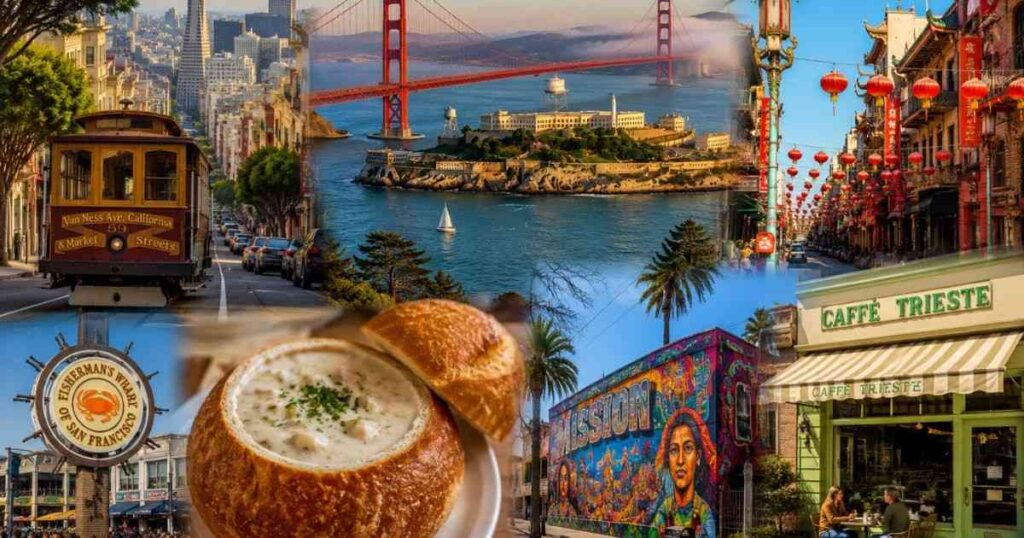
Beyond the postcard sites, the neighborhoods carry most of the real things to do in San Francisco. The Mission District is the place to start and Mission Street between 16th and 24th holds some of the best taquerias in the state. La Taqueria charges around $9 for a carne asada burrito, no rice, no beans and locals argue it’s the correct way to eat one. Clarion Alley and Balmy Alley, both free to visit, are covered in political murals that change every few years and take about 20 minutes to walk through properly.
Chinatown, just north of Union Square, is the oldest of its kind in North America and Grant Avenue’s gate marks the entrance. A dim sum lunch at a sit-down spot like City View runs $15 to $25 per person for a full spread. North Beach sits right next to Chinatown and swaps dumplings for espresso and Ligurian focaccia at Liguria Bakery, a shop that’s been baking the same recipe since 1911 and sells out most mornings by 1 PM.
For a view without an entrance fee, walk up to Twin Peaks. The summit sits at 922 feet and gives a wraparound view of the entire bay and it’s one of the few free things to do in San Francisco that rivals a paid observation deck. Uber there costs roughly $12 from downtown or the 37-Corbett bus gets you close for $2.50. Add the Ferry Building Marketplace to this list too. It’s free to walk through and the Saturday farmers market outside adds another one of the more overlooked things to do in San Francisco for anyone who cares about food.
Verdict: Skip a second museum and spend that half-day walking the Mission and Chinatown instead the food and murals deliver more than another gallery wall.
Best Time, Day Trips and Outdoor Things to Do in San Francisco
September and October are the best months to visit, since the city’s famous summer fog burns off and temperatures sit comfortably between 60°F and 70°F. June through August actually run cooler and greyer because of coastal fog, which surprises visitors who expect a typical California summer. If you want fewer crowds at Alcatraz and the bridge, target the second week of October before Thanksgiving travel picks up.
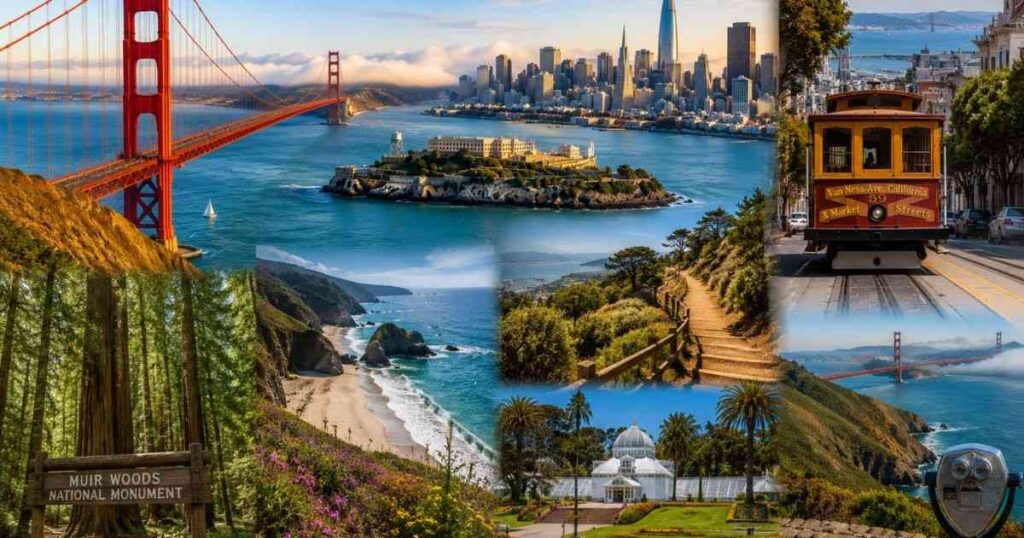
Muir Woods National Monument, 17 miles north of the city, holds old-growth redwoods over 250 feet tall and it requires a $15 per-person entry fee plus a mandatory parking or shuttle reservation booked in advance. Combine it with Sausalito, a 10-minute drive further south, where a waterfront lunch costs $20 to $35 and the return ferry to San Francisco takes 30 minutes and costs $15.50 one way. This pairing is consistently ranked among the best outdoor things to do in San Francisco because it fits into a single half-day without rushing.
Golden Gate Park deserves at least 3 hours on its own. The Japanese Tea Garden charges $13 entry and is the oldest public Japanese garden in the country, dating to 1894. The de Young Museum next door charges $20 for general admission, though the observation tower on the ninth floor is free and open to anyone. Pairing the park with a bike loop around Stow Lake rounds out one of the more relaxed outdoor things to do in San Francisco and it fits easily into a half-day without a car.
Pro Tip: Visit Muir Woods on a weekday morning weekend shuttle slots fill up 10 to 14 days in advance during September and October.
Getting Around and Practical Tips for San Francisco
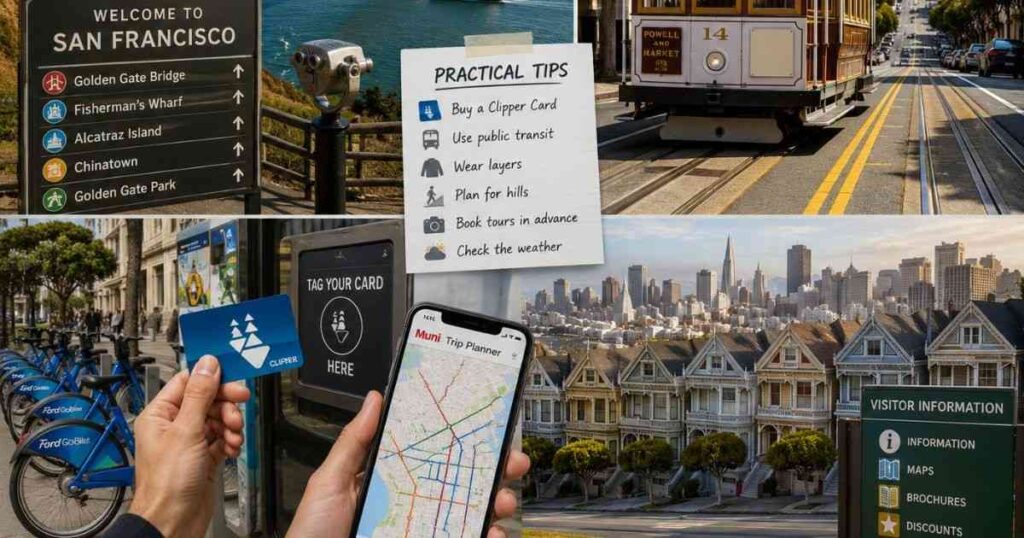
The cable cars are iconic but only one route is genuinely worth the 30-to-60-minute wait: the Powell-Hyde line, which ends near Ghirardelli Square with a bay view on the descent. A single ride costs $8 or a 1-day Muni Passport at $13 covers unlimited cable cars, buses and streetcars. The Powell-Mason line covers similar ground with shorter lines, so take that one if you’re short on time.
Renting a car is one of the least necessary things to do in San Francisco planning, since parking runs $30 to $50 a day at most downtown garages and the hills make driving stressful for first-timers. BART connects the airport to downtown for $10.65 and takes about 30 minutes, which beats a $60 to $70 rideshare fare from SFO in both cost and reliability during rush hour.
Most tourists don’t realize that Lombard Street’s famous crooked block is a 5-minute walk from a quieter, steeper and arguably more photogenic curve on Vermont Street in Potrero Hill, with none of the crowd. Fisherman’s Wharf is worth an hour for the sea lions at Pier 39, which cost nothing to watch but skip the overpriced seafood stalls and eat in North Beach instead. Walking remains one of the most underrated things to do in San Francisco, since the compact grid means most downtown attractions sit within a 20-minute walk of each other.
Verdict: A 3-day Muni Passport plus comfortable walking shoes covers 90% of what you need. A rental car adds cost and stress without adding access.
You may also like:
7 Days in San Francisco Itinerary
Golden Gate Park San Francisco Things to Do
Harbor House Inn Elk California
Frequently Asked Questions
How many days do you need in San Francisco?
Three full days cover the essential things to do in San Francisco, including Alcatraz, the Golden Gate Bridge and at least two neighborhoods. Add a fourth day if you want to include Muir Woods and Sausalito without rushing. Budget travelers on a tighter schedule can compress the highlights into two intense days but expect to skip one major neighborhood and one of the smaller things to do in San Francisco, like the Ferry Building or Twin Peaks.
Is San Francisco worth visiting?
Yes, largely because of its density few cities pack this many distinct experiences into a 7-mile by 7-mile footprint. You can walk from a Gold Rush-era neighborhood to a redwood-lined park to a bay-front pier in a single afternoon. The sheer range of things to do in San Francisco, from free hiking trails to world-class museums, is what keeps it on almost every list of top US destinations.
What is the best time to visit San Francisco?
September and October offer the clearest skies and warmest temperatures, typically between 60°F and 70°F. Avoid assuming summer is ideal, since June through August bring the heaviest coastal fog. Late spring, particularly May is a solid second choice with fewer crowds than fall.
Is San Francisco expensive for tourists?
It ranks among the pricier US cities, with a realistic daily budget of $150 to $250 per person covering meals, transit and one paid attraction. Hotel rates in central neighborhoods often exceed $250 a night, though staying slightly outside downtown near BART stations can cut lodging costs by 30 to 40 percent. Several of the best free things to do in San Francisco, including Twin Peaks, Golden Gate Park’s tower views and the Mission murals, help balance out the higher hotel and restaurant costs.
Can you do a day trip from San Francisco to Napa Valley?
Yes, Napa Valley sits about 1 hour and 15 minutes north by car and works well as a single-day wine trip. Most people combine it with a return through Sausalito if time allows, though Napa alone easily fills a full day between two or three wineries. Tasting fees typically run $30 to $60 per winery, so budget accordingly if visiting more than one.
Final Thoughts
The strongest case for San Francisco isn’t any single landmark, it’s how much variety sits within walking or short transit distance of each other. Between the ferry to Alcatraz, the walk across the Golden Gate Bridge and a taqueria line in the Mission, the things to do in San Francisco cover history, food and nature without requiring a rental car or a long drive. Skip the obvious fog-covered photo spot and head to Battery Spencer at golden hour instead, then walk back across the bridge as the lights come on over the bay.
Planning a longer California trip? Check out our other San Francisco itineraries and nearby day-trip guides to make the most of your visit.

