
Most people picture Paris in spring, all cherry blossoms and sidewalk cafés and they skip right past the season that actually shows the city at its most honest. Paris in winter strips away the tour-group crowds that clog the Louvre courtyard every July. The Seine turns the color of pewter, the chestnut vendors switch to roasted versions on every second corner and you can walk into Musée d’Orsay without a timed ticket bought three weeks in advance. This guide covers exactly what to expect, where to stay, what it costs and how to make the cold work in your favor instead of against you when you’re planning Paris in winter.
In This Guide You Will Find:
- How cold Paris actually gets month by month and what to pack for it
- Which museums and landmarks are least crowded during Paris in winter
- Where hotel prices drop the most, with specific neighborhoods
- The Christmas markets and ice rinks worth building a day around
- A realistic daily budget broken down by meals, transport and entry fees
- The one mistake most first-time winter visitors make with their itinerary
Quick Info Box
| Category | Details |
| Location | Paris, Île-de-France, France |
| Nearest Airport | Charles de Gaulle (CDG), 45 minutes from city center by RER B train |
| Best Time to Visit | Late November through February for lowest prices or December for Christmas markets |
| Travel Time from Nearest Major Hub | London to Paris: 2 hours 15 minutes by Eurostar |
| Days Recommended | 4 to 5 days |
| Average Daily Cost | $120 to $180 per person, mid-range travel |
Why Paris in Winter Beats the Summer Rush

Paris in winter runs on a completely different rhythm than the June-to-August version most travelers picture. Average highs sit between 43°F and 48°F from December through February, with lows dropping close to freezing on the coldest nights. That’s cold enough for a proper coat, not cold enough to keep you indoors. The upside shows up the moment you reach the Eiffel Tower ticket line: wait times drop from over an hour in July to under 20 minutes in January.
Hotel rates follow the same pattern. A three-star room in the Marais that runs $220 a night in June often drops to $130 to $150 in the second half of January, right after the Christmas rush ends. Restaurants stop requiring reservations three weeks out most bistros in the 6th arrondissement will seat you same-day if you show up before 7:30 p.m. The trade-off is daylight: sunset comes around 5:15 p.m. in December, so you lose the long golden-hour walks along the Seine that summer visitors get for free.
Pro Tip: Book your hotel for the first week of January instead of December you get the same low temperatures and thin crowds without the Christmas market price spike that hits late November through December 24th.
The other advantage of Paris in winter rarely makes it into typical travel guides: photography. Overcast winter skies act like a giant softbox, evening out the harsh shadows that summer sun throws across landmarks like Notre-Dame’s exterior and the Sacré-Cœur steps. Photographers who’ve shot both seasons often say the moodier winter light flatters the city’s grey stone architecture better than a cloudless July afternoon does.
What Paris in Winter Costs, Day by Day
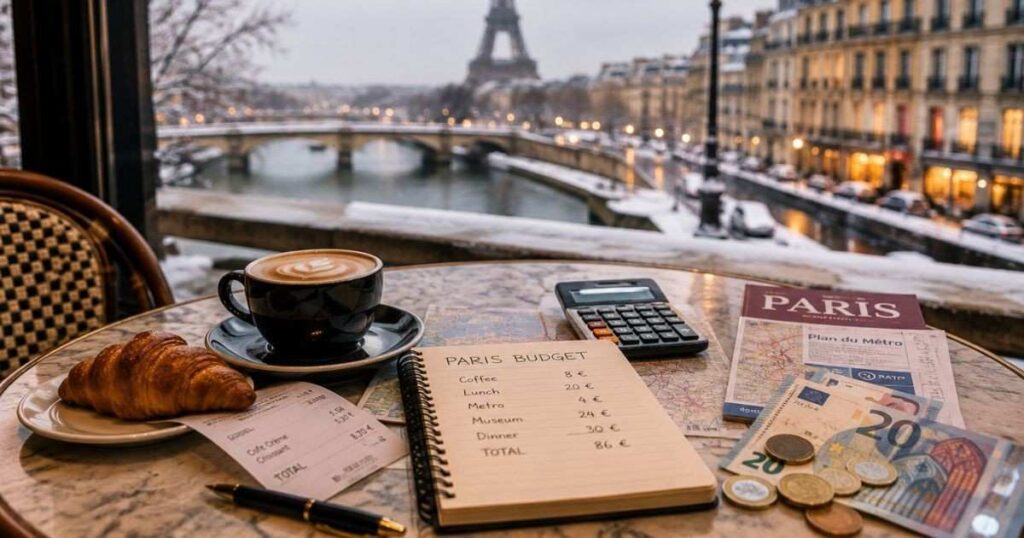
A realistic daily budget for Paris in winter runs $120 to $180 per person for a mid-range trip, noticeably lower than the $180 to $250 you’d budget for August. Museum entry adds up fast if you’re not careful: the Louvre charges €22 (about $24), Musée d’Orsay charges €16 (about $17) and the Sainte-Chapelle costs €13 (about $14). Buying the Paris Museum Pass at €70 for four days only pays off if you’re hitting at least four major sites, since winter’s shorter opening hours mean you’ll visit fewer per day than in summer.
Food costs drop too. A sit-down lunch with wine at a neighborhood bistro runs €18 to €25 in winter versus €25 to €35 during peak season, since restaurants aren’t marking up menus for tourist volume. The Paris Metro costs €2.15 per single ticket or €19.50 for a Navigo Easy pass loaded with 10 trips, which covers most winter itineraries since you’ll walk less in the cold and rely more on transit between neighborhoods.
Pro Tip: Skip the Museum Pass if you’re staying under three days with winter’s earlier closing times, most visitors only manage two full museum visits, making individual tickets cheaper than the pass.
Flights follow the same seasonal discount as hotels. Round-trip fares from major U.S. hubs to Paris often run $150 to $250 cheaper in January and early February compared to the summer peak, since airlines cut fares to fill seats during the slower travel months. Combine that with the lower hotel rates and a trip built around Paris in winter can cost 25 to 35 percent less overall than the identical itinerary booked for July.
The Christmas Markets and Winter-Only Experiences
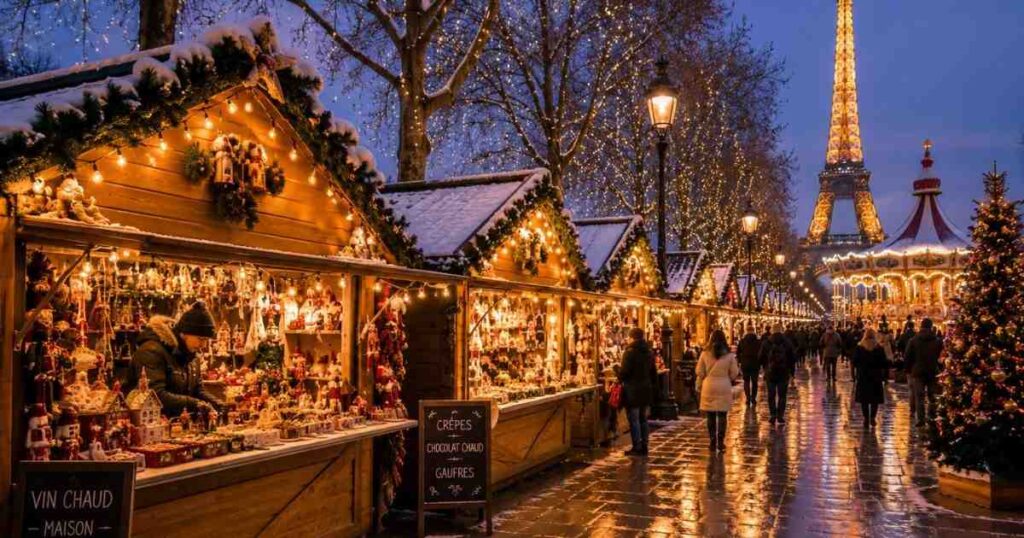
Visiting Paris in winter means access to seasonal experiences that simply don’t exist the rest of the year. The Marché de Noël des Champs-Élysées runs from mid-November through early January, with roughly 150 wooden chalets selling mulled wine, roasted chestnuts and handmade ornaments along the avenue. The ice rink at Hôtel de Ville operates free of charge from early December through early March, though skate rental costs €7.
Christmas in Paris also means the department stores compete for the best window displays Galeries Lafayette and Printemps both install elaborate animated scenes every November that stay up through mid-January and both are free to walk past even if you’re not shopping. The Jardin des Tuileries hosts a winter funfair with a 60-meter ferris wheel offering views over the Louvre and the Seine for €8 per ride. None of this competes for space with the summer picnic crowds that usually fill that same garden.
Verdict: The seasonal markets alone justify choosing Paris in winter over a summer trip if you’ve already seen the major landmarks on a previous visit.
Smaller neighborhood markets round out the experience without the Champs-Élysées crowds. The Marché de Noël at Parc de la Villette and the one at Place Saint-Sulpice both draw a fraction of the visitors, with better prices on mulled wine and fewer lines for crepes. Locals tend to favor these over the flagship market precisely because Paris in winter still gets busy in the most obvious tourist spots, even if overall numbers are down from summer.
Practical Tips for Getting Around in the Cold
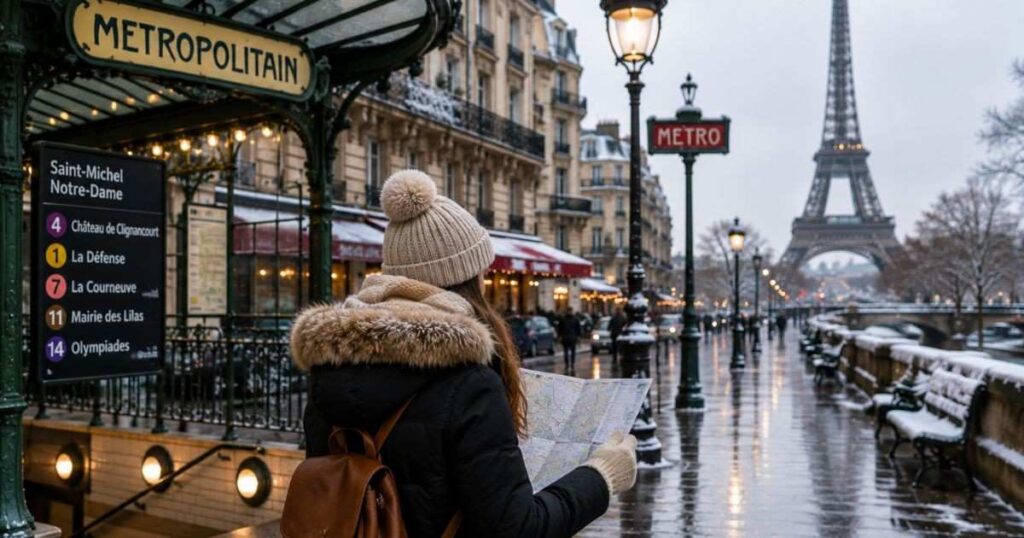
Layer clothing matters more than heavy clothing when you’re navigating Paris in winter, since you’ll move between cold outdoor walks and overheated metro cars and cafés throughout the day. A waterproof outer layer beats a thick wool coat, since Paris sees rain on roughly 12 to 15 days each winter month, more often than snow. Waterproof boots with real tread help on the cobblestone streets around the Marais and Montmartre, which get slick when wet.
Most tourists miss that the RER B train connecting CDG airport to the city center runs less frequently after 9 p.m. in winter, so plan late arrivals around a taxi (roughly €55 to €65 to central Paris) rather than counting on the train. Daylight runs short, from around 8:45 a.m. sunrise to 5:15 p.m. sunset in late December, so front-load outdoor sightseeing like Montmartre or the Eiffel Tower into the late morning and save museums for the darker afternoon hours.
Pro Tip: Carrying a compact umbrella rather than relying on a good Paris winter rain tends to come in short, wind-driven bursts rather than steady downpours and umbrellas hold up better on the exposed bridges over the Seine.
One mistake shows up again and again in first-time itineraries for Paris in winter: packing the schedule as tightly as a summer trip. Cold temperatures and early sunsets slow down walking pace and duck into a café for 20 minutes to warm up more often than you’d expect. Building in that buffer time, rather than fighting it, makes the days feel relaxed instead of rushed.
You may also like:
Frequently Asked Questions
How many days do you need in Paris in winter?
Four to five days covers the major landmarks, two or three museums and at least one day trip without rushing. Shorter daylight hours mean you’ll fit fewer outdoor activities per day than in summer, so budget an extra day compared to a warm-weather visit. Travelers focused only on the city center, skipping day trips to Versailles or Giverny, can manage a solid trip in three days.
Is Paris worth visiting in winter?
Yes lower hotel prices, shorter museum lines and seasonal Christmas markets make winter one of the strongest value seasons for the city. The trade-off is shorter daylight and a higher chance of rain but neither typically disrupts a well-planned itinerary. Visitors who prioritize museums, food and indoor culture over outdoor lounging tend to prefer this season over summer.
What is the best time to visit Paris in winter?
The first two weeks of January offer the best combination of low prices and thin crowds, since the Christmas rush ends December 24th but the markets and decorations often stay up through early January. Late November through mid-December works well if seeing the Christmas markets at full swing matters more than saving money. Avoid the week of Christmas and New Year’s if budget is the priority, since hotel rates spike noticeably during that stretch.
Is Paris expensive for tourists in winter?
It’s cheaper than the summer season, with hotel rates often dropping 30 to 40 percent outside the December holiday window. A realistic daily budget of $120 to $180 per person covers mid-range meals, transport and a couple of museum entries. Costs rise sharply during the last two weeks of December due to the Christmas market and holiday travel demand.
Can you do a day trip from Paris to Versailles in winter?
Yes and a Versailles day trip is easier during Paris in winter than in summer, since the Palace of Versailles sees a fraction of its peak-season visitor volume. The RER C train takes about 40 minutes each way from central Paris and entry to the palace and gardens runs €21. Shorter winter opening hours mean you should arrive by early afternoon at the latest to see the interior before closing.
Final Thoughts
Choosing Paris in winter over the crowded summer months trades a few degrees of comfort for shorter lines, lower prices and a version of the city that feels lived-in rather than performed for tourists. Anyone weighing whether Paris in winter suits their travel style should remember that the cold is manageable, the savings are real and the experience rewards travelers who come prepared rather than those chasing perfect weather.
You get the same Eiffel Tower, the same Seine, the same narrow streets in Montmartre, just without three hundred people photographing the same angle you’re trying to stand in. Arrive at the Jardin des Tuileries ferris wheel right after sunset, when the Louvre lights up gold across the garden and stay on for a second ride before the crowd from the evening markets arrives.

