
Most hikers assume the hardest part of visiting Fossil Springs is the elevation gain. It isn’t. The hardest part is getting a parking permit before someone else does. Once you’re standing at the bottom of that 1,600-foot canyon, staring at 70-degree water surging out of the rock at 20,000 gallons a minute, the climb back up feels like a fair trade. This guide covers everything you need to plan the trip, from permit rules to the best route down and the details most visitors miss along the way.
In This Guide You Will Find:
- How the permit system for Fossil Springs actually works and when you can skip it entirely
- A breakdown of the Bob Bear Trail versus the Flume Trail route into the canyon
- The exact elevation change and mileage you’re signing up for
- Which swimming holes are worth the extra walking
- How this destination differs from Fossil Creek, since the two get confused constantly
- Seasonal timing that changes your entire experience of the canyon
- What gear and prep actually matter once you’re below the rim
Quick Info
- Location: Coconino National Forest, near Strawberry, Arizona
- Nearest Airport: Phoenix Sky Harbor International Airport, roughly 100 miles away
- Best Time to Visit: October through April, outside the hot permit season
- Travel Time from Nearest Major City: About 2 hours from Phoenix, 1.5 hours from Flagstaff
- Days Recommended: 1 full day
- Average Daily Cost: $10 to $20 per person, including parking and gas
Getting to Fossil Springs and Understanding the Permit System
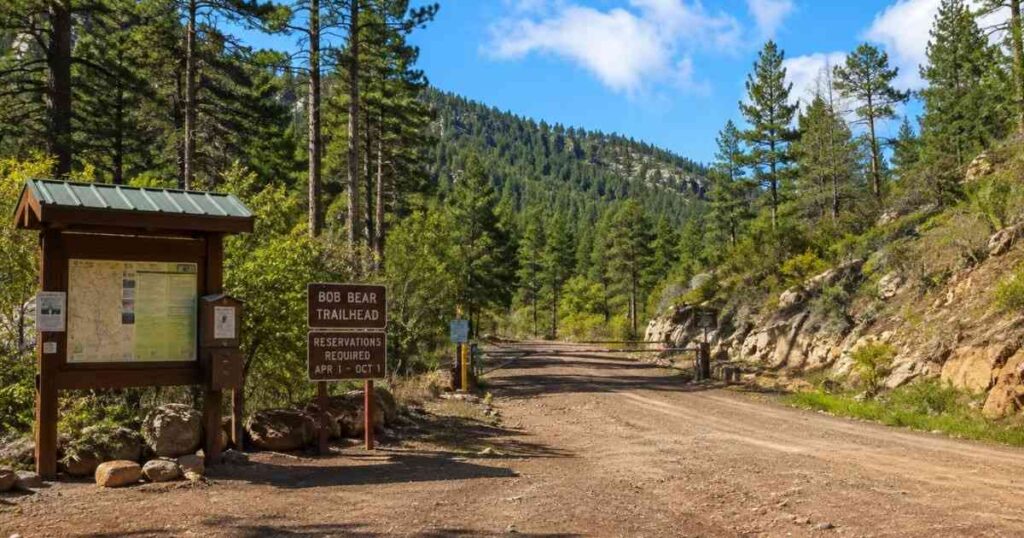
Fossil Springs sits inside the Coconino National Forest, a two-hour drive from Phoenix and about ninety minutes from Flagstaff. The closest town is Strawberry, Arizona, a small mountain community with gas stations, a general store and the Strawberry Inn if you want to stay the night before an early start. From Strawberry, you’ll turn onto Fossil Creek Road, which is paved for four miles before switching to dirt for the final stretch to the Bob Bear Trailhead.
Between April 1 and October 1, you need a reserved parking permit through Recreation.gov to access the trailhead. Permits cost around $10 per vehicle and sell out fast for weekend slots, so book two to three weeks ahead if you’re set on a specific Saturday. From October 2 through March 31, no permit is required and parking runs first-come, first-served, which is the single biggest reason locals prefer visiting in the cooler months. Arrive by 8 a.m. even in the off-season, since the small lot fills quickly once word gets around and don’t count on cell signals to check availability once you’re past Strawberry.
Pro Tip: Set a Recreation.gov account up weeks before your trip so you’re not creating one at midnight when permits are released.
Choosing Your Route: Bob Bear Trail vs. the Flume Trail
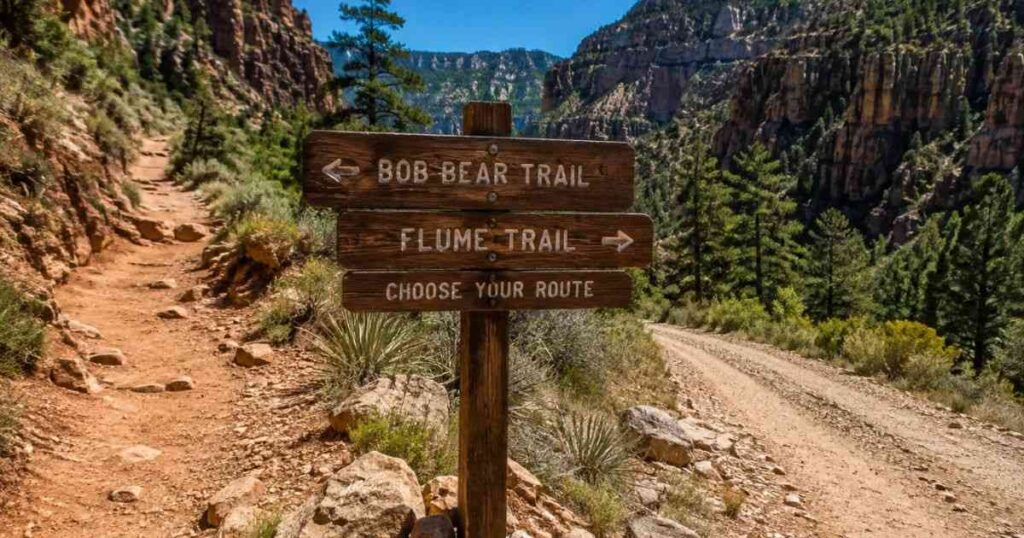
The Bob Bear Trail is the most direct way into Fossil Springs and also the most punishing. It’s a 10-mile round trip that drops about 1,500 feet from a trailhead sitting above 5,500 feet in elevation, which means you’re descending in thinner air and climbing back out of it on tired legs. The trail starts wide and easy, then narrows and steepens as it drops toward the canyon floor, passing through juniper scrub and patches of prickly pear before it flattens out near the water.
The alternative is the Flume Trail, accessed from Camp Verde rather than Strawberry. This route follows a fourteen-mile washboard dirt road that doesn’t require four-wheel drive but rewards high clearance. The Flume Trail itself is gentler and follows an old irrigation flume along the canyon wall, making it a better choice if steep descents aren’t your thing. It’s also longer overall, so factor in extra time if you choose this side.
Either way, you’re walking in not driving to the edge and that’s exactly what keeps the crowds thinner than at more accessible Arizona swimming spots. Both trailheads require a high-clearance vehicle for the final stretch, so a low sedan isn’t the right choice for either approach.
Verdict: Choose Bob Bear for the shorter overall distance and choose the Flume Trail if you want a gentler grade and don’t mind the longer drive from Camp Verde.
What Most Visitors Miss at Fossil Springs
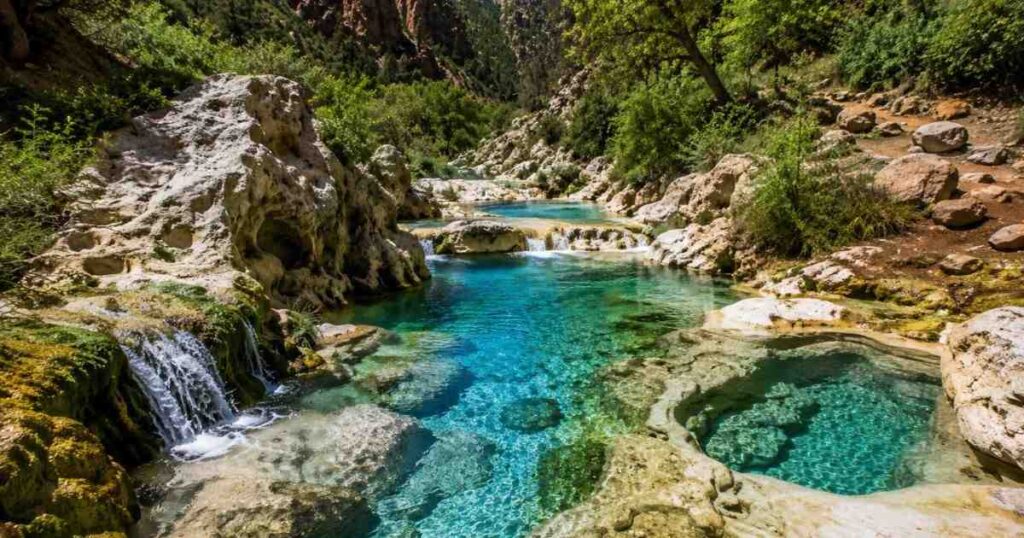
The water itself is the real headline at Fossil Springs and most first-timers underestimate how strange it looks. Because the spring is rich in dissolved calcium, it deposits travertine along the streambed, creating pale, almost bone-white formations that gave the springs their name. The result is water so clear and blue it looks tinted, even though nothing artificial is involved.
Most visitors hike straight to the first swimming hole they see and never venture further. The pools closer to the Flume Trail junction tend to be quieter, since the bulk of foot traffic clusters near the main falls. If you’re hiking here specifically to avoid crowds, plan to walk an extra ten to fifteen minutes past the first obvious spot, since the smaller side pools rarely see more than a handful of people even on a busy Saturday. Water temperature stays close to 70 degrees Fahrenheit year-round, which feels shockingly cold in July and refreshingly mild in October but never dangerously cold for swimming.
Pack more water than feels necessary. There is no potable water source anywhere along the trail and the return climb out of the canyon is where most rescue calls originate, almost always tied to dehydration rather than injury. A gallon per person is a reasonable minimum for a summer visit, even if that sounds excessive at the trailhead.
Pro Tip: Freeze a liter of water the night before so it’s still cold by the time you reach the canyon floor.
Fossil Springs vs. Fossil Creek: Clearing Up the Confusion
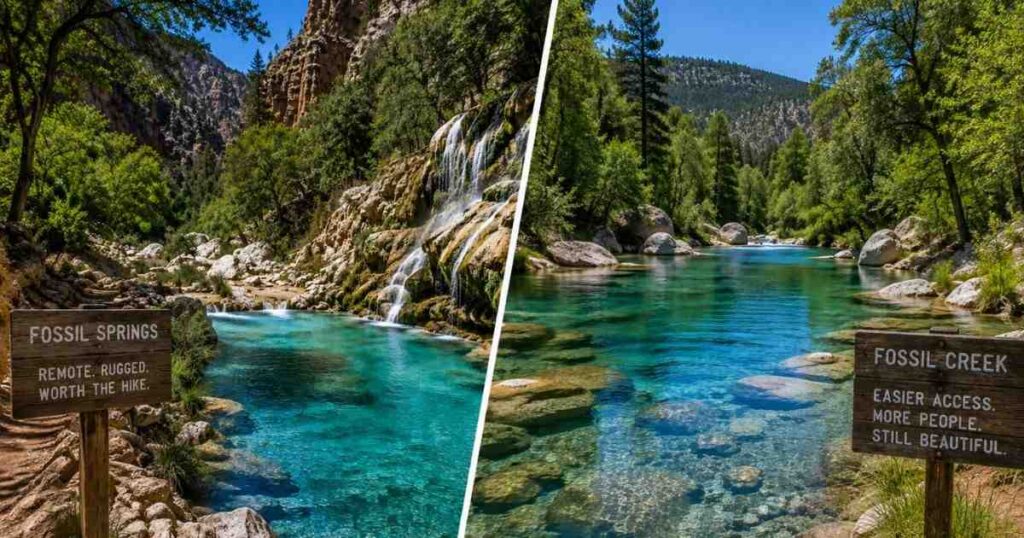
Fossil Springs and Fossil Creek get mixed up constantly and the confusion is understandable since they’re part of the same waterway. This is the source, where water surges directly out of the canyon wall. From there, it flows fourteen miles downstream as Fossil Creek, eventually reaching the Verde River near Camp Verde. Fossil Creek Falls, reached by a short two-mile round trip on the Dixon Lewis Trail, is a completely different access point and requires its own separate permit and parking area, so don’t assume one reservation covers both.
If your goal is a shorter, easier outing with waterfalls and swimming holes close to the parking lot, Fossil Creek Falls fits better. If you want the source itself, the travertine formations and a longer, quieter hike, Fossil Springs is the better choice. Roughly 60,000 people visit this river system annually and the split between the two access points keeps either spot from feeling as crowded as it otherwise would. Neither location connects to the other by trail, so plan on two separate trips if you want to see both ends of the waterway.
Verdict: Pick Fossil Springs for a longer, wilder day and Fossil Creek Falls for a shorter trip with easier access.
Best Time of Year and Practical Tips for Fossil Springs
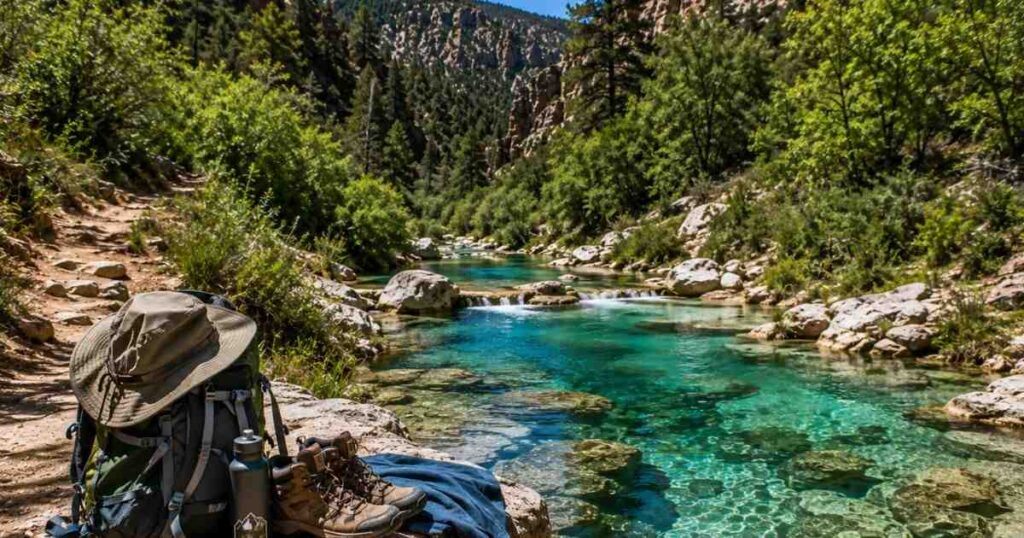
Summer temperatures at the trailhead regularly exceed 100 degrees Fahrenheit and the trail down has almost no shade for most of its length. October through April offers cooler hiking temperatures, though water in the canyon stays swimmable even when it’s chilly at the rim. Spring brings wildflowers along the lower stretches, while fall gives you cottonwood color without the summer crowds competing for parking permits. Winter mornings can drop below freezing at the trailhead even though the canyon floor warms up considerably by midday, so layers matter more than you’d expect for a desert hike.
Bring sturdy hiking shoes rather than sandals, since the trail is rocky and uneven in sections, especially near the canyon floor. Dogs can make the trip but the exposed, waterless terrain is hard on paws and stamina, so think twice before bringing one on a summer visit. There’s no cell service once you drop into the canyon, so download offline maps before you leave Strawberry or Camp Verde.
Vaulted toilets exist at the main trailheads but there are no other services, so plan meals and snacks before you arrive. Trash service doesn’t exist either, so everything you carry in needs to come back out with you, including fruit peels and anything else that feels biodegradable.
Pro Tip: Start hiking at sunrise in warmer months so you’re at the water by the time the canyon heats up and save the climb out for late afternoon shade.
You may also like:
Frequently Asked Questions
How many days do you need at Fossil Springs?
One full day is enough to hike in, swim and hike back out comfortably. Most visitors spend four to six hours total, including two to three hours at the water itself. If you want to explore both the Bob Bear and Flume Trail sides, plan a second visit rather than rushing both in one trip.
Is Fossil Springs worth visiting?
Yes, it consistently ranks among Arizona’s most rewarding day hikes because of its turquoise water and dramatic canyon setting. The effort required to reach it keeps the crowds smaller than at drive-up swimming spots. Most people who make the climb say the water alone justifies the elevation gain.
What is the best time to visit Fossil Springs?
October through April offers the most comfortable hiking conditions, with cooler air temperatures and no permit requirement after October 1. The water stays close to 70 degrees year-round, so swimming remains enjoyable even in cooler months. Avoid July and August unless you’re comfortable hiking in triple-digit heat.
Is Fossil Springs expensive to visit?
No, a day trip to Fossil Springs typically costs under $20 per person once you factor in the $10 parking permit and gas from Phoenix or Flagstaff. There are no entrance fees beyond the permit and no facilities charge for use. Pack your own food and water rather than relying on nearby services, since none exist at the trailhead.
Is Fossil Springs better than Fossil Creek Falls?
It depends on what you’re after: this hike offers a longer, quieter route straight to the source, while Fossil Creek Falls gives you an easier two-mile round trip closer to Camp Verde. Hikers chasing solitude and the travertine formations tend to prefer the longer route. Families or anyone short on time usually find Fossil Creek Falls more manageable.
Final Thoughts
Fossil Springs rewards anyone willing to trade a steep climb for water clear enough to see straight to the bottom of a pool that’s rarely crowded. Between the permit planning, the trail choice and the seasonal timing, a little preparation turns a punishing hike into one of the best days you’ll spend outdoors in Arizona. Most trips fall apart from under-preparing rather than bad luck, so treat the water and footwear advice here as non-negotiable rather than optional suggestions. Skip the first swimming hole you reach, walk the extra fifteen minutes past the crowd and find a quiet stretch of travertine-lined water to call your own before you start the climb back out.

