
A shaft of orange light drops through a crack in the sandstone and lands on the canyon floor like a spotlight and forty tourists go silent for exactly the six seconds it takes to snap a photo. That’s Upper Antelope Canyon at noon in July. A quarter mile away, Lower Antelope Canyon asks you to climb three steel ladders through a slot so narrow your shoulders brush both walls at once. Picking between Upper vs Lower Antelope Canyon isn’t about which one is prettier, it’s about which experience matches your legs, your camera bag and your patience for crowds.
Every traveler arriving in Page, Arizona faces the same question Upper vs Lower Antelope Canyon and which one deserves the limited hours of a single trip. This guide breaks down everything you need to decide between Upper vs Lower Antelope Canyon before you book a single ticket, down to the exact ladder count and the precise hour the light beams appear.
In This Guide You Will Find:
- The real physical difference between the two canyons not just the marketing photos
- Exact ticket prices for every tour operator currently running trips
- Which canyon produces the famous light beam shots and during which exact months
- How much walking, climbing and ladder work each canyon actually requires
- The specific time slots that avoid the worst crowds
- Which canyon locals recommend for first-time visitors versus repeat photographers
QUICK INFO
Location: Page, Arizona, on Navajo Nation land east of Highway 98
Nearest Airport: Page Municipal Airport (PGA), about 8 minutes from the canyon entrances. The nearest major airport is Harry Reid International Airport (Las Vegas), around 275 miles (443 km) away or about a 4.5-hour drive.
Best Time to Visit: Late morning to early afternoon, from March through October, for the best light inside the slot canyons.
Travel Time from Nearest Major Cities: About 4 hours 15 minutes from Phoenix and 4 hours 30 minutes from Las Vegas by car.
Days Recommended: 1 full day to visit both Upper and Lower Antelope Canyon with back-to-back guided tours.
Average Daily Cost: $120–$180 per person, including both tour tickets, lunch and fuel.
Upper vs Lower Antelope Canyon: Starting With Upper Antelope Canyon
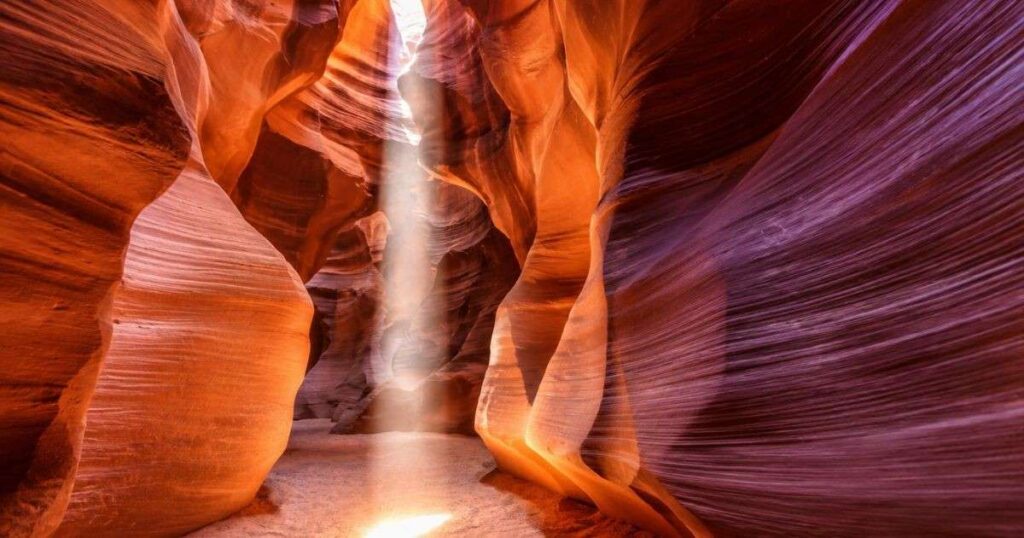
Upper Antelope Canyon sits at ground level, meaning you walk in on flat sand the entire quarter-mile route with zero climbing. Navajo guides call it “Tse’ bighanilini,” which translates to “the place where water runs through rocks” and the canyon walls curve into smooth wave shapes carved by flash flood erosion over thousands of years. The famous light beams only appear between late March and early October and only between roughly 11:00 AM and 1:00 PM when the sun sits high enough to drop straight through the narrow opening above.
Standard tours run 60 to 90 minutes and cost between $65 and $120 per person depending on the operator and time slot, with photography tours running longer and costing up to $200. The canyon is genuinely crowded during peak beam hours except groups of 15 to 20 people moving through single file, with guides pausing every 20 feet for photo stops. Most visitors don’t realize the 8:00 AM and 4:00 PM slots cost less and offer the same rock formations without the beam, just softer, more even lighting that photographers who dislike harsh contrast often prefer.
Pro Tip: Book the 9:30 AM slot in June if you want beams without the absolute peak 11:30 AM crowd crush.
Upper vs Lower Antelope Canyon: The Case for Lower Antelope Canyon
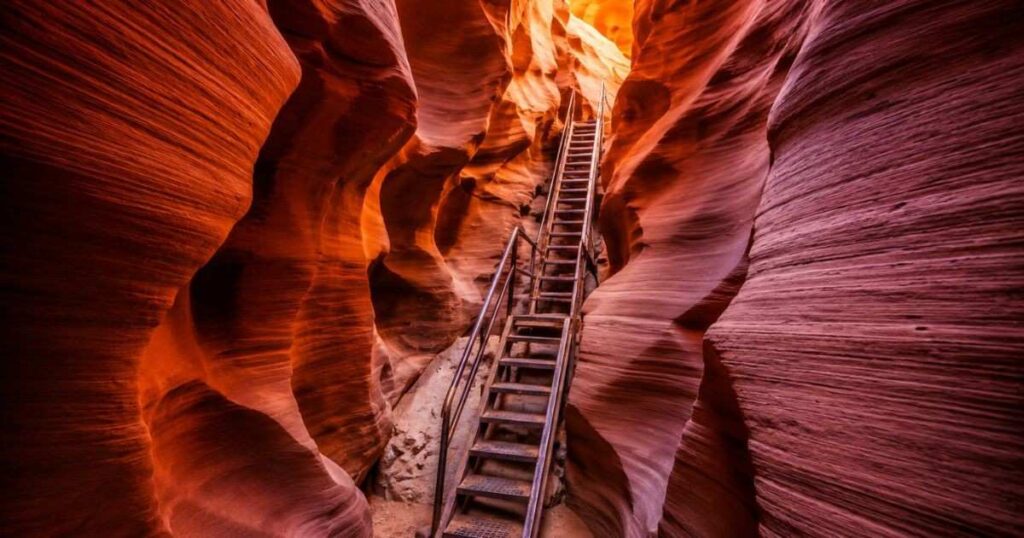
Lower Antelope Canyon runs deeper into the ground and you’ll descend and climb a series of narrow steel ladders and stairways across the half-mile route, with the steepest section requiring you to grip a handrail while your feet find footholds on metal rungs. The canyon corkscrews rather than flowing in a straight line and the walls twist into tighter, more dramatic shapes than Upper Antelope Canyon because the erosion pattern here comes from water moving both horizontally and vertically. Tour tickets cost $50 to $85 per person for the standard 60-minute walk, roughly 20 to 30 percent cheaper than Upper Antelope Canyon.
The narrower passages mean smaller tour groups, typically 8 to 12 people, which gives you more breathing room for photos and fewer strangers in your frame. Light beams are rarer here and mostly show up from June through August around midday but the deep purples and oranges reflecting off the curved walls look striking even without direct sun. Anyone with knee problems, limited mobility or a fear of tight spaces should think twice, since there’s no way to skip the ladders once you’re inside.
Verdict: Choose Lower Antelope Canyon if you want lower prices, smaller groups and don’t mind climbing.
Upper vs Lower Antelope Canyon: Cost and Crowd Comparison
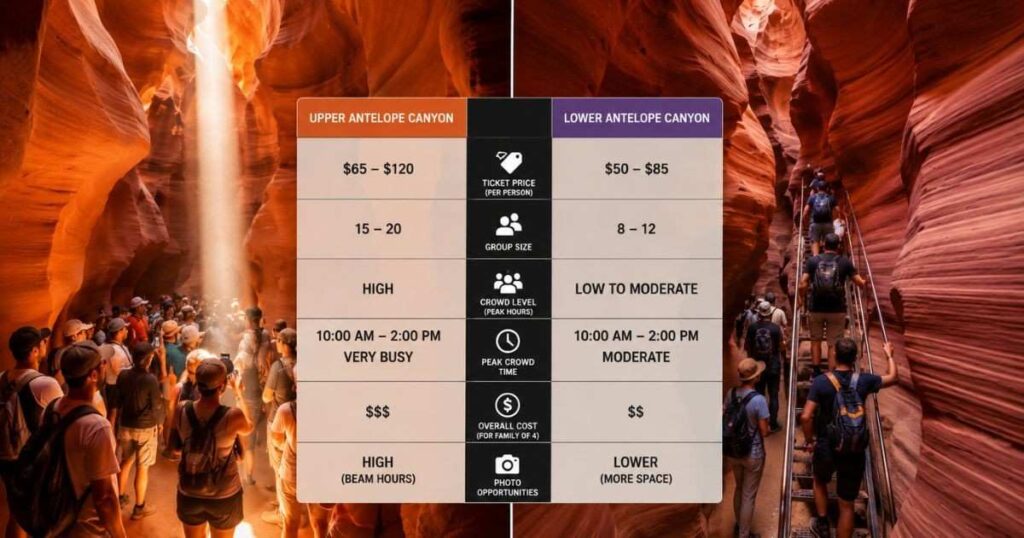
Running the numbers side by side makes the Upper vs Lower Antelope Canyon decision clearer and cost is usually the deciding factor once travelers see both price lists. A family of four visiting Upper Antelope Canyon during peak beam season pays roughly $320 to $480 for standard tickets, while the same group at Lower Antelope Canyon pays $200 to $340. That gap alone settles the Upper vs Lower Antelope Canyon debate for budget-conscious families before crowds even enter the conversation. Add a $15 Navajo Nation permit fee per person at some operators, plus another $10 to $15 for parking near the visitor centers in Page.
Crowds peak between 10:00 AM and 2:00 PM daily from May through August, when tour buses from Grand Canyon day trips and Lake Powell excursions arrive in waves. Early morning slots before 9:00 AM and late afternoon slots after 3:00 PM see roughly half the foot traffic at both canyons. Weekday visits, especially Tuesday through Thursday, consistently run lighter than weekend slots booked by Phoenix and Las Vegas weekend travelers.
Pro Tip: Book directly through Ken’s Tours, Chief Tsosie’s or Dixie Ellis’s Antelope Canyon Tours rather than third-party resellers to avoid a 15 to 20 percent markup.
Upper vs Lower Antelope Canyon: Best Time of Year for Photography
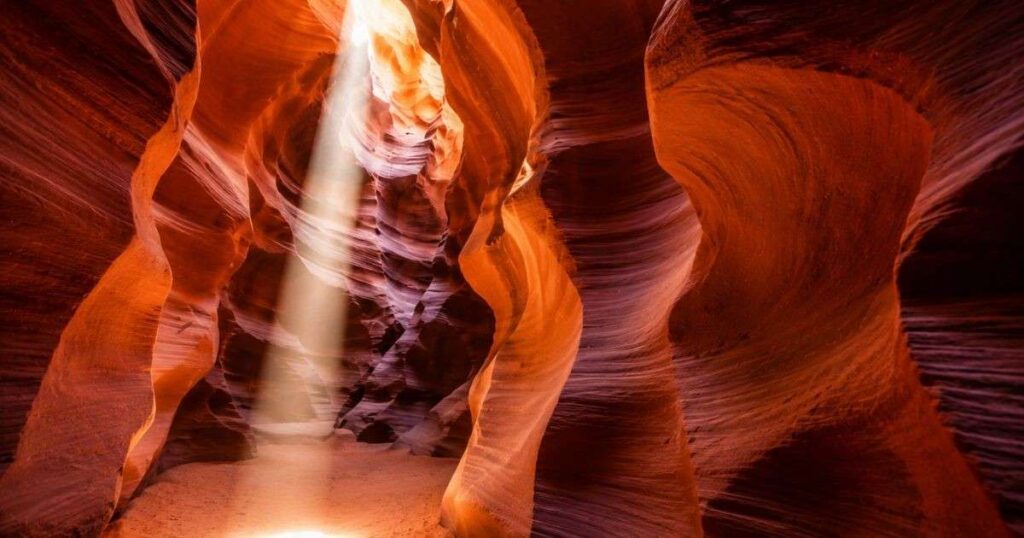
Anyone weighing Upper vs Lower Antelope Canyon for photography purposes needs to think about season before location. The light beam phenomenon at Upper Antelope Canyon only happens when the sun angle is high enough, which limits your window to roughly six months centered on summer. Outside that window, both canyons still show off rich sandstone colors, just without the dramatic vertical light shafts that dominate postcard shots.
Bring a camera with manual settings if you’re serious about photography, since the contrast between bright beam and dark rock confuses most phone camera sensors. Tripods are banned on standard tours at both canyons due to foot traffic but dedicated photography tours at Upper Antelope Canyon allow tripods for an extra fee and run during off-peak hours with smaller groups. Dust particles thrown into the air by guides create the visible beam effect in photos, so don’t be surprised if you see your guide tossing handfuls of sand upward during your tour.
Verdict: Photographers chasing beam shots should prioritize Upper Antelope Canyon between June and August everyone else gets similar color and texture at either canyon year-round.
Upper vs Lower Antelope Canyon: Getting There and Practical Tips
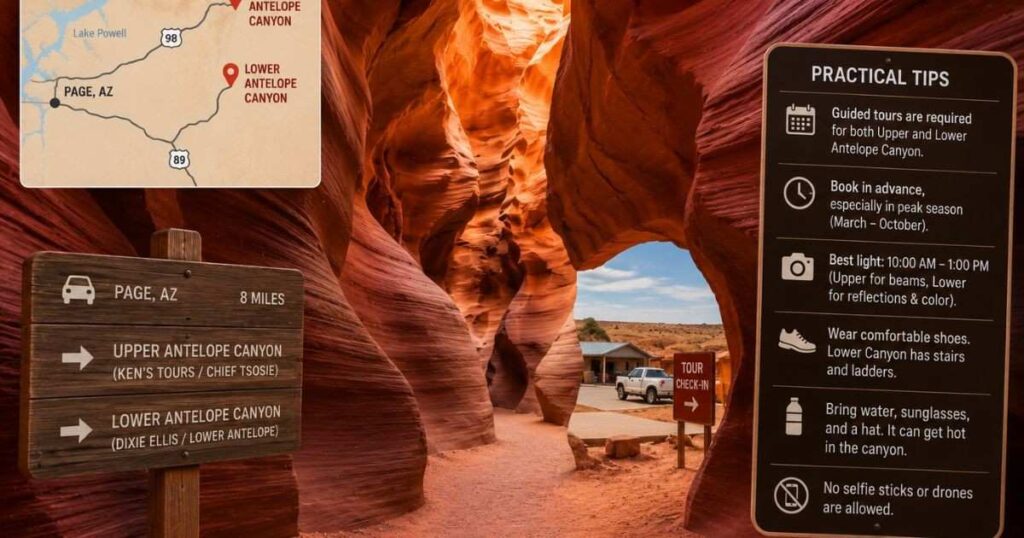
Both canyons sit within 10 minutes of downtown Page, Arizona, off Highway 98 and neither requires a rental car if you’re staying at a hotel within walking distance of a tour operator’s pickup point. This proximity is one reason the Upper vs Lower Antelope Canyon question rarely comes down to logistics both entrances are close enough to visit in the same afternoon. Book tickets at least two to three weeks ahead during summer months, since popular time slots sell out completely. Wear closed-toe shoes for both canyons but especially for Lower Antelope Canyon, where sandal straps catch on ladder rungs.
Temperatures inside both canyons run 10 to 15 degrees cooler than the surface in summer but flash flood risk is real and tours shut down without notice during monsoon season storms, typically July through September. Bring cash for tips, since Navajo guides work on tips as a meaningful part of their income, with $5 to $10 per person considered standard. Cell service inside both canyons is nonexistent, so download any offline maps or confirmation emails before you arrive.
Pro Tip: Stay at a hotel on the north side of Page to cut your drive time to either canyon entrance to under 8 minutes.
You may also like:
Frequently Asked Questions
How many days do you need for Upper vs Lower Antelope Canyon?
One full day covers both canyons comfortably if you book a morning slot at one and an afternoon slot at the other. Most visitors schedule Upper Antelope Canyon for the 11:00 AM beam window and Lower Antelope Canyon for a 2:00 PM slot afterward, which resolves the Upper vs Lower Antelope Canyon scheduling question without wasting a second day. Add a second day only if you’re also visiting Horseshoe Bend or Lake Powell nearby.
Is Antelope Canyon worth visiting?
Yes both canyons remain worth the trip because the sandstone formations took thousands of years to carve and don’t exist in comparable form anywhere else in Arizona. The Upper vs Lower Antelope Canyon debate is really a choice between two different but equally impressive experiences. Even repeat visitors report noticing new details on subsequent trips as lighting conditions change.
What is the best time to visit Antelope Canyon?
Late March through early October delivers the light beam effect at Upper Antelope Canyon, with peak beams appearing between 11:00 AM and 1:00 PM. For smaller crowds regardless of season, book the first tour slot of the day, usually 8:00 AM. Winter visits skip the beams entirely but offer noticeably thinner crowds and softer indirect light.
Is Antelope Canyon expensive for tourists?
Standard tours run $50 to $120 per person depending on which canyon and time slot you choose, with photography tours costing up to $200. Add a $10 to $15 parking fee and $5 to $10 per person in guide tips, bringing a realistic per-person total to $65 to $135. The Upper vs Lower Antelope Canyon price gap is the single biggest lever for cutting costs, since Lower Antelope Canyon runs 20 to 30 percent cheaper across nearly every operator. Compared to similar slot canyon tours in Utah, Antelope Canyon pricing runs roughly on par.
Is Lower Antelope Canyon better than Upper Antelope Canyon?
Neither canyon is objectively better, since the Upper vs Lower Antelope Canyon comparison comes down to personal priorities. Lower Antelope Canyon costs less and has smaller tour groups but requires ladder climbing that Upper Antelope Canyon doesn’t. Choose Upper if you want flat walking and the classic light beam photo and choose Lower if budget and smaller crowds matter more to you.
Final Thoughts
The Upper vs Lower Antelope Canyon decision ultimately comes down to your legs and your budget rather than which canyon photographs better, since both deliver striking sandstone formations carved by the same flash flood erosion. Book Upper Antelope Canyon if you want flat walking and a shot at the famous light beam between late morning and early afternoon. Book Lower Antelope Canyon if you’re comfortable on ladders and want to save 20 to 30 percent per ticket while dealing with smaller tour groups.
No article can make the Upper vs Lower Antelope Canyon call for you but the ladder count and the ticket price usually do. Whichever canyon you pick, arrive at the visitor center 20 minutes before your slot, since Navajo guides won’t hold a spot for late arrivals and tours run on a strict rotating schedule through both canyons every single day of the year.

