
Most tourists fly into Kona, rent a car and never make it to the other side. They miss the wettest, greenest, most geologically alive town in all of Hawaii. Hilo sits on the edge of an active volcanic island, 28 miles from Kilauea, one of the most continuously erupting volcanoes on Earth. Things to do in Hilo Hawaii range from standing inside lava tubes to eating butter mochi at a 40-year-old family bakery and almost none of it costs more than $25.
IN THIS GUIDE YOU WILL FIND:
– Exactly which waterfall trails are worth the mud and which ones aren’t
– How to time your visit to Rainbow Falls for the actual rainbow (not just the waterfall)
– What the Hilo Farmers Market sells that you genuinely cannot find anywhere else on the island
– Which black sand beach near Hilo lets you legally swim vs. which one doesn’t
– How to use Hilo as your base for Hawaii Volcanoes National Park without wasting half a day driving
– The one neighborhood most visitors skip that locals actually eat and shop in
Quick Info Box
| Quick Facts | Details |
| Location | Hilo, Big Island, Hawaii (East Side) |
| Nearest Airport | Hilo International Airport (ITO), 3 miles from downtown |
| Best Time to Visit | June–September (driest months) |
| Travel Time from Honolulu | About 45 minutes by flight |
| Recommended Stay | 3–4 days minimum |
| Average Daily Cost | $120–$180 per person (mid-range) |
Things to Do in Hilo Hawaii That Most Visitors Miss
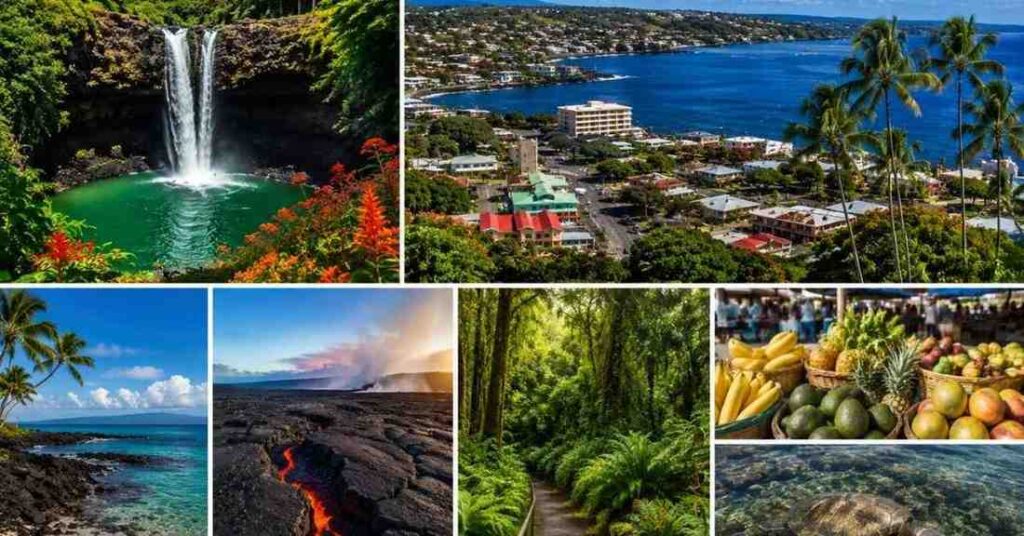
The moment you arrive in downtown Hilo, the first thing you notice is that it doesn’t look like a resort town and that’s exactly why it’s worth your time. The historic Bayfront area runs along Hilo Bay with wooden storefronts from the early 1900s, most of them still in use by local businesses. The Pacific Tsunami Museum on Kamehameha Avenue charges $9 admission and documents two waves in 1946 and 1960 that completely reshaped the town. Most visitors walk past it, which is a mistake, because the firsthand accounts inside are unlike anything else you’ll find in Hawaii.
Liliuokalani Gardens sits just east of downtown on Banyan Drive and covers 30 acres of Japanese-style landscape along the bay. Entry is free and the garden includes stone lanterns, koi ponds and a moon bridge donated by Hilo’s sister city in Japan. Early morning before 8 a.m. you’ll have it almost entirely to yourself. Things to do in Hilo Hawaii that cost nothing are actually some of the best ones and Liliuokalani Gardens is the clearest example of that.
The Mokupapapa Discovery Center on Kamehameha Avenue is another free stop that most tourists walk past. It covers the Northwestern Hawaiian Islands ecosystem with full-scale reef displays and interactive panels. A 1,500-gallon saltwater tank shows species found only in those remote atolls. When people ask about unique things to do in Hilo Hawaii that don’t cost anything, this center belongs at the top of that list.
Pro Tip: Park once on Kamehameha Avenue and do the entire downtown stretch on foot the museum, the gardens bridge and the Discovery Center are all within a 10-minute walk of each other.
Rainbow Falls and the Wailuku River Things to Do in Hilo Hawaii for Nature Lovers
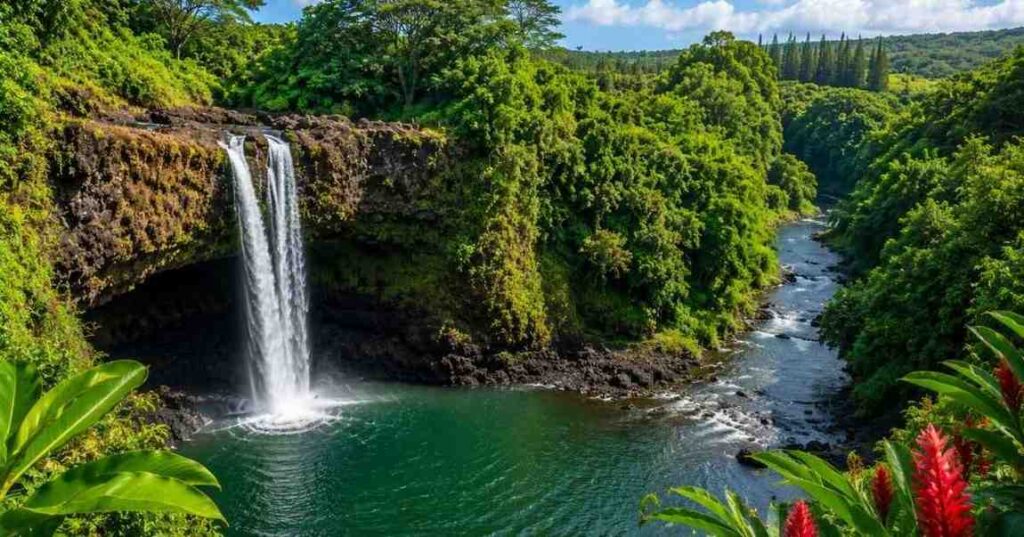
Rainbow Falls is the most photographed spot in Hilo and it earns it but only if you show up at the right time. The waterfall drops 80 feet into a natural lava pool and the mist it creates catches morning light between 9 a.m. and 10:30 a.m. to produce a genuine rainbow. Arrive after 11 a.m. and you’ll see a waterfall. Arrive at 9:15 a.m. and you’ll see why it has that name. Parking is free, entry is free and the walk from the lot to the overlook takes under two minutes.
A half-mile upstream, Boiling Pots is a second stop on the same road that almost nobody visits. The Wailuku River churns through a series of interconnected lava basins that bubble and foam like water coming to a boil even though the water is cold. Swimming is prohibited at both sites due to dangerous currents but the visual from the overlook at Boiling Pots is more raw and dramatic than Rainbow Falls on most days. Things to do in Hilo Hawaii that require zero entrance fee and give you this level of geology are genuinely rare.
Pe’epe’e Falls sits in the background behind Boiling Pots and is visible from the same overlook. The full Wailuku River loop, Rainbow Falls, Boiling Pots and Pe’epe’e overlook takes about 90 minutes with parking and walking combined. Bring waterproof shoes if it has rained in the past 24 hours, which in Hilo is most days between October and March. Waterfall hikes are among the most rewarding things to do in Hilo Hawaii and this loop covers three of them in a single morning.
Pro Tip: Check the Hilo rain forecast the night before if heavy rain is expected, skip Rainbow Falls that morning because runoff turns the pool brown and eliminates the rainbow effect entirely.
Hilo Farmers Market and Local Food Scene
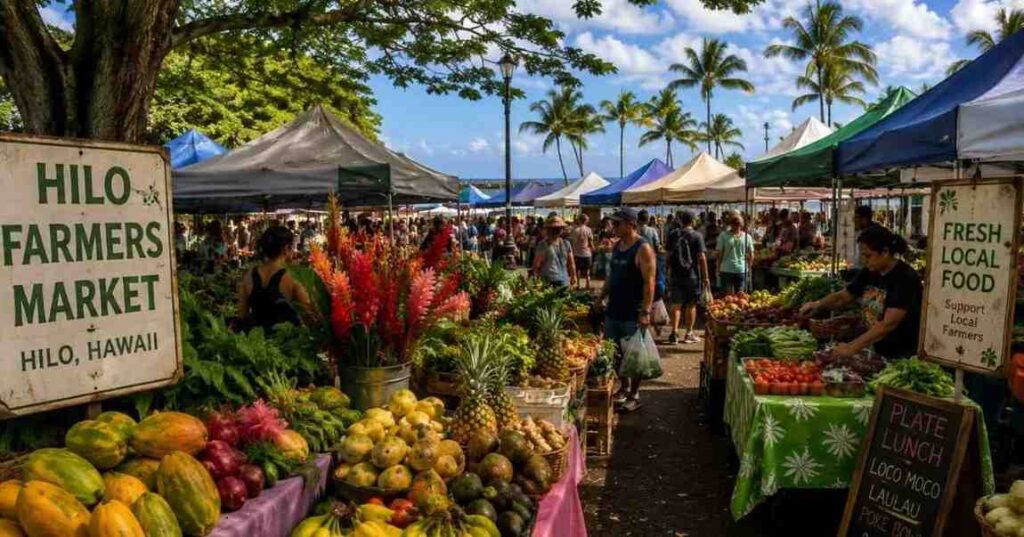
The Hilo Farmers Market runs Wednesday and Saturday on the corner of Mamo Street and Kamehameha Avenue and it is one of the most legitimate farm-direct markets in the state. On Saturdays, over 200 vendors fill both sides of the street by 7:30 a.m. and most of the best produce rambutan, longan, locally grown cacao and apple bananas sell out before 10 a.m. A full bag of mixed tropical fruit costs between $5 and $10. This is not a tourist market with refrigerator magnets, it is where Hilo residents actually buy their groceries.
For cooked food, Ken’s House of Pancakes on Kamehameha Avenue is open 24 hours and serves loco moco rice, hamburger patty, fried egg and gravy for around $13. It has been open since 1971 and runs the same menu with the same booths. Cafe 100, a few blocks away on Kilauea Avenue, invented the loco moco in 1946 and still serves a version for under $8. Things to do in Hilo Hawaii always come back to food eventually and both places will show you exactly what Big Island plate lunch culture actually means.
For poke, Suisan Fish Market on Lihiwai Street has been operating since 1907. It sells fresh ahi poke by the pound around $18 to $22 per pound depending on the preparation directly from the fish counter. Eat it at the picnic tables outside facing the bay. If you have been eating poke at hotel restaurants, this will reset your expectations entirely.
Pro Tip: Arrive at the Farmers Market before 8 a.m. on a Saturday if you want the Hamakua mushrooms and locally grown vanilla both vendors sell out by 9 a.m. most weeks.
Hawaii Volcanoes National Park The Biggest of All Things to Do in Hilo Hawaii
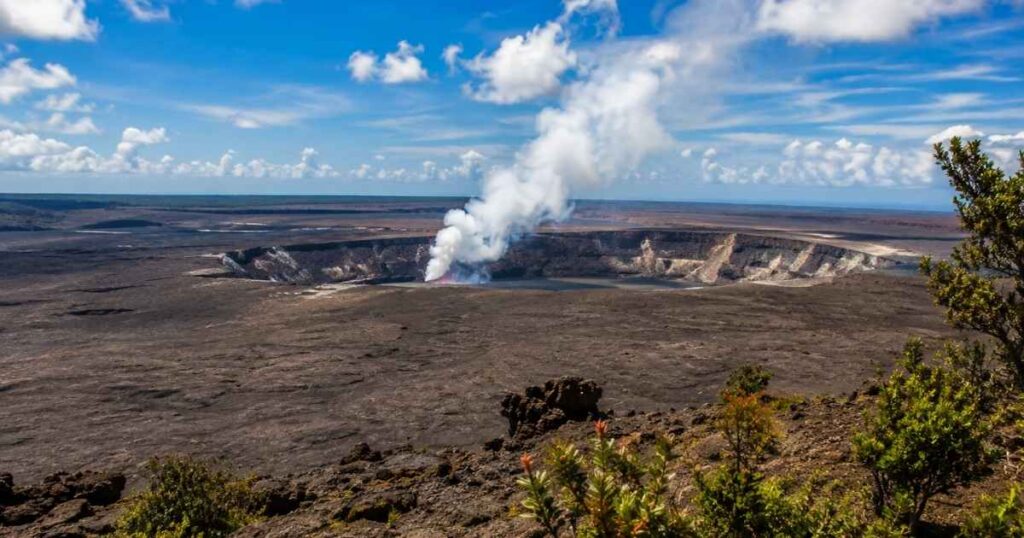
Hawaii Volcanoes National Park sits 28 miles southwest of Hilo on Highway 11 about 45 minutes by car. Entry costs $35 per vehicle and covers 7 days of unlimited re-entry. The park contains two active volcanoes Kilauea and Mauna Loa. Kilauea’s caldera, visible from the Kilauea Overlook and the Jaggar Museum site, is the central feature of the park and one of the few places on Earth where you can legally stand at the rim of an active volcanic system.
Crater Rim Drive circles the summit caldera and passes through steam vents, sulfur banks and lava tube entrances. The Thurston Lava Tube officially called Nahuku is a 500-year-old tunnel formed when the outer shell of a lava flow hardened while molten rock drained from inside. The walk through it takes about 10 minutes. Chain of Craters Road descends 3,700 feet from the summit to the coast in 20 miles and passes dozens of pit craters and hardened lava fields from flows as recent as 2003.
Things to do in Hilo Hawaii that involve the park work best as a full-day commitment. Plan 6 to 7 hours minimum 45 minutes driving each way plus 4 hours in the park. Night visits are worth it when lava is actively glowing in the caldera, which you can check on the USGS Hawaiian Volcano Observatory website before driving out. Compared to visiting volcanoes from Kona, the Hilo approach is 50 miles shorter each way and removes the need for a cross-island drive.
Pro Tip: Download the NPS Hawaii Volcanoes app before you leave Hilo cell coverage inside the park is unreliable and the offline maps show all trail closures updated from the previous day.
Black Sand Beaches and Coastal Things to Do in Hilo Hawaii
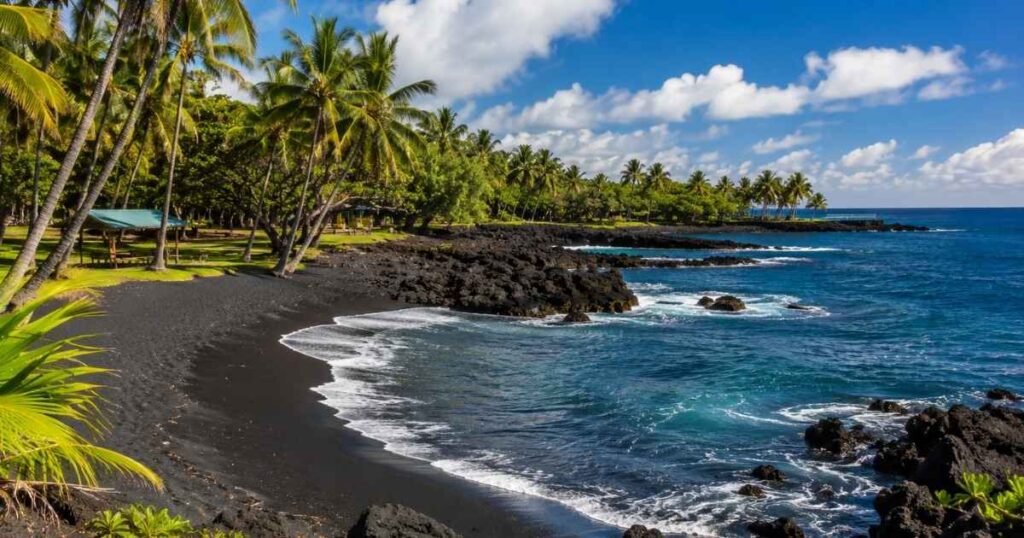
Richardson Ocean Park, 4 miles east of downtown Hilo on Kalanianaole Avenue, is the best swimming beach on the Hilo side of the island. The black sand comes from basalt that cooled rapidly in the ocean and broke into fine particles over centuries. Entry is free, there are lifeguards on weekends and the snorkeling just off the north end of the beach exposes coral heads with green sea turtles resting on the rocks. Water visibility runs 20 to 40 feet on calm days.
Leleiwi Beach Park, one mile before Richardson coming from town, has tidepools and calmer water but a rocky entry. It works better for wading and turtle-watching than for open swimming. Both beaches sit along the same road, so you can stop at both in one outing. Things to do in Hilo Hawaii near the water are concentrated in this 4-mile coastal stretch east of downtown, which most visitors bypass because they’re already thinking about the road to volcanoes.
Onekahakaha Beach Park, closer to town on the same road, has a protected keiki pool enclosed by a natural lava breakwater. The water inside the breakwater reaches only 3 to 4 feet deep and stays calm even when the ocean outside is rough. Families with small children use it specifically because of that protection. None of the three beaches charge admission, which makes coastal things to do in Hilo Hawaii as accessible as they come.
Pro Tip: Bring reef-safe sunscreen to Richardson. The park posts signs about chemical sunscreen damage to the coral and rangers do occasionally check what beachgoers are using.
Practical Tips for Things to Do in Hilo Hawaii
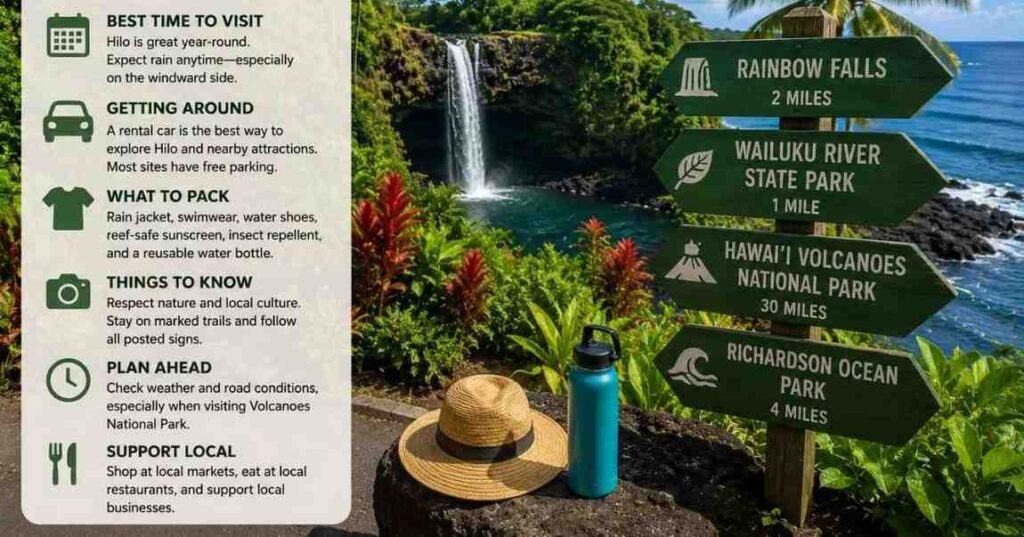
Hilo receives an average of 128 inches of rain per year, the highest of any city in the United States. That number sounds extreme but most of the rain falls in short bursts, often at night or early morning and clears within an hour. The practical effect is that things to do in Hilo Hawaii almost never get fully cancelled by weather but you need waterproof shoes and a light rain jacket every day without exception. June through September is the driest stretch, though “dry” in Hilo still means occasional afternoon showers.
Getting around Hilo without a car is possible but limiting. The Hele-On Bus covers most of the town and runs routes to Volcanoes National Park on certain days but schedules are infrequent some routes run only once per day. A rental car from Hilo Airport starts around $60 to $80 per day depending on season and gives you full access to the coastal road, the park and the Hamakua Coast north of town. Most things to do in Hilo Hawaii that sit outside downtown require a car, public transit simply won’t get you there on a flexible schedule.
For accommodation, the Hilo Bay area along Banyan Drive has a cluster of older hotels the Grand Naniloa and the Hilo Hawaiian Hotel both sit directly on the bay with views of the water and Mauna Kea on clear mornings. Rates range from $140 to $220 per night. Vacation rentals in the residential neighborhoods closer to Rainbow Falls run $90 to $140 per night and put you within 5 minutes of the main natural attractions. Staying in Hilo rather than Kona also cuts your drive time to things to do in Hilo Hawaii by 50 miles each way.
Pro Tip: Book your rental car before arriving. Hilo Airport has a small fleet and during summer and holiday weekends, cars sell out faster than hotel rooms.
You may also like:
Big Island Waterfalls You Can Swim In
Best Things to Do in Kona Hawaii
Frequently Asked Questions
How many days do you need in Hilo Hawaii?
Three to four days gives you enough time to cover the main things to do in Hilo Hawaii without rushing. Day one works well for downtown, Rainbow Falls and the Farmers Market. Day two covers Hawaii Volcanoes National Park as a full day. Day three fits the coastal beaches and Hamakua Coast drive. A fourth day allows for the Panaewa Rainforest Zoo, the only free zoo in Hawaii, which most visitors skip entirely.
Is Hilo worth visiting compared to Kona?
Hilo and Kona serve different travelers. Kona has better weather, more resorts and easier access to snorkeling in calm bays. Hilo has the Farmers Market, Rainbow Falls, proximity to Volcanoes National Park, lower accommodation prices and a lived-in local culture that Kona’s resort strip doesn’t offer. If your goal is authentic Big Island experience over beach resort comfort, Hilo is the stronger choice.
What is the best time to visit Hilo Hawaii?
June through September offers the driest conditions for things to do in Hilo Hawaii, with average rainfall roughly half that of the winter months. July and August are the driest individual months. The tradeoff is slightly higher accommodation rates and more visitors at Volcanoes National Park. October through December brings heavier rain but also emptier trails and lower hotel prices. Rainbow Falls and the lava tube are just as accessible, you simply need better rain gear.
Is Hilo Hawaii expensive for tourists?
Hilo is significantly more affordable than most Hawaii destinations. Free attractions Rainbow Falls, Liliuokalani Gardens, Mokupapapa Center, Richardson Beach make up the majority of things to do in Hilo Hawaii. A full day of activities including the Farmers Market breakfast, a park entry fee and a plate lunch at Cafe 100 costs under $60 per person. The main expense is accommodation and a rental car, which together average $200 to $280 per day for two people sharing.
Can you visit Hawaii Volcanoes National Park as a day trip from Hilo?
Hawaii Volcanoes National Park is the most accessible major day trip from Hilo at 28 miles and 45 minutes by car. A full day in the park costs $35 per vehicle entry. Most visitors spend 5 to 6 hours covering Crater Rim Drive, the Thurston Lava Tube and Chain of Craters Road before returning to Hilo for dinner. Trying to visit Volcanoes from Kona requires a 100-mile drive each way, which makes Hilo the far more practical base for the park.
Final Thoughts
Things to do in Hilo Hawaii don’t follow a resort itinerary and that’s the point. You eat fresh ahi at a fish market that’s been running since before Hawaii was a state. You stand at the edge of an active caldera 28 miles from your hotel. You watch a waterfall produce a real rainbow at 9 in the morning, for free, in a parking lot with four other people. Hilo rewards travelers who show up without a poolside agenda. Book three nights minimum, rent a car at the airport and start your first morning at the Farmers Market on Mamo Street before the rambutan is gone.

