
The red rocks around Sedona don’t just sit there looking pretty, they actually change color four times before noon depending on where the sun hits the iron oxide. Most visitors rush through in a single afternoon and leave without ever standing inside Boynton Canyon at golden hour. A 2 day Sedona itinerary gives you enough time to hike, chase the light and still sit down for a real meal instead of gas station snacks. This guide breaks down exactly how to spend those 48 hours without wasting a single one of them on traffic or guesswork.
Planning a 2 day Sedona itinerary means accepting that you cannot see everything and that’s fine, because the region concentrates its best sights into a tight radius anyway.
In this guide you will find:
- The exact hiking order that avoids midday heat and parking chaos
- Which vortex sites are worth the walk and which ones are tourist traps
- Real entry fees and parking costs for every stop on this 2 day Sedona itinerary
- A realistic food and lodging budget broken down by meal
- The one canyon drive most first-time visitors skip entirely
- How to fit in a Grand Canyon side trip if you have a rental car
QUICK INFO
Location: Northern Arizona, between Flagstaff and Phoenix
Nearest Airport: Phoenix Sky Harbor International Airport, approximately 2 hours south by car
Best Time to Visit: March to May and September to November, when daytime temperatures typically stay around 75°F (24°C)
Travel Time from Phoenix: About 2 hours by car; from Flagstaff, approximately 45 minutes
Days Recommended: 2 full days
Average Daily Cost: $180–$250 per person, including accommodation, meals and one guided activity
Day 1: Uptown Sedona and the Southern Trails
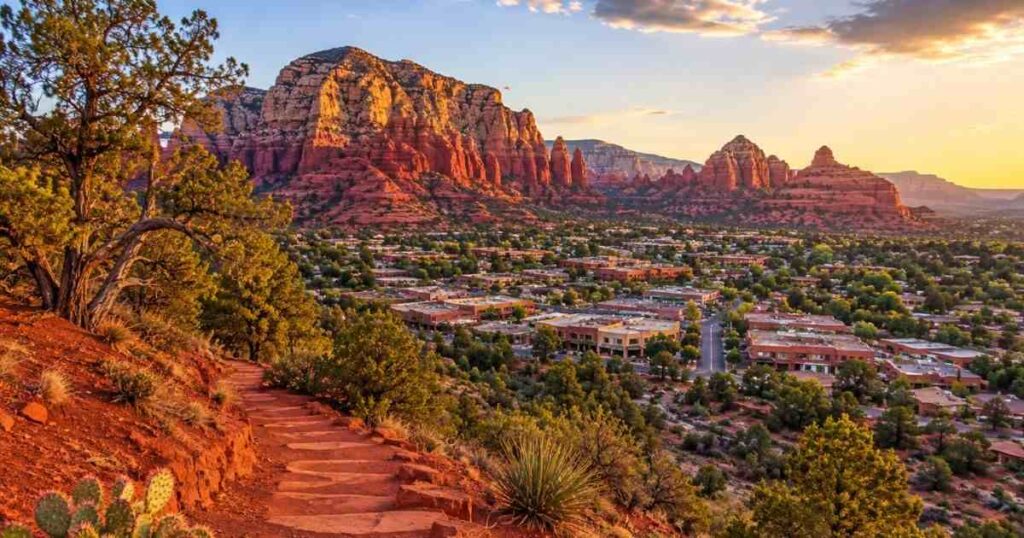
Start this 2 day Sedona itinerary at Cathedral Rock trailhead by 7:30 a.m. before the small lot at Back O’ Beyond Road fills up. The hike is short at 1.2 miles round trip but the final scramble gains 600 feet in under a quarter mile, so wear shoes with real grip. You will find the saddle view between the twin spires worth every bit of the climb, especially with the morning sun still low over Courthouse Butte. Parking here requires a Red Rock Pass, which costs $5 for the day or $15 for a week.
From Cathedral Rock, drive 15 minutes into Uptown Sedona for a mid-morning coffee break on Highway 89A. Most tourists don’t realize the real shopping deals sit two blocks off the main strip on Jordan Road, away from the $12 souvenir shot glasses. Grab lunch at a local taco stand for around $12 to $15 per person before heading toward Boynton Canyon. This trail runs 6.1 miles round trip if you go all the way to the vista but even the first 2 miles deliver dramatic red walls on both sides.
Boynton Canyon also holds one of the four main vortex sites and unlike Bell Rock, it requires almost no crowd navigation on weekday afternoons. Save your evening for the Airport Mesa overlook, a five-minute walk from a small parking area that costs $3 for two hours. Arrive 45 minutes before sunset to claim a rock ledge, since this spot fills up fast between April and October. This first day of your 2 day Sedona itinerary should end with dinner at a restaurant along Highway 179 with patio seating facing the rocks.
Pro Tip: Book the Cathedral Rock parking lot mentally as a backup plan, since it holds fewer than 25 cars and fills by 8 a.m. on weekends.
Anyone building a 2 day Sedona itinerary around photography should also plan the return drive through Uptown after dark, when string lights along Highway 89A turn the strip into an easy photo stop. Restaurants here fill up fast after 6 p.m., so book a table by mid-afternoon or plan on a 45-minute wait. This small adjustment keeps day one of your 2 day Sedona itinerary running smoothly instead of ending in a frustrating search for an open table.
Day 2: Oak Creek Canyon and West Sedona

Devote the second day of this 2 day Sedona itinerary to the drive north through Oak Creek Canyon on Highway 89A. This 14-mile stretch climbs nearly 2,000 feet through pine forest, a sharp contrast to the desert scrub around town. Stop at Slide Rock State Park, where entry costs $30 per vehicle and where a natural sandstone waterslide drops swimmers into cold creek pools. Arrive before 9 a.m. in summer, since the parking lot closes once it hits capacity, sometimes by 10:30 a.m.
After Oak Creek, loop back toward West Sedona for the Devil’s Bridge hike, the most photographed natural arch in the region. The trailhead parking on Dry Creek Road is tiny, so most visitors park along the road and add 1.5 miles round trip just to reach the actual trail. Budget three hours total for the 4.2-mile round trip hike including photo time on the arch itself. Bring at least one liter of water per person, since there’s zero shade for the final half mile.
Wrap up your 2 day Sedona itinerary with a scenic Jeep tour through Broken Arrow trail, which costs $90 to $120 per person for a 2-hour tour. These tours access terrain a standard rental car simply cannot handle, including the famous “Devil’s Staircase” rock formation. If you have a rental car and extra time, the Grand Canyon’s South Rim sits about 2 hours and 15 minutes north, making it possible to add a third day rather than trying to squeeze it into this trip. Compare that to a Sedona vs Grand Canyon day trip decision: Sedona rewards hikers with close-up red rock scrambling, while the Grand Canyon rewards those chasing sheer scale and distant views.
Verdict: Two days covers the essential hikes and one canyon drive but a third day opens up the Grand Canyon or a deeper look at the Palatki Heritage Site ruins.
Travelers stretching this 2 day Sedona itinerary into a slightly longer weekend often add a stop at the Chapel of the Holy Cross on the way back from Broken Arrow trail. The chapel sits built directly into a red rock formation and costs nothing to visit, with a small parking lot that fills up by mid-morning. Fifteen minutes here rounds out day two without disrupting the rest of the schedule laid out in this 2 day Sedona itinerary.
Practical Tips for Getting Around Sedona

A rental car is close to mandatory for any 2 day Sedona itinerary, since ride shares are scarce outside Uptown and surge pricing spikes fast on weekends. Most trailheads require a $5 Red Rock Pass, sold at visitor centers and self-pay kiosks at each lot. Buy the weekly pass for $15 if you plan to hit more than three trailheads, since it pays for itself by the third stop. Cell service drops out completely inside Oak Creek Canyon and along parts of Boynton Canyon Road, so download offline maps the night before.
Lodging inside Sedona proper runs $200 to $350 per night for a mid-range hotel, while staying in nearby Cottonwood cuts that closer to $110 to $140. The 20-minute drive from Cottonwood is worth the savings unless you specifically want to walk to Uptown restaurants at night. Most visitors miss that the free shuttle system only covers a few specific trailheads, not the full network of hikes covered in this guide. Pack layers even in warmer months, since temperatures can swing 25 degrees between a 7 a.m. trailhead start and a 2 p.m. canyon overlook.
Pro Tip: Fill your gas tank in Cottonwood or Camp Verde before arriving, since Sedona gas stations charge noticeably more per gallon.
Anyone finalizing a 2 day Sedona itinerary should also build in a 30-minute buffer between each stop, since trailhead parking searches eat more time than the hikes themselves. Weather changes fast at higher elevations along Oak Creek Canyon, so check the forecast the morning of, not the night before. A well-paced 2 day Sedona itinerary leaves room for one spontaneous stop, whether that’s a roadside overlook or an extra 20 minutes at a viewpoint that photographs better than expected.
You may also like:
Frequently Asked Questions
How many days do you need in Sedona?
Two days covers the main hikes, one vortex site and Oak Creek Canyon comfortably. A 2 day Sedona itinerary hits Cathedral Rock, Boynton Canyon, Slide Rock and Devil’s Bridge without feeling rushed. Add a third day only if you want to include the Grand Canyon or a Jeep tour without cutting other stops from your 2 day Sedona itinerary.
Is Sedona worth visiting?
Yes, Sedona delivers red rock scenery, moderate-difficulty hiking and a walkable Uptown area within one compact region. The combination of accessible trails and dramatic geology is rare within a 2-hour drive of a major airport. Even a short 2 day Sedona itinerary captures most of what draws repeat visitors back every year.
What is the best time to visit Sedona?
March through May and September through November bring daytime highs near 70 to 80°F, ideal for hiking. Summer months regularly push past 100°F by early afternoon, making midday trails uncomfortable and occasionally dangerous. Winter stays mild but can bring icy trail sections after rare snowfall in the canyon.
Is Sedona expensive for tourists?
Sedona runs pricier than nearby Cottonwood or Camp Verde, with hotel rates 40 to 60 percent higher inside town limits. A realistic 2 day Sedona itinerary costs $180 to $250 per person daily including meals, parking and one guided activity. Staying just outside town and driving in cuts lodging costs significantly without adding much travel time.
Can you do a day trip from Phoenix to Sedona?
Yes, Phoenix sits about 2 hours south, making a single long day trip possible but tight for serious hiking. A day trip only allows time for one major trail plus a quick Uptown stop before the drive back. Splitting your visit into a proper 2 day Sedona itinerary lets you actually hike instead of just driving and snapping photos.
Final Thoughts
A 2 day Sedona itinerary works because the region rewards focused planning over wandering. Two solid days of hiking, one scenic canyon drive and a sunset at Airport Mesa deliver more than most week-long Southwest road trips manage. Skip the rush to see everything and instead commit to the handful of trails and viewpoints outlined here. Arrive at Airport Mesa 45 minutes before sunset, find a ledge on the east side and stay until the rock face turns from orange to deep violet before the stars come out.
Planning a trip to Arizona? Save this 2 day Sedona itinerary before you go so you can spend more time exploring the red rocks and less time figuring out where to go next.

