
Most people expect the best Sedona vortex tours to involve crystals, chanting and strangers holding hands around a rock. That is not what happens or at least not unless you book the wrong one. Sedona’s four main vortex sites are geological formations of twisted juniper trees, red sandstone buttes and electromagnetic energy points that draw hikers, meditators, energy healers and curious skeptics alike. Whether you feel something mystical at these spots or simply stand on some of the most striking terrain in the American Southwest, the experience delivers either way.
In This Guide You Will Find:
- The four main Sedona vortex sites compared by difficulty, energy type and access time
- Exact costs for the best Sedona vortex tours versus self-guided hikes
- What a guided vortex tour in Sedona actually includes and what most operators leave out
- The best time of day and year to visit each vortex site with the fewest crowds
- Practical transport, parking and permit details for visiting Sedona vortexes independently
- How to choose between the best Sedona vortex tours operators based on your experience goals
QUICK INFO BOX
| Detail | Info |
| Location | Sedona, Arizona, USA |
| Nearest Airport | Flagstaff Pulliam Airport (45 min) / Phoenix Sky Harbor (2 hrs) |
| Best Time to Visit | March–May and September–November |
| Travel Time from Phoenix | Approximately 2 hours by car via I-17 N |
| Days Recommended | 2–3 days |
| Average Daily Cost | $120–$180 USD (tours + meals + lodging) |
What Are the Sedona Vortex Sites and Why Do They Matter
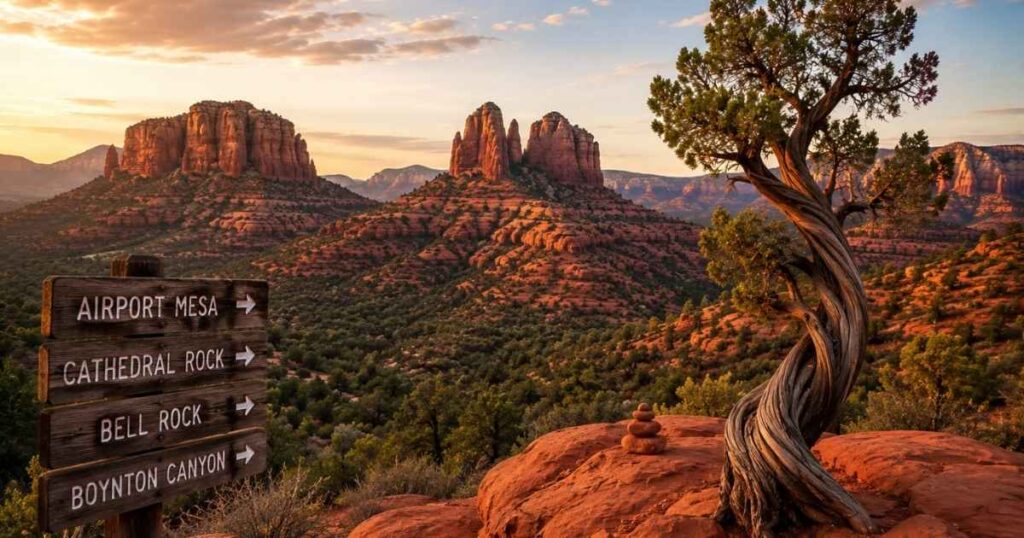
Sedona has four recognized vortex sites, each with a distinct character and a different physical intensity level. Airport Mesa sits at 4,500 feet elevation and offers a 360-degree panoramic view of the surrounding red rock formations, it is the most accessible vortex site, reachable in about 10 minutes from the parking area on Airport Road. Cathedral Rock requires a 1.5-mile round-trip hike with a scramble section rated moderate-to-strenuous but it delivers one of the most photographed views in all of Arizona.
Bell Rock stands alone like a natural amphitheater just south of Sedona near the Village of Oak Creek no climbing required to feel at the center of the site. Boynton Canyon sits 6 miles west of Sedona’s main strip and combines a 6-mile round-trip trail through a pinyon-juniper forest with two distinct energy points at either end of the canyon. When people search for the best Sedona vortex tours, they often don’t realize these four sites sit within a 10-mile radius of each other, making it completely possible to visit all of them in a single full day if you start early.
Most visitors don’t realize that each vortex in Sedona carries a different energy classification: Airport Mesa and Bell Rock are considered masculine or electric vortexes, while Cathedral Rock and Boynton Canyon are feminine or magnetic. This distinction shapes which vortex is recommended for which traveler intent mental clarity versus emotional healing, for instance. The twisted juniper trees at each site serve as visible indicators of vortex energy, their trunks spiraling in a clockwise direction. These are not planted or sculpted. They grow this way naturally in response to the geomagnetic properties of the terrain.
Pro Tip: Arrive at Airport Mesa before 7:30 AM to park for free on Airport Road and watch the sun hit the red rocks. The light is cleaner and the lot fills completely by 9 AM.
Best Sedona Vortex Tours: Guided Options Compared
The best Sedona vortex tours fall into three categories: jeep tours, walking tours and private spiritual sessions. Pink Jeep Tours is the largest operator and charges $115–$160 USD per adult for their Vortex & Spiritual Sites tour, which covers Airport Mesa, Cathedral Rock and Bell Rock in approximately 3.5 hours. The tour includes a naturalist guide who explains both the geology and the metaphysical history of each site, no spiritual commitment is required to join. Earth Wisdom Tours runs smaller group walking tours capped at 8 people and focuses more on meditation, breathwork and chakra alignment at each stop, charging around $95–$130 USD per person.
For private guided experiences, operators like Sedona Vortex Adventure and Inner Dimensions charge $200–$350 USD for a 3–4 hour one-on-one session that includes a personalized vortex assessment, energy clearing practices and a custom site itinerary. These attract serious practitioners rather than casual tourists. A number of resorts including Enchantment Resort in Boynton Canyon also offer in-house vortex experiences as part of wellness packages, these rank among the best Sedona vortex tours for guests already staying on property. If you book a jeep-based best Sedona vortex tour, confirm whether the guide stops at all four sites or only three, some budget tours skip Boynton Canyon because of the extra driving time.
Pro Tip: Read tour reviews specifically for the guide’s name Sedona’s tour quality varies enormously by individual guide not just by company.
Self-Guided Vortex Hikes in Sedona: Costs and Trail Details
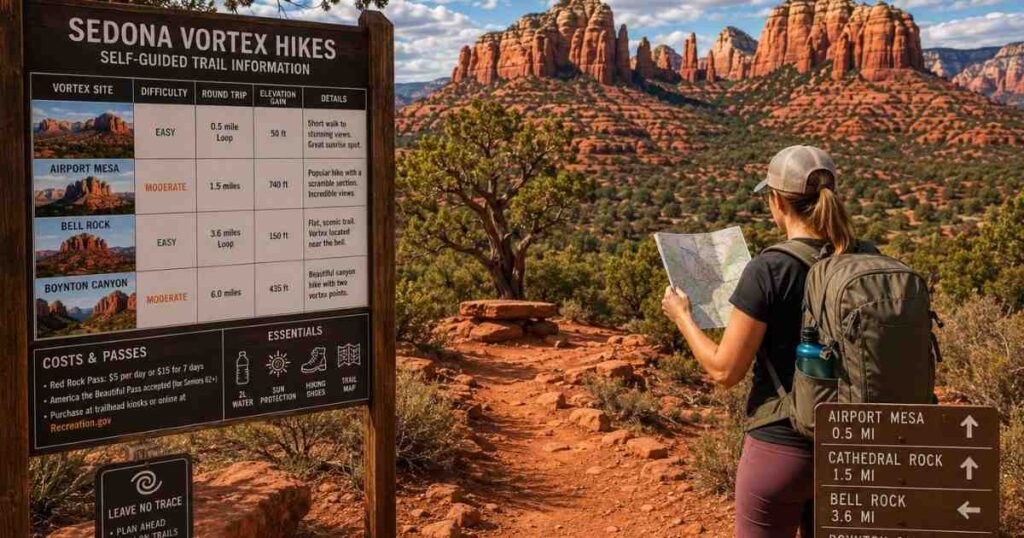
Comparing the best Sedona vortex tours against self-guided hikes comes down to one question: do you want context or freedom? Every vortex site is on public land managed by the Coconino National Forest and the only fee is the Red Rock Pass $5 per day or $15 for a weekly pass, purchased at the trailhead kiosks or in advance at recreation.gov.
The Cathedral Rock trailhead off Back O Beyond Road has limited parking and fills by 9 AM on weekends, so plan to arrive before 8 AM or use the free shuttle from the Sedona Visitor Center on Forest Road 216. Bell Rock Pathway is the easiest self-guided option the trail is paved for the first quarter mile and the vortex is accessible without any technical climbing.
Boynton Canyon Trail requires the most time at 3–4 hours round-trip at a moderate pace but it is the least crowded of the four main sites and the only one where you routinely see wildlife including mule deer and canyon wrens. Most guides recommend spending 15–20 minutes seated quietly at each vortex site rather than walking through and photographing, this is what most tourists miss when they visit independently.
Bring at least 2 liters of water per person in summer months when temperatures in Sedona exceed 100°F regularly from June through August. The best Sedona vortex tours self-guided experience costs under $20 total compared to $100–$350 for guided options the tradeoff is context and curation.
Pro Tip: Download the AllTrails app before you leave your accommodation and save the offline maps for Cathedral Rock and Boynton Canyon cell signal drops out in both canyons.
Best Time to Visit Sedona Vortexes: Seasons Broken Down
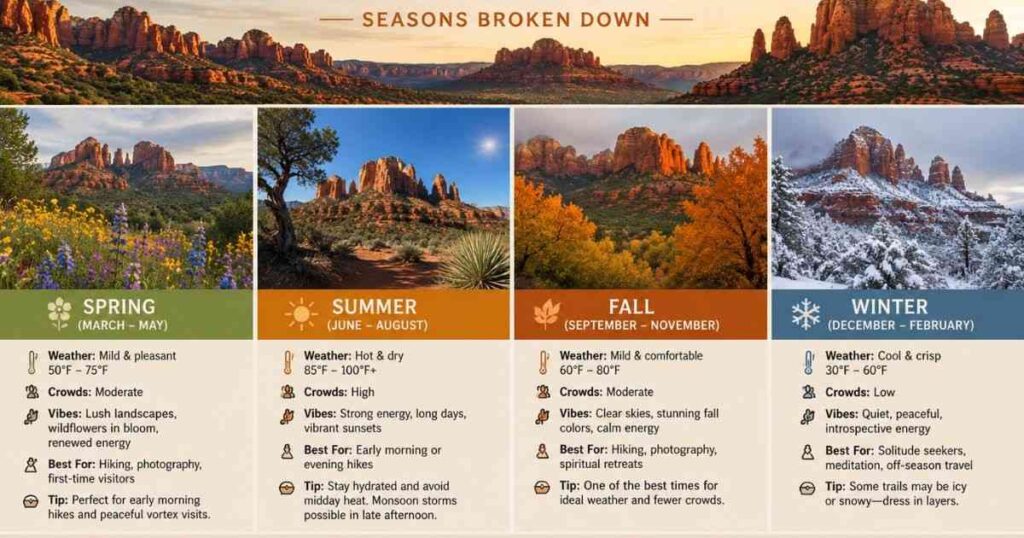
The best Sedona vortex tours operators agree unanimously: spring and fall are the prime seasons. March through May is the optimal window, daytime temperatures range from 65°F to 80°F, wildflowers bloom across the red rock terrain and the trails are dry but not scorched. September and October run a close second, with cooler mornings and a lower crowd density than spring. July and August bring the monsoon season, which means dramatic afternoon thunderstorms trail conditions become hazardous after 2 PM from July through mid-September and flash floods close several trailheads including parts of Boynton Canyon.
December through February is the most underrated season for Sedona vortex visits. Crowds drop by roughly 40% compared to peak spring months, tour operators offer discounts of 20–30% on guided experiences and the light on the red rocks in winter is sharper and more saturated than any other time of year. Snow occasionally dusts the higher formations including Cathedral Rock, creating one of Sedona’s most dramatic visual contrasts: red sandstone against white snow under a cobalt sky. Whatever month you visit, the best Sedona vortex tours and self-guided hikes both benefit from an early start before 8:30 AM, every site feels private after 10 AM, they all feel crowded.
Pro Tip: Book guided tours for weekday mornings in November you get the fall light, cooler temperatures and guides who have more time for individual questions when group sizes are smaller.
Practical Tips for Visiting Sedona Vortex Sites
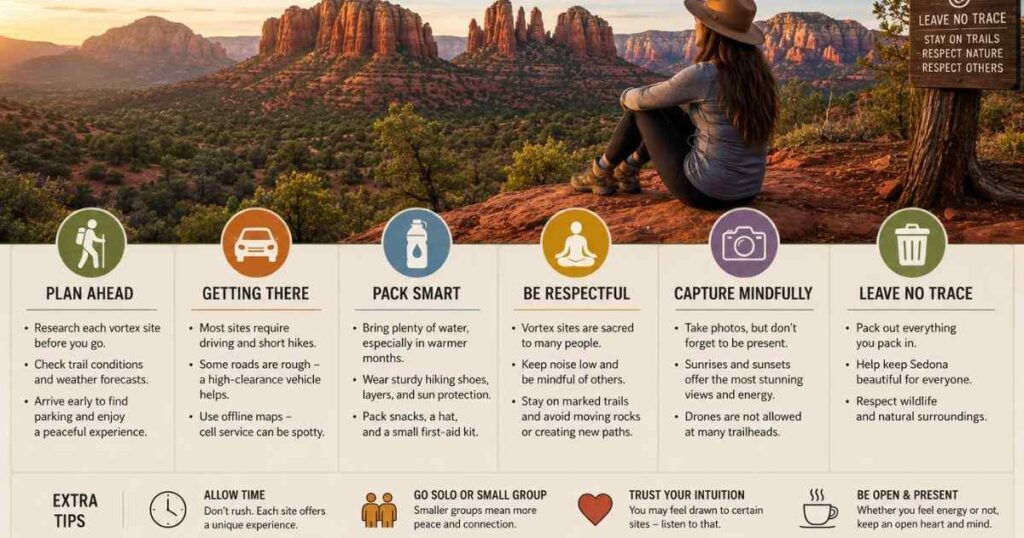
Sedona has no public transit system, so renting a car or booking a tour pickup is the only realistic way to visit all four vortex sites. Car rentals from Phoenix Sky Harbor run $45–$80 USD per day depending on the season. Most of the best Sedona vortex tours include hotel pickup from central Sedona properties confirming the pickup radius before booking if you stay outside the main Uptown or Tlaquepaque areas. Parking at Cathedral Rock and Airport Mesa costs $3–$5 at pay stations in addition to the Red Rock Pass and both lots are enforced daily.
Dress in layers regardless of the season, the elevation at Sedona sits around 4,500 feet and morning temperatures at the vortex sites run 15–20 degrees cooler than the town center even in summer. Sun protection is essential from March through October: UV exposure at altitude is significantly higher than coastal environments.
Sedona has no shortage of psychics, crystal shops and chakra healers along its main strip, most are legitimate small businesses, though some charge $80–$150 USD for reading sessions that last under 30 minutes, so set expectations before walking in. Most visitors don’t realize that the best Sedona vortex tours operators and the Sedona Visitor Center on Forest Road 216 both provide free printed vortex maps stopping there first before spending money on a map at a retail shop.
Pro Tip: Wear closed-toe shoes with ankle support even for the shortest vortex hike the red rock surface is uneven and slippery when dry, especially on Cathedral Rock’s scramble section.
You may also like:
Frequently Asked Questions
How many days do you need to visit all the Sedona vortex sites?
Two full days covers all four vortex sites comfortably with time for meals and exploration of Sedona’s main areas. If you book one of the best Sedona vortex tours on day one, you can cover three sites with a guide, then return independently to your favorite on day two. Day one works well for Airport Mesa and Cathedral Rock both are close to town and easy to combine. Day two is ideal for Bell Rock and Boynton Canyon, finishing with a sunset from Red Rock Crossing.
Are Sedona vortex tours worth it for skeptics?
Yes, even skeptics consistently rate the best Sedona vortex tours as a worthwhile experience. The guides provide detailed geology, Native American history of the land and practical trail information that improves the hike regardless of belief. The red rock terrain alone justifies the visit.
What is the best time to visit Sedona vortexes?
March through May and September through November offer the best combination of mild temperatures, dry trails and manageable crowds. Avoid mid-July through August for afternoon hikes due to monsoon thunderstorms. Winter months from December through February offer the lowest prices and smallest crowds.
How much does a Sedona vortex tour cost?
Researching the best Sedona vortex tours by price reveals three clear tiers. Guided jeep-based vortex tours cost $115–$160 USD per adult. Walking group tours run $95–$130 USD. Private one-on-one spiritual sessions range from $200–$350 USD. Self-guided visits with a Red Rock Pass cost $5–$15 USD total and are free of charge for visitors over 62 with an America the Beautiful Senior Pass.
Can you do a Sedona day trip from Phoenix to see the vortexes?
Yes Phoenix to Sedona is approximately 2 hours by car via I-17 North, making a day trip feasible. Leave Phoenix by 6:30 AM to reach Airport Mesa before it fills, visit two vortex sites by midday, have lunch in Uptown Sedona and add a third site in the afternoon before driving back. The best Sedona vortex tours that cater to day-trippers run from 8 AM to 1 PM and include pickup from designated Phoenix-area hotels for an additional fee of around $30–$50 USD. A full four-vortex day trip from Phoenix is exhausting two sites with proper time at each is more rewarding.
Final Thoughts
Sedona’s vortex sites deliver something most travel destinations cannot: a landscape that actively invites stillness. The best Sedona vortex tours give you expert context that transforms a hike into an experience, whether you leave convinced of the energy or simply in awe of the geology. Book a guided jeep tour for your first morning in Sedona, then return to your favorite site the following dawn on your own, before any other visitors arrive and sit with your back against the red rock at Cathedral Rock long enough to hear the canyon go quiet.

