
San Francisco does not reveal itself in three days it teases you. The fog-covered hills, the $3 oysters at the Ferry Building, the Victorian houses stacked on 45-degree inclines, the neighborhoods that feel like separate cities stitched together by cable car lines none of this makes sense until you slow down and actually walk it. Most tourists leave thinking Fisherman’s Wharf is the heart of the city. It is not even close. A well-planned 7 days in San Francisco itinerary is your ticket to understanding why this 49-square-mile city consistently ranks as one of the most complex and rewarding urban destinations in the entire United States.
In This Guide You Will Find:
- A complete 7 days in San Francisco itinerary broken down hour by hour with specific routes
- Exact entry fees, meal costs and transport prices so you can budget accurately
- The best neighborhoods to stay in based on your travel style and budget
- Three day trip options from the city Muir Woods, Sausalito, Napa with real travel times
- What most tourists miss entirely the Richmond District, Clarion Alley and Twin Peaks at golden hour
- Month-by-month advice on the best time to visit San Francisco without getting buried in fog
Quick Info Box
| Detail | Info |
| Location | San Francisco, California, USA |
| Nearest Airport | San Francisco International Airport (SFO) 22 km from downtown |
| Best Time to Visit | September to November |
| Travel Time from LA | ~1 hour by flight, ~6 hours by car |
| Days Recommended | 7 days |
| Average Daily Cost | $150–$250 per person (mid-range) |
7 Days in San Francisco Itinerary Your Complete Day-by-Day Plan
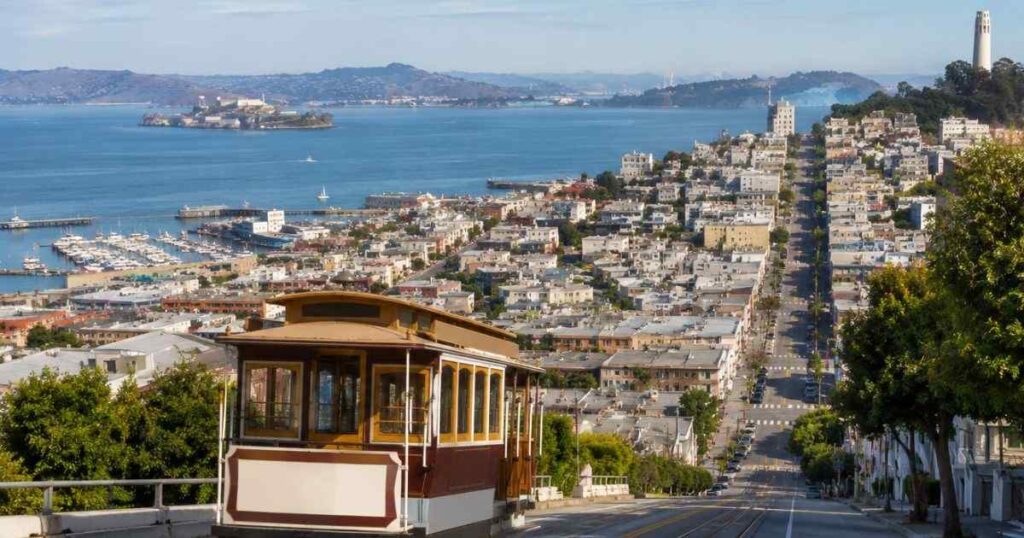
This one-week San Francisco itinerary is built for first-time visitors who want to go beyond the postcard stops. Each day has a clear geographic focus so you spend less time commuting and more time actually experiencing the city. Follow this plan in order the days are sequenced so your energy and your bookings align.
Day 1: The Embarcadero, Ferry Building and Pier 39
The moment you land at SFO, take BART directly to downtown. The ride costs $10.65 and takes exactly 30 minutes. No taxi can beat that in city traffic. Drop your bags and walk straight to the Ferry Building Marketplace on the Embarcadero waterfront. On Tuesday, Thursday and Saturday mornings, the Ferry Building Farmers Market takes over the outdoor plaza with $3 oysters, sourdough from Acme Bread Company and Blue Bottle Coffee for $6 a cup. Spend your first afternoon walking north along the waterfront to Pier 39. Do not go there to shop, go to watch the California sea lions that took over the K-Dock in January 1990 after the Loma Prieta earthquake and have refused to leave ever since. Over 300 sea lions occupy the docks on any given day and the noise alone is worth the walk.
Day 2: Golden Gate Bridge and the Presidio
Take Muni bus 28 from downtown to the Golden Gate Bridge for $2.50. The pedestrian walkway stretches 2.7 km and takes about 45 minutes at a relaxed pace. Most visitors walk halfway, take a photo and turn back. Instead, cross the full bridge to the Marin side and take the Vista Point trail, an extra 25-minute loop that puts you directly below the bridge’s north tower with the entire city skyline behind it. Almost no one does this. Spend your afternoon inside the Presidio, a 1,491-acre former U.S. Army base turned national park with free entry. The Walt Disney Family Museum sits inside the Presidio grounds and costs $25. It is one of the most thoughtfully designed museums in California and has nothing to do with theme parks.
Day 3: Alcatraz and North Beach
Book Alcatraz tickets at least two weeks before your trip they sell out consistently and cost $47.30 per adult including the ferry from Pier 33. The self-guided audio tour on the island runs about 45 minutes and features narration from former guards and inmates recorded in the 1980s. Alcatraz closes to day visitors by late afternoon, so spend your evening in North Beach San Francisco’s Italian-American neighborhood since the 1880s. A bowl of pasta at Tony’s Pizza Napoletana costs around $18. City Lights Bookstore, founded by poet Lawrence Ferlinghetti in 1953, stays open until midnight and stocks a poetry section in the basement that is unlike anything you will find in a chain bookstore.
Day 4: Chinatown, Union Square and Haight-Ashbury
San Francisco’s Chinatown is the oldest in North America, established in 1848 and it produces some of the cheapest and best food in the city. Golden Gate Bakery on Grant Avenue sells egg custard tarts for $2.25 each. There is almost always a line and it is always worth it. Walk south from Chinatown to Union Square in 10 minutes, where the city’s main retail district and the San Francisco Museum of Modern Art ($25 entry, free the first Thursday of each month) sit side by side. In the afternoon, take Muni bus 7 to Haight-Ashbury, the neighborhood where the 1967 Summer of Love happened and where Victorian storefronts now house vintage record shops, independent bookstores and cafés. The Haight is most alive between noon and 6pm.
Day 5: The Mission District and Dolores Park
The Mission District is where San Francisco eats. La Taqueria on Mission Street serves a carnitas burrito for $9.50 that FiveThirtyEight ranked the best in America in a blind taste test involving 64 taquerias. Walk three blocks north to Dolores Park, a 16-acre hilltop park with a view of the downtown skyline, the Bay Bridge and Twin Peaks that most tourists never see because they never leave Fisherman’s Wharf. From the park’s northeast corner, the view is clear on any day between September and November. Spend your afternoon on Clarion Alley, a 100-meter dead-end street between 17th and 18th that is covered floor-to-roof in rotating political murals by local artists. Entry is free and the art changes every few months, so no two visits are the same.
Day 6: Day Trip to Muir Woods or Sausalito
Muir Woods National Monument sits 29 km north of San Francisco and takes 45 minutes by car. Entry costs $15 per adult and the Cathedral Grove trail, a 2 km loop through old-growth coast redwood trees, some over 1,000 years old, is one of the quietest and most disorienting walks in California. Book a parking reservation at recreation.gov before you go, the lot fills by 9am on weekends. If you prefer water over forest, take the Golden Gate Ferry from the Ferry Building to Sausalito for $14.50 each way. The 30-minute crossing gives you a full view of the Golden Gate Bridge from the water, a perspective most visitors never get and Sausalito itself is a small Marin County waterfront town with good seafood and 3–4 hours of easy walking.
Day 7: The Castro, Twin Peaks and a Final Dinner
The Castro is San Francisco’s LGBTQ+ historic district and one of the most visually striking neighborhoods in the city. The 1922 Castro Theatre, a Spanish Colonial Revival cinema with a working Wurlitzer organ still shows films and hosts events year-round. The GLBT History Museum on 18th Street charges $5 entry and houses one of the most significant queer history archives in the world. From the Castro, walk or take a rideshare 10 minutes up to Twin Peaks, two hills at 280 meters elevation that give you a 360-degree panoramic view of the entire Bay Area, including both bridges, the Pacific Ocean and Mount Tamalpais to the north. For your final dinner, Zuni Café on Market Street serves a whole roast chicken for two ($95) that takes 45 minutes to prepare and arrives at your table with warm bread salad. It is the most San Francisco meal you will eat on this trip.
Pro Tip: Arrive at Twin Peaks by 4:30pm on Day 7 to see the city in golden hour light. The view at sunset is completely different from the flat midday version that most tourists see.
Where to Stay During Your 7 Days in San Francisco Itinerary
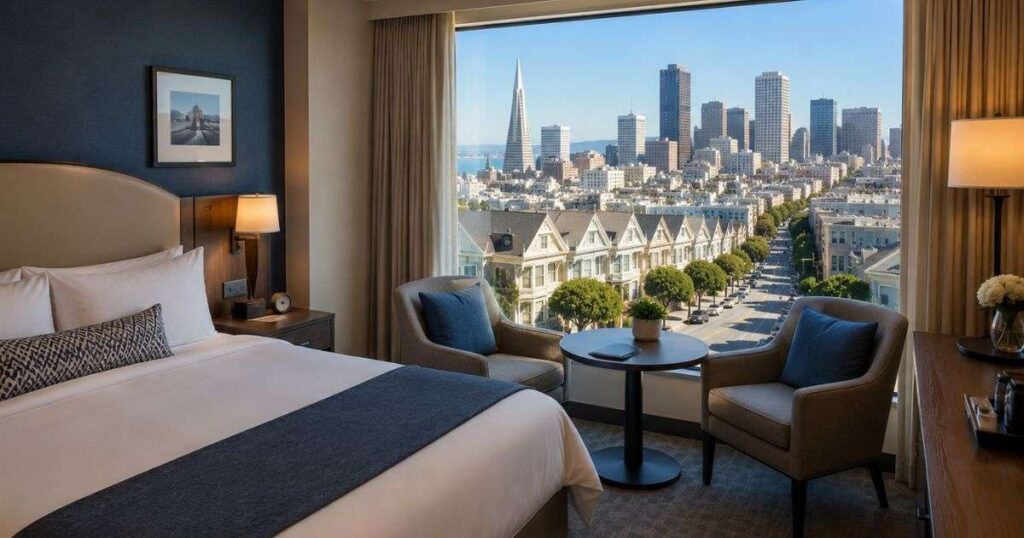
Your hotel neighborhood determines your daily commute, your nightly noise level and 20–30% of your trip budget. Union Square is the most central base for a seven-day San Francisco itinerary. 3-star hotels run $180–$280 per night and you are within 15 minutes of most Day 1–4 attractions. The Mission District offers boutique hotels and well-located Airbnbs for $120–$180 per night and drops you in the city’s best food neighborhood. Fisherman’s Wharf charges $220+ per night for a location that empties out by 9pm and caters entirely to tourists. The Tenderloin has hostels from $45 per night but street activity after dark is intense and not suitable for solo travelers visiting for the first time. The Hayes Valley neighborhood sits between all these areas with hotel rates of $160–$220 per night, walkable to Haight-Ashbury, SFMOMA and the Ferry Building, with actual neighborhood restaurants instead of tourist menus.
Pro Tip: Book accommodation in Hayes Valley or the Lower Haight if you want to walk to the city’s best restaurants without paying $15 each way in rideshare fees every night.
Best Time to Complete a 7 Days in San Francisco Itinerary
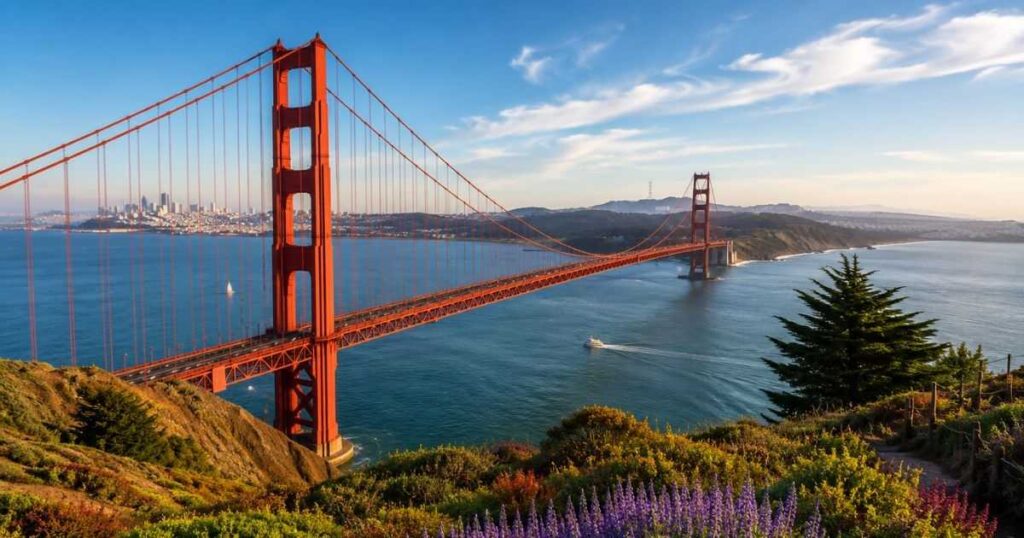
The biggest mistake first-time visitors make is planning a seven-day San Francisco itinerary for July or August. Summer in San Francisco is fog season Karl the Fog (the city’s unofficial mascot) rolls in from the Pacific Ocean every morning from June through August, holds temperatures at 14–16°C and regularly swallows the top half of the Golden Gate Bridge before noon. September and October are the warmest and clearest months of the year, with temperatures reaching 18–22°C and fog-free mornings across the Bay. November through January brings rainfall but also 20–30% lower hotel rates and noticeably thinner crowds at Alcatraz and the Golden Gate Bridge. March and April offer mild temperatures around 15°C, occasional rain and cherry blossoms in the Japanese Tea Garden inside Golden Gate Park ($15 entry, $7 for seniors). If you have flexibility, September is the single best month for this itinerary.
Pro Tip: Visit the Japanese Tea Garden on a Monday or Friday morning. It opens at 9am and weekday mornings before 10am bring a fraction of the weekend visitor numbers.
Getting Around San Francisco During Your 7-Day Itinerary
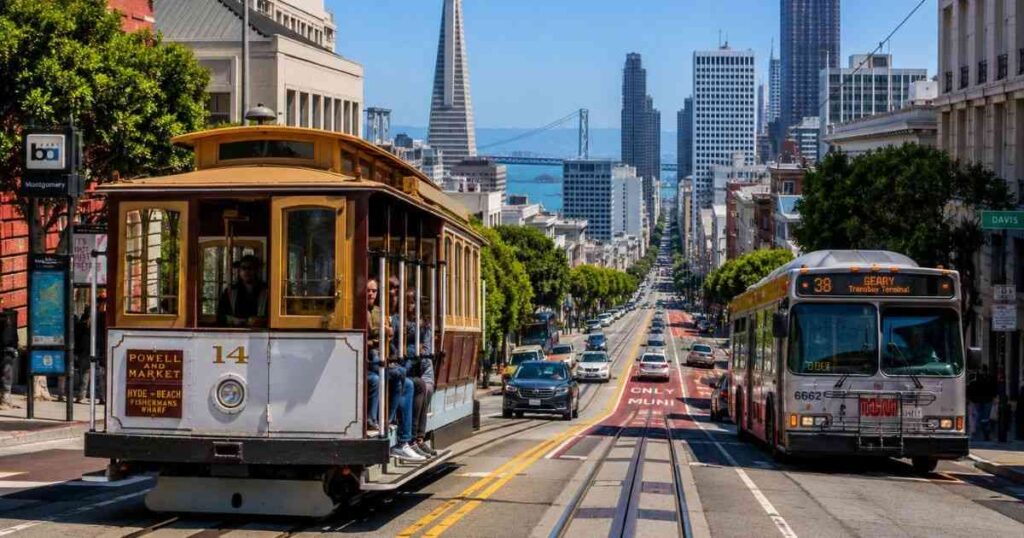
A 7 days in San Francisco itinerary does not require a rental car in fact, renting a car actively makes the trip harder. Garage parking costs $30–$55 per day, street parking requires knowing the city’s complex street-cleaning schedule and most of the city’s best neighborhoods are more accessible on foot than by car. The Muni system covers the entire city with buses, historic streetcars on Market Street, metro lines and cable cars. A single Muni fare is $2.50 and a 7-day Muni pass costs $26 it pays for itself in 11 rides. Cable cars cost $8 per one-way trip and are worth riding once on the Powell-Hyde line for the hill descent toward Aquatic Park but not as regular transport. BART connects SFO to downtown in 30 minutes for $10.65 and also runs to Oakland and Berkeley. Load money onto a Clipper Card at any BART station it works across Muni, BART, the Golden Gate Ferry and Caltrain and saves you from fumbling for exact change at every bus stop.
Pro Tip: Uber and Lyft surge during Golden State Warriors games at Chase Center and San Francisco Giants games at Oracle Park fares can triple between 9pm and 11pm on game nights. Check the schedule before you plan evening activities near SoMa or Mission Bay.
You may also like:
Frequently Asked Questions
How many days do you need for a San Francisco itinerary?
Seven days is the ideal length for a complete San Francisco itinerary for first-time visitors. Three days covers the main landmarks Golden Gate Bridge, Alcatraz, Fisherman’s Wharf but a 7 days in San Francisco itinerary lets you explore neighborhoods like the Mission District, Castro and Haight-Ashbury, take at least one day trip to Muir Woods or Sausalito and eat through the city’s best food districts without rushing. Most visitors who spend fewer than 5 days say they wish they had stayed longer.
Is a 7 days in San Francisco itinerary worth it?
Yes, seven-days in San Francisco is worth every night. The city layers history, food culture, national park access and neighborhood personality in a way that rewards longer stays. Your first day and your seventh day will feel like two completely different cities, which is exactly the point of spending a full week here. Visitors who follow a structured 7 days in San Francisco itinerary consistently report it as one of their most memorable U.S. city trips.
What is the best time to start a 7 days in San Francisco itinerary?
The best time to begin a 7 days in San Francisco itinerary is mid-September, when fog season ends, temperatures peak at 18–22°C and summer crowds thin out at major attractions. October is equally strong. Avoid starting your itinerary in June or July if clear Golden Gate Bridge views are on your list morning fog covers the bridge before noon on most summer days and does not lift until mid-afternoon.
How much does a 7 days in San Francisco itinerary cost?
A one-week in San Francisco itinerary costs approximately $1,050–$1,750 per person for accommodation, daily transport, meals and attractions not including flights. The largest single expenses are hotel costs ($180–$280 per night for mid-range) and Alcatraz tickets ($47.30 per adult). You can reduce daily food costs significantly by eating in the Mission District and Chinatown, where full meals run $7–$12 instead of $25–$40 at tourist-area restaurants near Fisherman’s Wharf.
Is a 7 days in San Francisco itinerary better than spending a week in Los Angeles?
A seven-day San Francisco itinerary and a week in Los Angeles serve completely different travel styles. San Francisco is compact, walkable and transit-friendly. Seven days here means deep neighborhood exploration, national park day trips and one of the best urban food scenes in the country, all without a car. Los Angeles sprawls across 1,300 square kilometers, requires a rental car and rewards travelers who want beach culture, film industry access and warmer, sunnier weather. If this is your first California trip and you want to cover the most ground with the least logistical friction, the week in San Francisco itinerary wins.
Conclusion
A well-executed 7 days in San Francisco itinerary does something that most city trips fail to do it changes how you think about the place before you leave. The city’s geography forces you to slow down: the hills, the fog, the neighborhoods that dead-end into staircases. Seven days gives you enough time to stop following the tourist trail after Day 3 and start walking in the direction that looks interesting. That is when San Francisco actually begins. Book your Alcatraz tickets the day you confirm your travel dates they sell out 3 to 4 weeks in advance and without that reservation, your Day 3 falls apart before it starts.

